
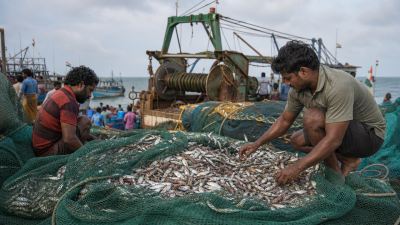
India’s inshore fishing grounds face acute degradation. Official landing data shows modest growth, but scientists report destruction of the nearshore benthic environment driven by extensive mechanised trawling, pollution, habitat loss and weak enforcement. The crisis affects livelihoods, stock productivity and coastal ecology.
What is the current issue?
Inshore waters—the coastal zone up to a few nautical miles—are the principal fishing ground for small-scale fishers. Mechanised trawling, operating from about 64,414 vessels, scrapes and alters the seabed. Landings data (35.7 lakh tonnes in 2025) mask habitat collapse and recruitment failure in many nearshore species.
Why it matters
- Ecology: Benthic habitats, nursery grounds and biodiversity decline.
- Livelihoods: Traditional fishers lose access to nearshore stocks and income.
- Food security: Coastal fish supply and local protein access weaken.
- Governance and conflict: Competition between mechanised and small-scale sectors raises enforcement and social-friction issues.
Primary drivers of inshore ecosystem decline
- Mechanised trawling: Trawls physically remove and disturb benthic fauna and flora; gear catches juveniles and non-target species. Intensive trawling since the 1960s has degraded seabed structure.
- Hydrological changes: Dam construction upriver reduces nutrient and sediment flux to the coast, altering productivity.
- Mangrove loss and coastal modification: Removal of breeding and nursery habitat reduces recruitment.
- Pollution: Industrial effluent, agricultural runoff and urban waste increase turbidity and cause eutrophication.
- Overcapacity: Large fleet size with minimal entry controls increases fishing pressure on limited coastal stocks.
Impact of mechanised trawling
- Habitat destruction: Seabed scraping breaks down sediment structures and eliminates sessile organisms.
- Reduced recruitment: Destruction of nurseries and juvenile mortality lower future stock productivity.
- Bycatch and waste: High bycatch of non-commercial species and discards reduce ecosystem resilience.
- Masked signals: Aggregate landing increases can mask local collapses because landings reflect effort and market shifts more than stock health.
Governance and regulatory failures
- Rule enforcement gaps: The statutory 5 nautical mile no-trawl zone exists but is poorly enforced due to shortages of staff and patrol vessels.
- Entry controls: Minimal restrictions on new mechanised vessels sustain fleet growth and excess capacity.
- Stakeholder exclusion: Small-scale fishers are frequently excluded from decision-making and compliance schemes.
- Patchy state action: Some states enforce seasonal bans; for example, Kerala recently booked vessels for violating the annual trawling ban, showing selective enforcement is possible.
- Fragmented legal framework: Fisheries management is split between central policy and state implementation; coordination is weak.
Policy responses and their limits
- Promotion of deep-sea fishing: The central government encourages offshore expansion. FAO assessment indicates only marginal gains and notes this shifts costs onto fishers without restoring inshore grounds.
- Seasonal bans and spatial rules: Seasonal trawl bans and the 5 nm restriction exist but require systematic surveillance and sanctions.
- Data initiatives: The National Marine Fisheries Census 2025 (MFC 2025) aims to collect socio-economic data to inform policy.
Socio-economic implications
- Competition and displacement: Mechanised fleets outcompete small-scale fishers for inshore catches. Reduced access increases poverty risk in coastal communities.
- Income volatility: Declining catch per unit effort raises instability for artisanal fishers and fishing-dependent households.
- Cost shift: Encouraging deep-sea effort raises capital and operational costs, making transition unaffordable for many fishers.
- Social conflict: Enforcement crackdowns without participatory processes can escalate local tensions.
Data, monitoring and assessment challenges
- Landing data dependence: Government sustainability claims rely mainly on landing statistics rather than direct stock surveys. Landings reflect effort, market and spatial shifts.
- Need for direct assessments: Scientific trawl surveys, acoustic surveys, age-structured assessments and stock-recruitment studies are required for accurate status.
- Monitoring technology: Vessel Monitoring Systems (VMS), electronic logbooks and observer programmes improve compliance and data quality.
- Socio-economic data: MFC 2025 can inform rights-based approaches and livelihood support if integrated with biological data.
Way forward: priority actions
| Dimension | Immediate | Medium-term | Long-term |
|---|---|---|---|
| Enforcement | Increase patrol assets; use coastal radar and VMS. | Harmonise state-centre enforcement and penalties; strengthen seasonal bans. | Permanent no-trawl inshore reserves and marine protected areas (MPAs). |
| Fleet management | Halt unregulated vessel entry; incentivise gear modification. | Introduce capacity-reduction schemes and buy-back where needed. | Rights-based allocations and zonal access for small-scale fishers. |
| Science & data | Expand trawl and acoustic stock surveys; validate landing data. | Deploy VMS, e-logbooks and observer coverage across mechanised sector. | Integrated stock-recruitment and ecosystem-based fisheries management. |
| Socio-economic measures | Compensation and alternative employment during bans. | Skills, finance and market support for small-scale value chains. | Community co-management and legal recognition of traditional rights. |
| Habitat & pollution | Enforce mangrove protection and reduce coastal effluent. | River basin nutrient management to restore coastal productivity. | Large-scale coastal restoration and MPA network linked to fisheries management. |
Model Questions
1. Explain the primary drivers of inshore fisheries degradation in India, with special reference to mechanised trawling and other anthropogenic factors. [GS-III: Environment & DM]
Mechanised trawling physically scrapes and alters seabed habitats, removing benthic fauna and nursery areas and catching juveniles. Overcapacity (64,414 vessels) increases pressure. Other drivers include reduced nutrient flow from dams, mangrove removal, and pollution from industry, agriculture and urban sources. Combined effects reduce recruitment, biodiversity and stock resilience, producing local collapses even where aggregate landings appear stable.
2. Assess the governance and enforcement failures that allow continued degradation of India’s inshore fishing grounds. Evaluate current policy responses. [GS-II: Governance]
Failures include weak enforcement of the 5 nm no-trawl rule due to limited patrols and staff, minimal entry controls on mechanised vessels, and exclusion of fishers from management. Policy responses—seasonal bans and promotion of deep-sea fishing—are uneven and incomplete. Deep-sea expansion shifts costs to fishers and does not restore inshore habitats. Effective governance needs coordinated state-centre action, surveillance tech and participatory management.
3. Analyse the socio-economic impact of inshore fisheries degradation on coastal communities and propose measures to protect livelihoods. [GS-III: Economic Development]
Degradation reduces inshore catch, displacing artisanal fishers and increasing income volatility. Mechanised fleets crowd small-scale fishers, raising poverty risk. Measures: enforce spatial protection for artisanal zones, provide compensation and seasonal support during bans, invest in value-chain improvements, offer skill training and financial instruments, and enable community co-management to secure access and share benefits.
4. Discuss the limitations of current fisheries data in India and outline a framework for evidence-based marine fisheries management. [GS-III: Science & Technology]
Current reliance on landing data misses stock abundance and recruitment trends. Evidence-based management requires direct stock assessments (trawl and acoustic surveys), age-structured analyses, and ecosystem indicators. Combine VMS, e-logbooks and observer data with socio-economic census results (MFC 2025). Implement transparent, periodic stock assessments and link them to adaptive rules, zonal allocations and precautionary fishing limits.
Last Modified: July 6, 2026