
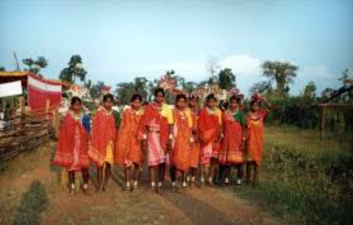
The Union Government has operationalised an Antyodaya governance framework to reach the poorest and most marginalised. The approach uses saturation-based inclusion, multi-ministry convergence and data mapping (PMJUGA). Central pillars include PM JANMAN for PVTGs and rapid expansion of EMRS for tribal education.
What is the current issue
Antyodaya governance replaces fragmented, demand-driven welfare with saturation-level delivery to ensure 100% coverage of eligible beneficiaries. The focus is on Scheduled Tribes and other marginalised groups that historically missed services due to remoteness and administrative gaps.
Why it matters
Governance: closes persistent exclusion in service delivery. Economy: raises productive capacity through education and livelihoods. Social equity: reduces inter-group disparities. Security and environment: stabilises fragile tribal regions while linking forest-dependent livelihoods to formal markets.
Operational framework of Antyodaya governance
Saturation-based delivery
- Objective: Achieve 100% inclusion of eligible beneficiaries in identified habitations.
- Data base: PMJUGA maps infrastructural gaps in over 63,000 tribal-dominated villages, covering five crore tribal persons across 549 districts.
- Targeting: Habitational and block-level saturation rather than beneficiary-initiated access.
Multi-sectoral convergence
- Coordination: Interventions coordinated across 17 line ministries to deliver services together.
- Funding mechanism: Tribal Sub-Plan resources are pooled and monitored through the Development Action Plan for Scheduled Tribes (DAPST).
- Simultaneous inputs: Electricity, clean water, roads and mobile connectivity are deployed in tandem to create usable access.
Key initiatives for Particularly Vulnerable Tribal Groups (PVTGs)
PVTGs are the most isolated tribal groups with stagnant populations, pre-agricultural technology and low literacy. The Dhebar Commission first identified the least developed tribal groups; PVTG remains the operational category. Odisha has the highest number of recognised PVTGs (13 of 75).
PM JANMAN (Pradhan Mantri Janjati Adivasi Nyaya Maha Abhiyan)
- Scale: Budget exceeding ₹24,000 crore; targets 75 PVTGs in about 22,000 habitations across 200 districts.
- Management: Eleven critical interventions executed by nine ministries.
- Core interventions:
- Pukka housing: PMAY‑G homes for eligible households.
- Grid and off‑grid power: Solar home lighting and household electrification in deep‑forest locations.
- Mobile Medical Units: Dedicated vans addressing sickle cell anaemia, malnutrition and other local burdens.
- Anganwadi centres: Crèches and nutrition services to improve maternal and child health indicators.
Educational and livelihood interventions
Eklavya Model Residential Schools (EMRS)
- Purpose: Free quality middle and secondary education for ST students in remote areas.
- Coverage goal: An EMRS in every block with >50% ST population and at least 20,000 tribal persons.
- Curriculum: CBSE syllabus combined with local tribal languages and cultural activities.
Institutional framework for tribal products
- TRIFED: Commercial channels for marketing tribal products and value addition.
- Van Dhan Vikas Kendras (VDVKs): SHG-based value addition for minor forest produce (mahua, wild honey, tamarind).
- Minimum Support Price for MFP: Expanded list of non-timber forest products covered under price support to protect gatherers from market volatility.
- NSTFDC: Concessional loans for self-employment schemes for ST individuals.
Welfare matrix for Scheduled Castes and other marginalised groups
| Scheme Name | Target Group | Core mechanism |
|---|---|---|
| PM‑AJAY | Scheduled Castes (SC) | Combines legacy schemes to fund skill development, assets and village infrastructure. |
| SHRESHTA | Meritorious SC students | Residential placements in selected private CBSE schools. |
| SEED | Denotified, Nomadic and Semi‑Nomadic Tribes (DNT) | Ayushman Bharat coverage, free coaching for competitive exams, livelihood support. |
| PM‑YASASVI | OBC, EBC and DNT students | Scholarships and OBC hostel funding; 2026‑27 admissions opened 1 June and close 31 August; selection now merit‑based (YET discontinued). |
Area‑based development programmes
- Aspirational Districts Programme: Targets 112 under‑developed districts, many with high tribal populations. Regions are scored on 49 KPIs across health, education, agriculture and infrastructure.
- Aspirational Blocks Programme: Replicates the ADP model at block level to address hyper‑local deprivation and accelerate service delivery.
Constitutional and institutional safeguards
- Article 275(1): Grants‑in‑aid from the Consolidated Fund of India for ST welfare and administration of scheduled areas.
- Forest Rights Act, 2006: Recognition of individual and community forest rights for forest‑dwelling STs and traditional dwellers.
- National Commission for DNT: Reports on systemic deprivation of denotified and nomadic communities.
- Dhebar Commission: Origin of the PTG category now called PVTG.
Challenges in implementation
- Geographical isolation: Remote habitations raise costs and complicate logistics for last‑mile delivery.
- Human resources: Limited trained personnel for education, health and social protection in tribal areas.
- Health burdens: High prevalence of sickle cell anaemia and chronic malnutrition in specific groups.
- Market access: Weak linkages and price volatility for forest produce despite MSP provisions.
- Cultural fit: Tension between standardised interventions and locally appropriate practices and languages.
- Monitoring: Need for real‑time indicators and grievance redress at habitation level to prevent exclusion errors.
Way forward
- Strengthen data systems: Maintain and update PMJUGA maps and beneficiary registries to sustain saturation coverage.
- Deepen convergence: Institutionalise joint planning across ministries at district and block levels with pooled budgets via DAPST.
- Last‑mile logistics: Use mobile medical units, solar off‑grid solutions and community cadres for remote delivery.
- Livelihood resilience: Scale VDVKs, market linkages and MSP coverage; support processing and collective enterprises.
- Cultural and linguistic inclusion: Integrate tribal languages and pedagogy in EMRS and local service delivery.
- Community participation: Empower Gram Sabhas and tribal institutions in planning, monitoring and MIS verification.
- Performance monitoring: Use ADP/ABP KPIs and habitation‑level dashboards for adaptive course corrections.
Model Questions
- Critically analyse the ‘Antyodaya Governance’ approach in addressing developmental challenges of tribal communities in India. Discuss its operational framework and key initiatives for holistic empowerment. [GS‑II: Governance]
- Explain how saturation‑based inclusion, as implemented through schemes like PM JANMAN, overcomes historical exclusions faced by Particularly Vulnerable Tribal Groups (PVTGs). [GS‑II: Governance]
- Examine the role of Eklavya Model Residential Schools and institutional mechanisms for tribal products in securing long‑term education and livelihood gains for tribal populations. [GS‑III: Economic Development]
- Assess the role of area‑based programmes and constitutional safeguards in reducing disparities among Scheduled Tribes, Scheduled Castes and other marginalised groups under the Antyodaya framework. [GS‑II: Social Justice]
Answer should define Antyodaya governance and its shift from demand‑driven to saturation delivery. Explain PMJUGA mapping, DAPST‑led convergence across 17 ministries, and core schemes such as PM JANMAN and EMRS. Assess strengths (100% coverage, pooled funds) and implementation gaps (remoteness, human resources, monitoring). Recommend measures for strengthening last‑mile delivery and community participation.
Answer should contrast demand‑driven and saturation models, describe PMJUGA mapping and PM JANMAN’s scale (75 PVTGs, 22,000 habitations, 11 interventions, nine ministries). Show how simultaneous delivery of housing, power, health and nutrition addresses multi‑dimensional exclusion. Note operational challenges and measures to ensure culturally appropriate, monitored delivery.
Answer should outline EMRS objectives, coverage norm (blocks with >50% ST and 20,000 tribal persons), CBSE curriculum plus local languages, and expected impact on retention and human capital. Describe TRIFED, VDVKs and MSP for MFP as mechanisms for value addition, market access and income stabilisation. Discuss linkages between education and marketable skills for sustainable livelihoods.
Answer should describe ADP and ABP scoring on 49 KPIs and geographic targeting of 112 districts. Cite Article 275(1) and FRA 2006 as legal foundations. Discuss parallel schemes for SCs (PM‑AJAY, SHRESHTA) and DNTs (SEED, PM‑YASASVI) and evaluate how area‑based and rights‑based measures together address structural disparities, while noting gaps in implementation and accountability.