
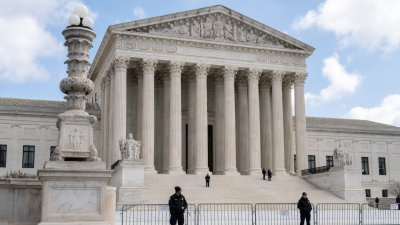
The U.S. Supreme Court recently upheld birthright citizenship under the 14th Amendment, striking down President Trump’s Executive Order 14160. The 6–3 decision reaffirmed that most persons born on U.S. soil are citizens at birth, with limited exceptions for foreign diplomats and invading forces.
What is the current issue?
Summary
SCOTUS ruled 6–3 that EO 14160 was unconstitutional under the 14th Amendment. Chief Justice Roberts wrote the majority opinion, joined by four other justices. Justice Kavanaugh concurred separately, on statutory grounds. Three justices dissented. The EO had been blocked by lower courts and never took effect.
Why it matters
- Governance: Limits executive ability to alter settled constitutional rights by fiat.
- Law: Reinforces judicial review and precedent-based constitutional interpretation.
- Social policy: Affects millions born to non-citizen parents; shapes debates on integration and public services.
- Political economy: Fuels legislative pressure on immigration reform and resource-allocation debates.
- International relations: Signals US adherence to long-standing constitutional norms to foreign governments and migrants.
Constitutional basis
Text and statutory context
The 14th Amendment provides that “all persons born or naturalised in the United States, and subject to the jurisdiction thereof, are citizens of the United States.” The Immigration and Nationality Act (1952) implements the principle. The clause embodies jus soli — citizenship by place of birth — subject to narrow exceptions.
Historical evolution and key precedents
- Post‑Civil War intent: Ratified to secure citizenship for formerly enslaved people and to reverse the Dred Scott decision.
- United States v. Wong Kim Ark (1898): Landmark decision affirming birthright citizenship for most persons born in the United States regardless of parental status.
- Modern statutory practice: INA and administrative practice long treated most US‑born children as citizens at birth.
The June 30, 2026 SCOTUS ruling
Case outcome and opinions
- Decision: 6–3 — EO 14160 struck down as unconstitutional under the 14th Amendment.
- Majority: Opinion by Chief Justice Roberts; joined by Justices Sotomayor, Kagan, Barrett and K. Brown Jackson.
- Concurrence: Justice Kavanaugh agreed with the result but wrote that the EO violated federal law rather than necessarily the Constitution.
- Dissent: Justices Thomas, Alito and Gorsuch. Justice Thomas disputed the majority’s historical interpretation of the 14th Amendment.
- Exceptions preserved: Children of foreign diplomats and occupying military forces remain outside birthright citizenship.
- Practical note: EO 14160 never took effect; it had been enjoined by lower courts.
Judicial review and separation of powers
The ruling reaffirmed the judiciary’s role as a check on executive action that conflicts with constitutional text and precedent. It limited presidential capacity to redefine citizenship by executive order. The decision channels any policy change to Congress or, ultimately, to constitutional amendment if lawmakers choose that path.
Legislative avenues and challenges
- Statutory change: Congress can pass immigration or nationality statutes, though such statutes must respect the Constitution as interpreted by SCOTUS.
- Constitutional amendment: Most difficult route; requires supermajorities in Congress and state ratification.
- Political reality: Polarised politics make durable statutory reform difficult. President’s call for Congress to act shifts the burden to legislators.
Implications for immigration policy and political debate
- Policy focus shifts: From executive unilateralism to legislative negotiation on immigration, enforcement, and benefits.
- Public debate driver: Rates of births to unauthorised immigrant mothers rose historically from about 1.2 lakh (120,000; ~3%) in 1990 to nearly 3.9 lakh (390,000; ~9%) in 2006–07, declined after 2008, and reached ~9% by 2023. These figures inform political claims and policy urgency.
- Administrative impact: Federal and state agencies must continue to recognise citizenship for most US‑born persons; any change would require new statutory or constitutional arrangements and administrative planning.
Comparative perspective: United States and India
| Dimension | United States | India |
|---|---|---|
| Primary principle | Jus soli under 14th Amendment; broad birthright citizenship with narrow exceptions. | Mixed model. Citizenship Act, 1955 originally wide jus soli; amendments from 1987 and 2004 added parental citizenship conditions. |
| Legal change mechanism | Judicial interpretation, Congressional statute, constitutional amendment. | Parliamentary amendment to Citizenship Act; constitutional amendment rarely used for citizenship rules. |
| Policy drivers | Civil‑rights history; migration flows and political debate on unauthorised immigration. | Concerns about illegal migration, national security, demographic pressures, and regional migration (e.g., Bangladesh border concerns). |
Socio‑political and ethical dimensions
- Historical justice: Birthright citizenship was designed to secure civil and political integration for formerly enslaved populations.
- Ethical concerns: Denying citizenship to persons born within national territory raises risks of statelessness, social exclusion and a permanent disadvantaged class.
- Security and sovereignty arguments: Opponents argue broad jus soli may incentivise unauthorised migration; proponents stress rights, integration and equal protection.
- Administrative ethics: Any reform must consider records, identity documentation, welfare access and children’s rights.
Operational and governance challenges
- Implementation: Even with statutory change, identifying affected persons and applying new rules would be administratively complex.
- State‑federal coordination: Vital for issuance of identity documents, access to services and schools.
- Judicial litigation: Any new statutory limits would face likely constitutional challenges and litigation timelines.
Model Questions
1. Examine the constitutional basis of birthright citizenship in the United States, tracing its evolution from the 14th Amendment to recent Supreme Court rulings. [GS-II: Constitution of India & Polity]
Condensed answer: The 14th Amendment grants citizenship to those born or naturalised in the US and subject to its jurisdiction, establishing jus soli. Wong Kim Ark (1898) affirmed broad birthright citizenship. The June 30, 2026 SCOTUS ruling struck down EO 14160 as unconstitutional (6–3), reaffirming precedent. The case illustrates constitutional text, historical intent, and the role of judicial interpretation against executive attempts to alter citizenship policy.
2. Compare the principle of birthright citizenship in the United States with citizenship rules in India. Assess policy trade‑offs each country faces. [GS-II: Governance]
Condensed answer: The US follows broad jus soli under the 14th Amendment with narrow exceptions. India follows a mixed model: original jus soli narrowed by 1987 and 2004 amendments to the Citizenship Act requiring parental citizenship or non‑illegal status. Trade‑offs: US model favours inclusion and integration but raises migration debates; India’s model limits automatic citizenship to address illegal migration and security but risks excluding children born domestically.
3. Analyse the interplay between executive action, legislative authority and judicial review in the context of the SCOTUS decision on EO 14160. What legislative paths remain for changing citizenship rules? [GS-II: Governance]
Condensed answer: The ruling shows judiciary checking executive attempts to redefine constitutional rights. Executive orders cannot override constitutional text or controlling precedent. Legislative paths: Congress may enact statutes altering immigration benefits, but statutes must conform to the Constitution; a constitutional amendment is possible but politically and procedurally onerous. Political polarisation and litigation risk make durable legislative change difficult.
4. Discuss the socio‑historical origins of birthright citizenship in the US and evaluate the ethical and societal implications of restricting it. [GS-I: Modern World History]
Condensed answer: Birthright citizenship grew from post‑Civil War aims to guarantee citizenship to former slaves and counter Dred Scott. Ethically, restricting it risks statelessness, social exclusion and an entrenched underclass. Societally, limits could hinder integration, complicate service delivery and provoke litigation. Advocates for restriction cite sovereignty and law enforcement; trade‑offs require careful legal and humanitarian consideration.
Last Modified: July 5, 2026