
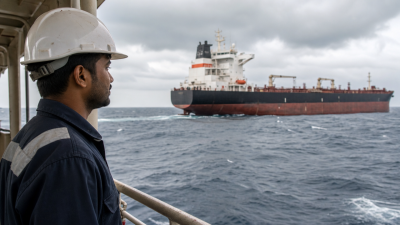
India faces a seafarer protection crisis after the MV Smyrtos episode: an Indian captain is in UK custody, the vessel was described as “stateless”, and international bodies urged depoliticisation of shipping amid attacks that have killed seafarers. The incident has revived debate on Indians serving on sanctioned or high‑risk ships.
What is the issue?
Indian seafarers account for about one‑fifth of the global seafaring workforce — over 5 lakh registered, ~3.2 lakh active. They earn foreign exchange of roughly USD 6–9 billion annually. Recent events (MV Smyrtos, arrest of Captain Ajay Pant, attacks on merchant ships) expose legal, security and livelihood risks when crew serve on sanctioned or “shadow‑fleet” vessels.
Why it matters for governance and national interest
- Economic: Remittances and foreign exchange from seafarers support trade and household incomes.
- Diplomatic: Arbitrary arrests abroad create bilateral tensions and require consular/diplomatic resources.
- Security: Attacks and contested jurisdiction on maritime routes endanger lives and India’s maritime commerce.
- Rule of law: Unilateral sanctions and “stateless” ship operations test international maritime legal frameworks and India’s policy coherence.
Legal framework and contesting claims
UN versus unilateral sanctions
UN Security Council sanctions are binding under international law. Unilateral measures by states or blocs (UK, EU, US) are not universally binding and their extraterritorial application is contested. This creates legal uncertainty for seafarers operating on vessels linked to sanctioned entities.
Maritime law fundamentals
- UNCLOS and flag state: Flag state has primary jurisdiction on the high seas. Registration confers legal status and protections.
- Stateless vessels: Ships without a legitimate flag can be treated as stateless; they lack the protection of a flag state and may be boarded or detained under coastal‑state authority.
- Jurisdictional conflicts: When a ship enters territorial waters of a state enforcing unilateral sanctions, crew may face prosecution under that state’s laws despite absence of universal consensus.
Geopolitical and maritime security dimensions
- Shadow fleets: Vessels that change identity/registry to evade sanctions complicate enforcement and increase risks to crews.
- Attacks on merchant shipping: International Maritime Organization reported numerous attacks; 14 seafarers have died in over 40 attacks recently, prompting calls to depoliticise shipping.
- Strategic chokepoints and routes: Escalation in conflicts affects insurance, route security and costs for shipping firms employing Indian crew.
Case study: MV Smyrtos and Captain Ajay Pant
- Incident facts: Captain Ajay Pant was arrested after the MV Smyrtos, linked to the Russian shadow fleet and carrying ≈98,000 tonnes of crude, was intercepted and described by UK authorities as stateless.
- Legal exposure: Captain Pant faces prosecution in the UK under alleged breach of UK sanctions; he remains in custody and the Indian High Commission is monitoring the case.
- Crew status: 24 crew (Indian and Georgian nationals) remain aboard, anchored off Weymouth; their legal and welfare status is precarious.
- Policy response: Directorate General of Shipping (DGS) advises seafarers to assess risks but has not imposed a blanket ban on serving on sanctioned vessels.
Social and human‑rights implications
- Livelihood vs risk: Higher pay on certain vessels attracts seafarers despite legal and physical dangers.
- Detention consequences: Arrests and prolonged legal processes cause financial hardship, family distress and mental health issues.
- Welfare gaps: Existing insurance, repatriation and legal assistance mechanisms are uneven for crews on high‑risk or irregular ships.
India’s policy stance and institutional roles
- Directorate General of Shipping: Issues advisories; no blanket prohibition. Focus on awareness, pre‑employment checks and crew safety guidance.
- Diplomacy and multilateral engagement: India raised maritime security concerns at the UN Security Council and works through IMO and ILO to protect seafarer rights.
- Consular support: High Commissions provide monitoring and legal assistance but capacity is strained during complex prosecutions abroad.
Operational and governance challenges
- Information asymmetry: Seafarers and manning agents may lack reliable data on vessel ownership, flag legitimacy and sanction status.
- Enforcement gaps: Difficulty in policing shadow fleets; flag hopping and forged documentation undermine oversight.
- Policy trade‑offs: A blanket ban would protect lives but reduce earning options and affect remittances; permissive policy increases legal and safety exposure.
Ethical considerations
- State duty: Government must protect citizens working abroad and provide timely consular and legal support.
- Individual autonomy: Seafarers have the right to choose employment but require full information about legal and safety risks.
- Equity: Policies must avoid pushing the most vulnerable into riskier employment while preserving legitimate livelihoods.
Policy recommendations and operational measures
| Measure | Short term | Medium–long term |
|---|---|---|
| Advisory regime | Clearer DGS advisories listing risk indicators, banned registries and pre‑deployment checks. | Mandatory pre‑clearance for certain vessel types; centralised digital registry of verified ships and manning agents. |
| Consular & legal support | Rapid legal aid teams and emergency repatriation fund for detained seafarers. | Bilateral protocols with major jurisdictions on handling cases involving Indian crew; MOUs for legal cooperation. |
| Insurance & contract safeguards | Promote hull crew insurance covering detention, legal costs and repatriation. | Standard contract clauses forbidding deployment to flagged‑for‑risk vessels; monitoring of compliance. |
| International advocacy | Use IMO, ILO and UNSC forums to press for seafarer protection and depoliticisation of shipping. | Push for clearer multilateral norms on extraterritorial sanctions affecting mariners and a mechanism for safe passage. |
| Employment alternatives | Skill upgradation and placement on non‑sanctioned trades and offshore energy sectors. | Incentivise Indian tonnage and domestic ship registry reforms to broaden safe employment options. |
Practical guidance for policy implementation
- Data collection: Systematic recording of incidents involving Indian seafarers to inform policy and risk mapping.
- Outreach: Awareness programmes at maritime training institutes and among manning agencies about sanction risks and checking flag authenticity.
- Bilateral engagement: Negotiate case‑handling protocols with sanctioning states to protect seafarer rights and ensure due process.
- Regulatory coherence: Align DG Shipping advisories with MEA, MHA and maritime intelligence inputs for coordinated action.
Model Questions
1. Analyse the ‘Indian Seafarers and Sanctioned Ships Dilemma’ from legal and geopolitical perspectives, and explain India’s approach to unilateral sanctions and its implications for the seafaring workforce. [GS-II: International Relations]
Discuss distinction between UN binding sanctions and unilateral measures; explain UNCLOS principles—flag state jurisdiction and problems posed by stateless or shadow fleets; cite Captain Ajay Pant/MV Smyrtos as case study; assess diplomatic, consular and legal implications for India’s 3.2 lakh active seafarers; recommend multilateral advocacy at IMO/UNSC and bilateral protocols to safeguard crews while protecting national interests.
2. Examine the economic and social implications of Indian seafarers serving on sanctioned vessels and evaluate whether current DGS guidance is adequate. [GS-III: Economic Development]
Outline economic contribution (USD 6–9 billion) and livelihood dependence; detail risks—detention, legal prosecution, attacks causing fatalities; critique DGS advisory posture as necessary but limited: awareness without mandatory safeguards leaves gaps in legal aid, insurance and enforcement; recommend pre‑deployment checks, mandatory insurance and a dedicated repatriation/legal fund to protect incomes and welfare.
3. Critically evaluate the role of UNCLOS, IMO and other international frameworks in protecting seafarers caught in geopolitical disputes and unilateral sanctions. [GS-II: International Relations]
Explain UNCLOS remit—high seas regime, flag state jurisdiction—and its limits against extraterritorial sanctions and shadow fleets; assess IMO and ILO roles in safety and labour standards; note recent calls to depoliticise shipping and reported attacks; argue for clearer multilateral norms on extraterritorial application of national sanctions and enhanced IMO mechanisms for seafarer protection.
4. Discuss the ethical dilemmas in balancing seafarers’ livelihood, national economic interests and compliance with international norms; propose a multi‑pronged strategy for India. [GS-IV: Ethics, Integrity and Aptitude]
Identify ethical tension: individual autonomy and need for income versus state duty to protect citizens from undue harm; highlight information asymmetry and disproportionate risks for vulnerable crews. Propose strategy: stronger advisories, legal/consular backup, insurance and repatriation support, awareness and training, diplomatic engagement and push for clearer international rules—ensuring fairness while preserving livelihoods.
Last Modified: June 27, 2026