
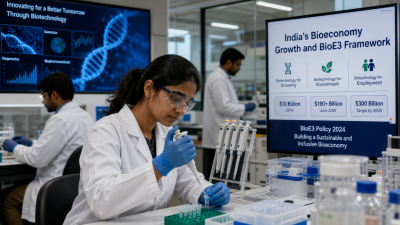
As of mid‑June 2026 India’s bioeconomy exceeds $190 billion, up from about $10 billion in 2014, and contributes nearly 5% of GDP. The government targets a $300 billion bioeconomy by 2030 under the BioE3 (Biotechnology for Economy, Environment and Employment) policy and a ₹1 lakh crore RDI Fund supports long‑term technology financing.
What is the current issue
Rapid expansion of biotechnology activity across healthcare, genomics, diagnostics, biopharmaceuticals and bio‑energy. Growth is driven by the BioE3 policy (approved 2024), 11,800+ biotech startups, public RDI financing, and emerging indigenous technologies and clinical innovations.
Why this matters for governance, economy and security
- Economic growth: Nearly 5% contribution to GDP and potential export earnings; 2030 target implies higher value addition and industrial clustering.
- Healthcare access: Affordable CAR‑T, next‑generation antibiotics, genomics and precision medicine reduce treatment costs and improve outcomes.
- Employment: High‑skilled job creation across R&D, manufacturing, regulatory, clinical services and bio‑logistics.
- Environment & energy security: Bio‑energy and circular solutions (e.g. steel‑slag road technology) reduce landfill, fossil fuel dependence and emissions.
- Strategic technology: Domestic capability in critical biologics, diagnostics and genomics strengthens national resilience and international competitiveness.
The BioE3 framework: objectives, features and immediate impact
Objectives
Promote biotechnology for economy, environment and employment; position India as a global biotechnology hub; strengthen indigenous R&D, commercialisation and skills.
Key features
- Policy support: Coordinated incentives, regulatory simplification and targeted challenges (D.E.S.I.G.N for BioE3) to involve students and researchers.
- Finance: ₹1 lakh crore RDI Fund for long‑term technology financing and scale‑up capital.
- Sector focus: Healthcare, genomics, diagnostics, biopharmaceuticals, and bio‑energy including SAF and biofuels.
- Innovation to market: Support for clinical translation, pilot manufacturing facilities and biotech parks.
Impact to date
- Scale: Bioeconomy has nearly doubled since 2020 and expanded almost twenty‑fold since 2014.
- Startups: Over 11,800 biotech startups contributing to product pipelines and employment.
- Clinical and tech breakthroughs: Progress on next‑generation antibiotics, affordable CAR‑T cell therapy, genomics and precision medicine.
- Evidence base: India Bioeconomy Report (IBER) 2026 confirms sector metrics and growth drivers.
Drivers of expansion and the innovation ecosystem
- Policy architecture: BioE3 provides long‑term vision, challenge grants and convergence across ministries.
- Capital availability: RDI Fund plus private VC, corporate R&D and blended finance channels for scale‑up.
- Startup density: Large number of startups accelerates product development, clinical trials and manufacturing linkages.
- Academic‑industry linkages: Increased translational research, incubators and biotech parks supporting technology transfer.
- Indigenous engineering solutions: Examples such as steel‑slag road technology show circular economy application and cost savings for public infrastructure.
- Market demand: Rising domestic healthcare needs, global supply chain realignments and demand for sustainable fuels.
Multidimensional importance for national development
- Industrialisation: High value manufacturing (vaccines, biologics, diagnostics) creates skilled industrial jobs and exportable products.
- Public health: Affordable advanced therapies and diagnostics lower out‑of‑pocket expenses and improve population health metrics.
- Rural and agritech linkages: Bio‑inputs, biofertilisers, and biomass value chains create rural income streams.
- Climate and environment: Bio‑energy, waste‑to‑value processes and biodegradable bioproducts reduce emissions and pollution.
- Geopolitics: Strong domestic biotech capacity reduces strategic dependence and opens export diplomacy avenues.
Bio‑energy sector: status, issues and required policy actions
Bio‑energy forms an integral element of BioE3. Industry stakeholders have called for a single agency to coordinate bio‑fuel and Sustainable Aviation Fuel (SAF) projects to accelerate deployment and financing.
- Potential: Use of agricultural residues, dedicated energy crops and industrial biomass for power, transport fuel and SAF production.
- Barriers: Fragmented administrative responsibility, feedstock supply chain gaps, financing needs for commercial plants, and scalability of advanced conversion technologies.
- Policy measures: Establish a unified bio‑energy agency; provide fiscal support and long‑term offtake guarantees; invest in biomass logistics and regional processing hubs; support technology validation and SAF blending mandates linked to aviation policy.
Challenges in reaching $300 billion and strategic responses
| Challenge | Policy response |
|---|---|
| Regulatory complexity and long approval timelines | Single‑window regulatory framework; risk‑proportionate approvals; clear clinical and biosafety pathways |
| Insufficient skilled workforce | Expand specialised curricula, priority fellowships, industry‑sponsored training and translational research programmes |
| Funding gaps for scale‑up | Operationalise RDI Fund rapidly; encourage blended public‑private financing and tax incentives for manufacturing capex |
| Supply chain and infrastructure deficits | Biotech parks, cold‑chain investment, regional biomass hubs, and dedicated clinical trial networks |
| Market access and export standards | Align domestic standards with international norms, export facilitation, and bilateral R&D partnerships |
Operational priorities for policy implementation
- Regulatory reform: Create a Biotechnology Regulatory Facilitation Unit for single‑window clearances and post‑market surveillance.
- Finance and incentives: Derisk early commercialisation through concessional debt, matching grants and R&D tax credits.
- Skills and human capital: Scale postgraduate training, clinical research networks and vocational pathways for bio‑manufacturing.
- Public procurement: Use government procurement in health and defence to provide anchor demand for domestically produced biologics and diagnostics.
- International collaboration: Strategic partnerships for technology transfer, joint clinical trials and market entry.
- Ethics and biosafety: Strengthen institutional biosafety committees, data governance for genomics and patient protection frameworks.
Model Questions
- Examine the main drivers behind the recent expansion of India’s bioeconomy and assess its importance for India’s economic development and public health. [GS-III: Economic Development]
- Critically evaluate the BioE3 framework with reference to its objectives, instruments and early outcomes for innovation and entrepreneurship. [GS-III: Science & Technology]
- Identify key challenges to achieving a $300 billion Indian bioeconomy by 2030 and propose an integrated strategy to address them. [GS-III: Economic Development]
- Discuss the role of bio‑energy within India’s bioeconomy and outline policy measures required to scale bio‑fuels and SAF projects. [GS-III: Environment & DM]
Answer should state growth metrics ($190 billion, nearly 5% of GDP), BioE3 policy and RDI Fund, startup ecosystem (11,800+), and indigenous innovations (CAR‑T, genomics, antibiotics). Analyse economic effects (exports, manufacturing, jobs), health outcomes (affordable advanced therapies, diagnostics), rural linkages (bioinputs, biomass), and strategic advantages (supply‑chain resilience, technology leadership).
Answer should outline BioE3 aims (Economy, Environment, Employment), instruments (D.E.S.I.G.N challenge, RDI Fund, regulatory facilitation), sector focus (healthcare, genomics, biopharma, bio‑energy), and early outcomes (startups, clinical breakthroughs). Evaluate strengths (funding, challenge grants, market push) and gaps (regulatory delays, scale‑up finance, skill shortages), with recommendations for tighter policy‑industry linkages.
Answer should list challenges: regulatory complexity, funding shortfall for scale‑up, skilled manpower gap, infrastructure and market access. Propose strategy: single‑window regulation, rapid deployment of RDI Fund and blended finance, skill pipelines and industry training, biotech parks and supply‑chain hubs, public procurement for market creation, and international collaborations for technology and exports.
Answer should describe bio‑energy uses (power, transport fuel, SAF), current calls for a single coordinating agency, feedstock and logistics barriers, and financing needs. Recommend measures: create unified bio‑energy agency, biomass collection hubs, fiscal incentives and offtake guarantees, technology validation centres, SAF blending mandates, and integration of bio‑energy targets into national energy planning.