
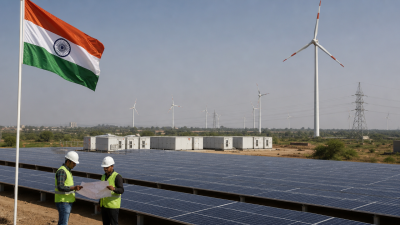
India remains on a transition path from fossil fuels but faces a complex trade-off: installed non‑fossil capacity and GDP emissions intensity have improved, yet energy intensity in several manufacturing sectors shows stagnation or reversal. Climate risk and large financing gaps add urgency to operational policy and investment choices.
What is current Issue?
Core facts
- COP26 targets — 500 GW non‑fossil capacity by 2030; 50% of energy from renewables; reduce projected emissions by 1 billion tonnes; cut carbon intensity by 45% from 2005 levels by 2030; net‑zero by 2070.
- Progress — Installed non‑fossil capacity 283.5 GW (by March 2026); non‑fossil share of installed capacity reached 50%; GDP emissions intensity down ~36% from 2005 levels.
- Risks — Nearly 90% of planned renewable capacity faces high or critical climate risk exposure by 2030. Investing 2% of RE project capex in resilience could cut potential losses from USD55bn to USD27bn (saving USD28bn).
- Financing — Net‑zero needs cumulative USD22.7 trillion by 2070 with a USD6.5 trillion shortfall; the power sector needs USD4.3 trillion by 2050 with a USD2 trillion gap. Domestic institutional investors could supply about USD1.2 trillion by 2050.
Why it matters for governance and economy
- Energy security — Fuel substitution and uneven intensity improvements can raise import dependency and local pollution.
- Economic competitiveness — High energy intensity in industry raises production costs and limits export competitiveness.
- Fiscal and financial stability — Large financing gaps and climate risks expose public and private balance sheets without de‑risking instruments.
- International relations — Delivery on COP26 pledges affects India’s access to climate finance and trade negotiations involving carbon measures.
India’s COP26 commitments and measured progress
- Capacity and share — Trajectory towards 500 GW non‑fossil by 2030 continues; non‑fossil share of installed capacity at 50%.
- Emissions intensity — Economy‑wide carbon intensity reduced by ~36% relative to 2005, short of the 45% COP26 target but on a clear downward path.
- Gap to goal — Technology deployment, financing and climate resilience in project planning determine whether targets are met at acceptable cost and risk.
Energy‑intensity paradox: drivers and sectoral picture
Definition
Energy intensity = energy consumed per unit of GDP. Paradox: macro improvements in emissions intensity coexist with high or rising energy intensity in key sectors.
Main drivers
- Fuel substitution — Use of petroleum coke in place of coal or electricity increases energy intensity and emissions per unit output in some industries.
- Energy price and demand effects — Price movements and slower growth in manufacturing alter energy use patterns and efficiency incentives.
- Technology and investment gaps — Older plant stock and limited adoption of best available technologies sustain high intensity.
High‑intensity sectors
- Manufacturing — Largest energy consumer. Sub‑sectors with high intensity: cement, basic metals, chemicals, pulp & paper, textiles.
| Dimension | Status |
|---|---|
| Non‑fossil installed capacity | Reached 50% share; 283.5 GW installed |
| GDP emissions intensity | Reduced ~36% from 2005 |
| Sectoral energy intensity | Fluctuating / stagnant in heavy industries |
Policy and institutional framework
- Energy Conservation Act (2001; amended 2022) — Mandates renewable energy obligations for large consumers; proposes a carbon credit trading scheme to create market incentives.
- Bureau of Energy Efficiency and related schemes — Standards, energy audits, and market mechanisms (for example, performance‑based programmes) remain central to lowering intensity.
- Corporate and market actions — Private initiatives can raise ambition: example — Colt Data Centre Services cut GHG emissions 27% vs 2019 baseline and achieved 100% renewable electricity for Scope 2, with 90% renewable share across Scopes 1–3.
Climate risk to renewable energy projects and operational responses
- Exposure — Nearly 90% of planned renewable capacity faces high or critical climate risk by 2030, affecting generation, asset life and revenue streams.
- Cost of resilience — Small resilience spending (2% of capex) on planned RE projects can reduce expected losses by USD28bn according to recent assessment.
- Mitigation measures — Integrate climate risk into site selection; upgrade design standards for extreme weather; invest in resilient O&M, storage and grid hardening; use insurance and contingency finance.
Financing requirements and mobilisation options
| Item | Amount (USD) | Gap |
|---|---|---|
| Net‑zero cumulative need (to 2070) | 22.7 trillion | 6.5 trillion shortfall |
| Power sector (to 2050) | 4.3 trillion | 2.0 trillion gap |
| Domestic institutional mobilisation potential (to 2050) | 1.2 trillion | — |
- Instruments — Green bonds, sustainability‑linked loans, blended finance, concessional windows, transition bonds, guarantees and pooled risk facilities.
- Market mechanisms — Carbon credit trading under the EC Act can generate finance for low‑carbon investments if design ensures price signals and transparency.
- De‑risking and incentives — Public guarantees, viability gap funding, and first‑loss facilities attract private capital and lower financing cost for infrastructure and storage.
Sectoral strategies: manufacturing and power
- Manufacturing
- Mandatory energy audits, benchmarking and adoption of best available technologies.
- Fuel switching and process electrification where feasible; promote hydrogen for hard‑to‑abate processes.
- Industrial cluster electrification, waste‑heat recovery and circular material flows to reduce intensity.
- Power sector
- Accelerate storage deployment and flexible generation to integrate variable renewables.
- Strengthen transmission and regional markets to avoid curtailment and improve capacity utilisation.
- Embed climate resilience in project appraisal and procurement; insurers and lenders to require resilience plans.
Priority actions for policy and implementation
- Align incentives — Price signals, carbon markets and targeted subsidies to favour low‑intensity production and resilient RE.
- Mobilise capital — Use blended finance, domestic institutional pools and regulatory reforms to channel USD1.2 trillion potential and attract foreign finance.
- Project‑level resilience — Mandate resilience checks in appraisal; set minimum resilience capex for large RE projects.
- Sectoral delivery plans — Sector roadmaps with measurable intensity targets, technology timelines and funding pathways for heavy industries.
- Regulatory certainty — Stable long‑term policy signals to reduce perceived risk and lower cost of capital.
Model Questions
1. Despite progress on aggregate emissions and renewable capacity, India faces an ‘energy intensity paradox’. Analyse the causes of this paradox and recommend policy measures to resolve it. [GS-III: Economic Development]
Answer: The paradox arises because economy‑wide emissions intensity has fallen while energy intensity in heavy industries remains high due to older plant stock, fuel substitution (petroleum coke), energy price effects and slower manufacturing growth. Policy measures: enforce energy audits and benchmarking, mandate adoption of best available technologies, provide incentives for electrification and waste‑heat recovery, implement carbon pricing/credit trading, and subsidise capital for retrofit and process modernisation.
2. Assess the main financing and climate‑risk challenges for India’s renewable expansion and propose measures to mobilise capital and enhance project resilience. [GS-III: Environment & DM]
Answer: Challenges: cumulative USD22.7 trillion need to 2070 with USD6.5 trillion shortfall; power sector USD4.3 trillion need with USD2 trillion gap; nearly 90% of planned RE faces high climate risk. Measures: mobilise domestic institutional capital, expand green bonds and blended finance, use guarantees and first‑loss facilities, require resilience capex (2% example lowers expected losses), integrate climate risk in project appraisal and use insurance and contingency funds.
3. Examine how the Energy Conservation Act (2001, amended 2022) and related institutional measures can drive reductions in energy intensity, especially in manufacturing. [GS-III: Economic Development]
Answer: The Act’s renewable obligations for large consumers and proposed carbon credit trading create regulatory and market incentives. Supporting measures: strengthen Bureau of Energy Efficiency programmes (energy audits, standards, PAT‑type schemes), mandate disclosure and benchmarking for industrial clusters, link fiscal incentives to verified intensity reductions, and enable carbon credit revenues to finance retrofits. Combined regulatory and market tools raise compliance and investment in efficiency.
4. Suggest a financing and policy roadmap for bridging India’s green transition gaps, indicating roles for public finance, domestic institutional investors and private sector practices. [GS-III: Economic Development]
Answer: Roadmap: public finance to provide guarantees, concessional debt and viability support for early projects; mobilise domestic institutional investors via regulated green instruments and pooled investment vehicles (potential USD1.2 trillion); scale private finance through green bonds and SLBs; deploy blended finance to derisk returns; require corporate disclosure and resilience plans (corporate example: Colt DCS achieving large RE share) to lower perceived risk and attract long‑term capital.
Last Modified: June 26, 2026