
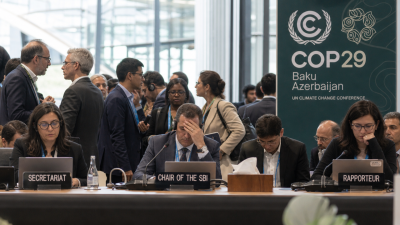
Recently, UN officials warned that climate change and a global energy crisis are driven by continued dependence on fossil fuels. UNFCCC talks have stalled on finance for loss and damage and on a credible fossil‑fuel phaseout, while calls for stronger methane cuts and equitable transition measures have grown louder.
What is the current issue?
UNFCCC processes are in deadlock. Annual conferences, including recent CoP meetings and SB64 in Bonn, have not secured concrete commitments from developed nations on loss & damage finance or effective fossil‑fuel phaseout. Political momentum exists for transition discussions, but key emitters remain outside some forums and subsidy phaseout is stalling.
Why it matters for governance and security
- Economic risk: Recent assessments attribute trillions of USD in global GDP damage to historic emissions, with substantial losses in India and Brazil. Continued emissions raise adaptation costs and fiscal burden.
- Energy security: Rapid transition without planning can destabilise energy supplies and raise prices, affecting development and social stability.
- International relations: Deadlock on finance and responsibility fuels mistrust between developed and developing countries, complicating cooperation on trade, finance and technology transfer.
- Environmental limits: Continued fossil‑fuel emissions and high methane levels make the 1.5°C goal increasingly difficult to attain, raising systemic climate risks.
UNFCCC deadlock: causes and immediate consequences
Causes
- Finance shortfall: Developed nations have not pledged sufficient loss & damage or adaptation finance. Negotiations on the Global Goal on Adaptation were deferred.
- Subsidy politics: Domestic political resistance and calls for international coordination delay removal of fossil‑fuel subsidies.
- Fragmented participation: Some transition fora exclude major emitters, limiting universality and burden‑sharing.
- Industry influence: Delegations noted attempts by fossil‑fuel interests to challenge scientific premises and policy options.
Consequences
- Climate target credibility: Rising emissions and stalled methane reductions put 1.5°C beyond reach without faster action.
- Increased adaptation deficit: Vulnerable countries face growing losses and unmet adaptation needs.
- Policy fragmentation: Ad hoc national measures replace coordinated global pathways, raising trade and investment risks.
Fossil‑fuel transition: global challenges and dynamics
- Technical and infrastructural lock‑in: Existing capital stock in oil, gas and coal creates stranded‑asset risks and slows substitution.
- Social and labour adjustment: Regions dependent on fossil industries require reskilling, income support and regional economic plans.
- Finance and investment flows: Transition requires scaled public and private finance for renewables, grids, storage and low‑carbon industry.
- Methane and short‑lived pollutants: High methane emissions from fossil operations demand immediate industry controls to reduce near‑term warming.
- Governance gaps: Lack of global consensus on subsidy phaseout, carbon pricing and transition timelines sustains uncertainty.
Climate finance: adaptation and loss & damage
Adaptation finance remains underfunded. Developing groups sought a tripling of adaptation finance in Bonn; omission of this commitment increased mistrust. Loss & damage finance has few reliable pledges. Donor reluctance, competing fiscal priorities and weak delivery mechanisms slow disbursement. Predictable, concessional finance and transparent governance of funds are essential for implementation on the ground.
India: commitments, achievements and constraints
- Revised NDCs: India raised its emission‑intensity reduction target to 47% (from 2005 levels) for 2031–35 and increased non‑fossil electricity share to 60% by 2035.
- Land‑use and sequestration: Forest Survey data show carbon stock rising from 6.6 to 7.2 Gt CO2e over a decade. Afforestation targets for degraded lands remain unmet.
- Policy instruments: Expansion of renewables, solar programmes and energy efficiency missions support targets. Grid integration and storage remain challenges.
- Constraints: Financing gap for clean energy investment, need to secure reliable baseload, industrial emissions from manufacturing and transport, and fiscal pressures on subsidy reform.
Ethical and equity considerations
- Historical responsibility: High historical emitters bear larger accountability for past emissions and associated economic damage.
- Distributional impacts: Vulnerable populations and low‑income countries face disproportionate loss and damage despite limited contribution to past emissions.
- Intergenerational equity: Current policy inertia imposes higher costs and risks on future generations.
- Procedural justice: Inclusive decision‑making and access to finance and technology are central to a fair transition.
International cooperation and governance deficits
| Dimension | Developed nations | Developing nations |
|---|---|---|
| Primary expectation | Provide finance, technology transfer, lead emissions cuts | Secure adaptation, pursue low‑carbon growth, require support |
| Current gap | Insufficient finance commitments; slow subsidy phaseout | High adaptation needs; limited fiscal space and technology access |
Policy options for a managed, fair transition
- Finance mobilisation: Scale concessional finance, mobilise private capital via de‑risking instruments, operationalise predictable loss & damage mechanisms.
- Subsidy reform: Implement phased removal of fossil‑fuel subsidies combined with targeted social protection for affected households.
- Technology and capacity: Expand technology transfer, joint R&D, and support for grid modernisation and storage deployment.
- Just transition measures: National transition plans for workers and regions, linked conditional finance and technical support from developed partners.
- Stronger short‑term action: Rapid methane controls in fossil operations and deployment of high‑impact mitigation in near term to reduce warming trajectory.
Model Questions
1. Analyse the reasons for the current UNFCCC deadlock on climate finance and fossil‑fuel phaseout. What are the implications of this deadlock for the goal of limiting warming to 1.5°C? [GS-III: Environment & DM]
The deadlock arises from inadequate developed‑country commitments on loss & damage and adaptation finance, political resistance to subsidy removal, fragmented participation in transition fora, and industry influence challenging science. Consequences include continued high emissions and methane levels, reduced credibility of the 1.5°C target, rising adaptation costs, greater economic losses for vulnerable states, and weaker global cooperation on coordinated mitigation and adaptation pathways.
2. Discuss the hurdles to achieving a fair global transition away from fossil fuels and outline the roles of developed and developing countries in ensuring equity and stability. [GS-II: International Relations]
Hurdles include stalled subsidy phaseout, finance and technology gaps, social dislocation in fossil‑dependent regions, and exclusion of major emitters from some dialogues. Developed countries must provide finance, concessional loans, technology transfer and lead deep emissions cuts. Developing countries must pursue low‑carbon growth, strengthen governance and transparently use support. Jointly they need binding financing arrangements, transition roadmaps and social protection measures to sustain equity.
3. Evaluate India’s revised NDCs and forestry performance in the context of global climate action deadlocks. What challenges does India face in meeting its targets? [GS-III: Economic Development]
India’s stronger NDCs—47% emission‑intensity reduction and 60% non‑fossil power by 2035—raise ambition. Forest carbon gains show progress, but afforestation on degraded lands lags. Challenges include mobilising finance for clean energy and grids, ensuring baseload and energy access, scaling industrial decarbonisation, meeting implementation capacity, and securing international support amid global finance deadlocks.
4. Examine the ethical and intergenerational equity issues raised by the stalled fossil‑fuel phaseout and inadequate loss & damage finance. Suggest policy principles to address these dilemmas. [GS-IV: Ethics, Integrity and Aptitude]
The ethical issues include historical responsibility of major emitters, unequal burden on low‑emission countries, and passing greater climate risks to future generations. Policy principles should include polluter‑pays for loss & damage, proportional burden‑sharing based on capacity and historical emissions, transparency and participation of affected communities, and targeted support for adaptation and livelihood protection to uphold intergenerational and distributive justice.
Last Modified: June 28, 2026