
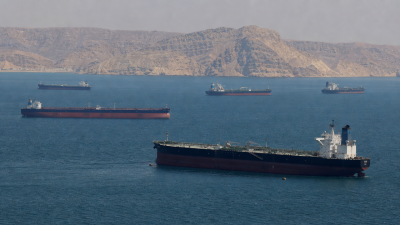
On 23 June 2026 Iran reaffirmed administrative control over the Strait of Hormuz and announced an agreement releasing USD 12 billion in frozen assets plus a ship‑movement communication channel. Concurrent diplomatic talks and a temporary US oil sanctions lift aim to reduce tensions and keep the chokepoint open for commerce and energy flows.
What is the current issue
- Key facts: Iranian parliamentary speaker Mohammad Bagher Ghalibaf said Tehran will retain administration of the Strait; an agreement finalised the release of USD 12 billion in frozen assets and created a communication channel for ship movements.
- Sanctions and shipments: The US Treasury temporarily lifted sanctions on Iranian oil until 21 August 2026 to support diplomacy; Iran increased open shipments through the Strait to about 6 million barrels on three sanctioned supertankers.
- Security environment: Conflicting announcements of an IRGC‑linked closure were met by CENTCOM reports that commercial traffic continued. Kpler data showed 71 confirmed transits over a recent weekend (peak 35), below pre‑crisis norms of 100–150 daily vessels.
- Insurance reaction: Lloyd’s and Chubb announced a USD 400 million marine war risk consortium; Chubb’s CEO warned mines remain the greatest uncertainty.
Why this matters
- Governance: Control assertions affect regional authority, maritime regulation and incident management protocols.
- Economy: The Strait carries a large share of global oil and liquefied gas exports; supply disruption raises prices and trade costs.
- Security: Mine threats and ambiguous closure claims elevate military and naval responses, increasing escalation risk.
- International relations: Great‑power and regional diplomacy, sanctions policy and mediation determine continuity of global energy flows.
Geopolitical significance
- Chokepoint function: The Strait links the Persian Gulf to the Arabian Sea and the wider Indian Ocean. A substantial portion of seaborne oil and LNG transits this route.
- Leverage and control: Political control over the Strait confers bargaining power in regional disputes and sanctions regimes.
- Actor map: Iran, Gulf producers, the United States, European insurers and Asian importers (notably India, China, Japan, South Korea) are direct stakeholders; mediators such as Qatar and Pakistan have a facilitation role.
Economic implications for maritime trade and energy markets
- Price volatility: Threats to throughput push crude and refined product prices higher and raise market risk premia.
- Shipping costs: War risk premiums and rerouting raise freight costs. The USD 400 million insurance consortium is a market response to concentrated risk.
- Supply volumes: Increased Iranian open shipments partly restore flows, but transit counts remain below pre‑crisis levels, indicating continued market caution.
- Trade timing and contracts: Longer voyages and hedging add cost to supply chains and may prompt short‑term contractual disruptions in spot and term markets.
Maritime security challenges
| Threat | Impact | Current mitigation |
|---|---|---|
| Mines and unexploded ordnance | Physical damage, route denial, crew risk | Naval mine‑countermeasure operations, but limited clearance capacity |
| Declarations of closure / interdiction | Commercial uncertainty, potential escalation | Communication channels; naval presence and monitoring |
| State and non‑state interference | Insurance spikes, cargo diversion | Consortium insurance, convoy planning, diplomatic de‑confliction |
Effectiveness of current mechanisms
- Diplomatic engagement: High‑level talks and mediators produced asset release and ship‑movement channels. These measures lower immediate tension but do not remove security hazards.
- Operational measures: Communication protocols reduce miscalculation risks. CENTCOM reporting of continued traffic shows resilience in practice.
- Market measures: Insurance consortiums and temporary sanction lifts restore commercial incentives to use the route, yet elevated premiums and reduced daily transits show incomplete risk removal.
- Gaps: Mine clearance capacity, reliable independent monitoring and enforceable guarantees for freedom of navigation remain limited.
Implications for India’s energy security and strategic interests
- Dependence: India imports a major share of crude oil and LNG via the Strait. Disruption would raise import bills and inflationary pressure.
- Strategic posture: India’s diplomatic balance with Iran, Gulf states and the US is tested by competing security and energy priorities.
- Commercial impact: Higher freight and insurance costs affect trade competitiveness and refinery margins.
Recommended approach for India
- Diversify supply: Expand long‑term contracts with non‑Gulf suppliers, increase LNG import terminals, and accelerate renewables to reduce hydrocarbon dependence.
- Strategic reserves: Increase SPR capacity and operational readiness to manage short‑term shocks.
- Diplomacy: Maintain dialogue with Iran, Gulf states, the US and mediators to support de‑escalation and secure navigation guarantees.
- Maritime security cooperation: Strengthen intelligence sharing, naval coordination and capacity for mine‑countermeasures within IORA, and bilateral/multilateral frameworks.
- Commercial policy: Support industry through risk‑sharing mechanisms, contingency logistics planning and incentives for alternative routing where feasible.
Model Questions
1. Analyse the geopolitical significance of the Strait of Hormuz for global energy security. Discuss recent developments, including the roles of sanctions relief and diplomacy in managing tensions. [GS-II: International Relations]
India and global importers rely on the Strait as a major oil and LNG corridor. Control confers strategic leverage; recent diplomacy produced a communication channel and USD 12 billion asset release, while the US temporary sanction lift restored some commercial flows. These steps reduce immediate pressure on prices and transit incentives, but enduring security threats (mines, closure claims) mean geopolitical risk remains and require sustained multilateral engagement and operational safeguards.
2. Examine the economic implications of renewed tensions and security concerns in the Strait for maritime trade and energy markets. What measures are being used internationally to mitigate these risks? [GS-III: Economic Development]
Tensions raise crude price volatility, increase freight and war‑risk insurance costs, and disrupt contractual flows. Reduced transits below pre‑crisis norms show persistent commercial caution. Mitigation includes temporary sanction relief to normalise shipments, a USD 400 million insurance consortium to underwrite passage, diplomatic de‑escalation, convoy planning and contingency routing. Governments may also release reserves or invoke hedging to stabilise domestic markets.
3. Discuss the challenges to maritime security and freedom of navigation in the Strait of Hormuz, given conflicting reports on its status. Evaluate current mechanisms for ensuring safe commercial passage. [GS-III: Internal & External Security]
Challenges include ambiguous closure claims, mine threats, and state‑linked interdiction risks. Conflicting IRGC closure notices and CENTCOM traffic reports create operational uncertainty. Current mechanisms—diplomatic talks, ship movement communication channels, naval monitoring and insurance consortia—reduce miscalculation and financial risk but fall short on mine clearance and independent enforcement. Sustained multinational mine‑countermeasure capacity and reliable verification are needed for effective freedom of navigation.
4. How do recent developments in the Strait of Hormuz affect India’s energy security and strategic interests? Propose a coherent policy mix for India to manage evolving risks. [GS-II: Governance]
India faces higher import costs and supply risk. Policy should combine supply diversification (alternate suppliers, LNG infrastructure, renewables), expanded strategic reserves, active diplomacy with Iran, Gulf states and partners, and enhanced maritime security cooperation (intelligence sharing, mine‑countermeasure capacity). Complementary measures include industry risk‑sharing for insurance costs, contingency logistics, and refining flexibility to absorb short‑term disruptions.
Last Modified: June 23, 2026