
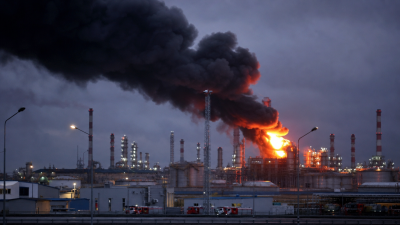
On 16 June 2026 Ukrainian drones struck the Moscow Oil Refinery in Kapotnya, causing a fire and damaging the ELOU-AVT-6 unit. The attack forms part of an intensified long‑range campaign against Russian energy infrastructure that has doubled since early 2026 and is producing domestic fuel shortages.
What is the current issue
Ukrainian long‑range strikes now reach deep into Russian territory. Kyiv and its services claimed responsibility for multiple hits on refineries, terminals and pumping facilities. Moscow reports dozens of incoming drones intercepted; one caused damage at the Kapotnya refinery. Russia faces supply constraints and emergency measures by fuel retailers and refiners.
Why it matters
Governance and security: Energy infrastructure supports military mobility, aviation and civilian services; its degradation affects operational readiness and public order. Economy: Disrupted refining capacity reduces state revenues and exports, and raises domestic prices. Society and environment: Fuel shortages, rationing and release of lower‑quality fuels affect daily life and risk local pollution. Technology: Drone and long‑range precision strike use changes defence requirements and critical infrastructure protection. International relations: Attacks on a major producer alter global markets and diplomatic alignments.
Strategic rationale behind targeting energy infrastructure
- Disrupt war economy: Damaging refining, storage and transhipment reduces revenues used to finance military operations.
- Logistical denial: Strikes constrain fuel available for ground, air and support forces and civil aviation supplied from affected refineries.
- Pressure and deterrence: Deep strikes aim to raise domestic political cost and coerce strategic concessions.
- Psychological effect: Attacks over capital cities demonstrate reach and can influence public morale.
- Target selection: Energy assets are often dual‑use; their classification depends on direct military contribution at the time of attack.
Key incidents — concise summary
- Moscow Oil Refinery, Kapotnya: Drones struck the ELOU‑AVT‑6 unit, caused fire and damage; operator is Gazprom Neft; refinery supplies jet fuel to major Moscow airports.
- Tamanneftegaz terminal, Krasnodar: SBU claimed hits on five tanks and two loading stands; fires reported at a major liquefied hydrocarbon transhipment complex.
- Kotovo, Volgograd region: Ukrainian military reported strike on an oil processing and pumping facility with resultant fire.
- Operational effects: Tatneft imposed nationwide purchase restrictions (cash only; 30‑litre limit for passenger cars). Russia extended measures permitting some refineries to dispatch lower‑quality fuels. Russia reported shooting down large numbers of drones in recent engagements.
Economic and societal ramifications
- Domestic shortages and rationing: Retail limits, cash‑only measures and quantity caps reflect local supply stress.
- Fuel quality and safety: Release of substandard gasoline and diesel raises vehicle damage risk, safety concerns and potential environmental harm.
- State revenues and war finance: Reduced refining throughput and export interruptions lower fiscal receipts for the belligerent state.
- Global market impact: Sustained disruption in a major producer elevates price volatility and forces buyers to seek alternative supplies, altering trade flows.
- Civilian services: Aviation, public transport and emergency services face operational constraints when jet fuel and diesel supplies are affected.
Ethical and legal considerations under international humanitarian law
- Distinction: Parties must distinguish military objectives from civilian objects. Energy facilities are dual‑use; lawful attack requires a demonstrable, effective contribution to military action.
- Proportionality: Expected civilian harm must not be excessive relative to concrete and direct military advantage.
- Precautionary measures: Attacking forces must take feasible steps to verify targets and minimise incidental civilian harm.
- Legal accountability: Claims of military necessity must be supported by evidence. Destruction of predominantly civilian infrastructure without clear military use may engage state responsibility and individual criminal liability.
- Practical challenge: Attribution, evidence and proving proportionality are difficult in remote and drone‑based strikes.
Evolving nature of warfare and critical infrastructure protection
Operational trends
- Long‑range precision: Increased reach allows strikes on deep targets previously considered rear areas.
- Drone proliferation: Low cost, modular payloads and swarming tactics stress conventional air defences.
- Asymmetric cost model: Attackers can impose outsized effects for limited expenditure.
Protection measures
- Layered air defence: Integrate sensors, short‑range interceptors, and directed‑energy or kinetic countermeasures.
- Electronic warfare and jamming: Disrupt UAV navigation and communications.
- Physical hardening and redundancy: Harden critical units, decentralise processing, and maintain dispersed storage to reduce single‑point failure.
- Operational measures: Fuel stockpiling, rotating reserves, export controls and contingency supply contracts.
- Cyber–physical security: Protect industrial control systems and SCADA; coordinate public‑private emergency response planning.
Geopolitical implications
- Escalation risk: Attacks within a rival’s territory raise the stakes and can provoke broader military or diplomatic responses.
- Energy market re‑calibration: Buyers diversify suppliers and may accelerate strategic reserves and alternative routes.
- Sanctions and countermeasures: Energy disruption alters the efficacy and targeting of sanctions and can shift alliance behaviour.
- Strategic signalling: Strikes communicate capability and intent to both domestic and international audiences.
India — strategic imperatives and challenges
- Energy security: Prioritise diversification of crude sources, increase strategic petroleum reserves, and expand long‑term supply contracts to absorb shocks.
- Market management: Use state oil companies to secure spot and term supplies; coordinate with IEA‑like mechanisms during crises.
- Foreign policy balance: Maintain strategic autonomy while managing relations with major suppliers and geopolitical partners.
- Domestic resilience: Strengthen refining flexibility, increase storage capacity, develop inland distribution resilience and enforce fuel quality safeguards.
- Defence and technology: Invest in indigenous counter‑UAV systems, critical infrastructure protection doctrine, and civil‑military coordination mechanisms (include entities like NCIIPC and National Disaster Management structures for preparedness and response).
Model Questions
- Examine the strategic implications of targeting energy infrastructure in contemporary conflicts, with specific reference to the Russia–Ukraine war. Discuss the ethical and legal challenges such attacks pose under international humanitarian law. [GS-II: International Relations]
- Analyse the economic ramifications of Ukraine’s campaign against Russian energy infrastructure for the belligerents and the global energy market. What measures can nations adopt to enhance energy security? [GS-III: Economic Development]
- Discuss the implications of the increasing role of long‑range precision strikes and drone technology for military strategy and protection of critical infrastructure. Use recent strikes on Russian refineries as reference. [GS-III: Internal & External Security] Explain how drones and precision munitions enable deep strikes, impose asymmetric costs and challenge existing air defences. Outline protection: layered sensors and interceptors, EW, cyber‑physical security, physical hardening, redundancy, and private‑public planning. Emphasise doctrine, training and procurement changes for resilience.
- How does the targeting of energy infrastructure in the Russia–Ukraine conflict affect global geopolitics and what strategic choices should India make to safeguard its energy and security interests? [GS-II: International Relations]
Define strategic aims: degrade war finance, disrupt logistics, and impose political cost. Use Moscow refinery and other strikes as examples. Analyse IHL constraints: distinction, proportionality, precaution and dual‑use assessment. Discuss evidentiary and accountability issues and how proportionality and military necessity should be assessed in drone and long‑range strike contexts.
Assess domestic effects: fuel shortages, retailer rationing, lower‑quality fuel release and lost export revenues. Global effects: price volatility and supply‑chain shifts. Recommend measures: diversify supplies, strategic petroleum reserves, long‑term contracts, refining flexibility, renewables expansion, demand management and international coordination for emergency releases.
Explain geopolitical effects: market volatility, shifts in alliances, and escalation risk. For India recommend diversification of suppliers, build strategic reserves, secure long‑term contracts, enhance domestic refining and renewables, pursue balanced diplomacy, and invest in indigenous critical‑infrastructure protection and defence technologies.