
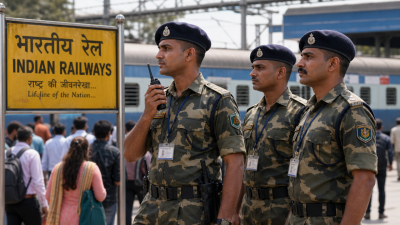
Delhi has directed a 20% reservation for ex‑Agniveers in Group C direct recruitment across selected departments, with departments required to amend rules and complete procedures by 30 June 2026. This complements central measures in Indian Railways to expand post‑service employment for Agniveers.
What is the issue
Recent directives create explicit reservation pathways for ex‑Agniveers into public service roles. The policy targets rapid absorption into uniformed Group C posts and formalises quota provisions already under development at central agencies.
Why it matters for governance and society
Policies affect manpower planning in police, fire, prisons and forest services. They convert military training into state capacity. They also shape expectations about post‑service livelihood, social security and federal responsibility for veteran rehabilitation.
Policy framework and institutional mechanisms
Central scheme and inter‑agency cooperation
- Agnipath scheme: Short‑duration military recruitment that created the ex‑Agniveer cohort requiring planned rehabilitation.
- Inter‑service frameworks: Memoranda between Army and civilian agencies establish reservation and recruitment channels for ex‑servicemen.
State and central implementation levers
- State recruitment rules: Departments must amend recruitment rules to operationalise reservations for specific posts.
- Central agency frameworks: Railways and Defence cooperation to allocate posts and create fast‑track contract engagements.
Central initiative: Indian Railways — structure and practice
Indian Railways and the Indian Army launched a cooperation framework in February 2026 to widen employment paths. Railways has allocated reservations and contractual roles to expedite engagement.
| Dimension | Provision |
|---|---|
| Reservation (Level‑1) | 10% for ex‑Agniveers; 20% horizontal for ex‑servicemen in Level‑1 posts |
| Reservation (Level‑2 and above) | 5% for ex‑Agniveers; 10% horizontal for ex‑servicemen in Level‑2/above |
| Posts reserved (2024–25) | 14,788 posts for ex‑servicemen across levels (6,485 Level‑1; 8,303 Level‑2/above) |
| Interim engagement | Contract recruitment as Pointsmen until regular processes conclude |
State initiative: Delhi Government directive
Lieutenant Governor Taranjit Singh Sandhu directed a 20% reservation for ex‑Agniveers in direct recruitment to Group C posts across departments. The reservation applies to police constables, firemen, jail warders and forest & wildlife guards. Departments must finalise procedures and amend rules by 30 June 2026.
Specific employment opportunities and reservation details
- Delhi Group C posts: Police constables (Delhi Police), firemen (Delhi Fire Service), jail warders (Prisons), forest & wildlife guards (Environment, Forest & Wildlife).
- Railways: 10% in Level‑1 and 5% in Level‑2/above specifically for ex‑Agniveers; additional horizontal reservations for ex‑servicemen and contractual Pointsmen roles.
- Interim measures: Contract appointments to meet immediate staffing shortages while permanent recruitment rules are amended.
Implementation aspects and operational deadlines
- Rule amendments: Departments must edit recruitment rules to incorporate the quota and selection criteria.
- Administrative timeline: Delhi departments instructed to finalise procedures by 30 June 2026.
- Selection process design: Need to specify eligibility, fitness standards, age relaxations, reservation verticals and horizontal overlaps with existing ex‑servicemen quotas.
- Capacity planning: Recruit‑and‑train pipelines, induction training and role‑specific certification must be budgeted.
Socio‑economic implications and skill utilisation
Targeted employment provides livelihood continuity and social dignity. It places disciplined, trained personnel into crucial public services. Economic benefits include reduced unemployment risks for ex‑Agniveers and lower recruitment costs due to pre‑existing discipline and basic skills.
- Benefits: Career pathway after service, improved public service staffing, utilisation of fitness and chain‑of‑command experience.
- Challenges: Skill mismatch for non‑uniformed roles; equity concerns among other aspirants; regional disparity in opportunities; need to reconcile multiple reservation categories.
- Mitigations required: Certification of military skills, bridging training, transparent selection norms and grievance redressal mechanisms.
Way forward: operational and policy measures
- Skill mapping and certification: Create standard matrices translating military training to civilian job competencies and issue recognised certificates.
- Bridging courses: Short vocational and role‑specific training for police, fire, prison and forest roles prior to induction.
- Reskilling for non‑uniform roles: Programmes for IT, logistics, transport and public health roles to broaden employability.
- Private sector incentives: Tax or procurement incentives for firms hiring ex‑Agniveers; public‑private placement cells.
- Entrepreneurship support: Credit facilitation, mentorship and start‑up incubation focused on ex‑servicemen entrepreneurs.
- Psychosocial support: Counselling and mentorship to aid social reintegration and career planning.
- Federal coordination: Central‑state working group to harmonise reservation policies, avoid duplications, and track placements and outcomes.
- Monitoring and evaluation: A dashboard tracking vacancies notified, posts filled, training outcomes and grievance disposal rates.
Model Questions
- Analyse the rationale for providing reservations to ex‑Agniveers in government jobs and assess how such measures can serve governance and national integration objectives. [GS-II: Governance]
- Examine the federal dimensions of implementing employment policies for ex‑Agniveers. What coordination mechanisms are necessary to ensure uniform and equitable rehabilitation? [GS-II: Governance]
- Evaluate the socio‑economic implications of targeted reservation and recruitment of ex‑Agniveers for the broader labour market. [GS-III: Economic Development]
- Suggest a comprehensive strategy for holistic rehabilitation of ex‑Agniveers beyond job reservations. What institutional measures and skill‑development pathways should be prioritised? [GS-III: Economic Development]
Rationale: convert military training to public service, ensure second‑career livelihood, strengthen uniformed services. Assess governance impact: improved staffing and discipline, need for transparent selection, skill certification, training bridges, and measures to balance equity for civilian aspirants. Link to national integration through social security and regained civic participation.
Discuss roles of Union ministries, state departments and central agencies (Railways). Recommend intergovernmental committees, model recruitment rules, data sharing, funding for training, and dispute resolution. Address regional disparities by standardised certification and monitored placement targets with periodic review.
Cover benefits: reduced unemployment, skill utilisation, lowered recruitment costs; risks: displacement perception, skill mismatch, opportunity cost for other aspirants. Recommend mitigations: bridging training, staggered quota absorption, private sector incentives and monitoring labour market effects to preserve fairness and efficiency.
Prioritise skill mapping/certification, tailored vocational courses, education linkages, entrepreneurship support, placement cells, private sector incentives, psychosocial counselling and a central monitoring dashboard. Institutionalise a public‑private placement platform and regional training centres to ensure scalable, measurable reintegration.