
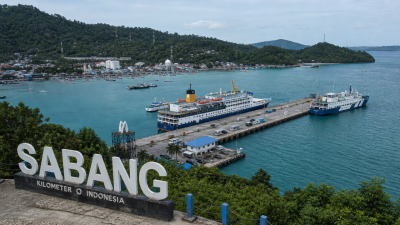
During Prime Minister Narendra Modi’s recent state visit to Indonesia, both countries agreed to jointly develop Sabang Port on Weh Island. The pact includes maritime industries, cruise and energy support services, renewal of a maritime security MoU, an IFC‑IOR liaison officer and talks on defence procurements.
Current issue
India and Indonesia will jointly develop Sabang Port at the northern tip of Sumatra. The port overlooks the Strait of Malacca and lies about 100–160 miles from India’s developing Great Nicobar transhipment port. Authorities will finalise scope, modalities and financing in a time‑bound manner.
Why it matters
- Security: Enhances maritime domain awareness near a strategic chokepoint through which major volumes of global trade and energy transit.
- Economy: Creates opportunities in shipbuilding, repair, cruise tourism and offshore energy services.
- Diplomacy: Deepens the Comprehensive Strategic Partnership and wideens defence cooperation.
- Regional balance: Provides India a forward foothold to coordinate with partners in the Indo‑Pacific.
Geopolitical and strategic significance
Sabang Port gives India a presence close to the Strait of Malacca, a critical maritime chokepoint. Combined with Great Nicobar, the port pair enables distributed maritime access to the Andaman Sea and eastern approaches to the Indian Ocean. The arrangement supports a posture that seeks to protect sea‑lane interests and to provide alternatives to unilateral extra‑regional infrastructure influence.
Maritime security and surveillance
- Maritime domain awareness: Joint facilities and data sharing can expand surface and sub‑surface monitoring in the Andaman Sea.
- Information fusion: Indonesia will place an International Liaison Officer at India’s IFC‑IOR, improving real‑time maritime information exchange.
- Operational reach: Logistical support for replenishment, repairs and search‑and‑rescue will extend patrolling and humanitarian response capabilities.
- Legal and normative tools: Renewed MoU on Maritime Safety and Security provides an institutional basis for coordinated patrols and incident management.
Economic and connectivity dimensions
Planned activities include cruise and marine tourism, shipbuilding and repair, and shore services for offshore energy. Sabang can integrate with Great Nicobar to offer transhipment, logistics and alternative routing options. Enhanced air and maritime links under the Andaman‑Aceh connectivity agenda can stimulate regional trade, tourism and investment.
Potential economic benefits
- Trade facilitation: Reduced diversion costs for short‑sea shipping and improved transhipment options.
- Local employment: Port and allied industries can create skilled and semi‑skilled jobs in Aceh and Andaman regions.
- Energy services: Shore‑based support for offshore energy can attract regional investment in exploration and services.
India–Indonesia bilateral relations and defence cooperation
The Sabang deal is part of a wider Comprehensive Strategic Partnership. Defence discussions included possible Indonesian acquisition of BrahMos and Astra missiles, indicating deeper interoperability and defence industrial ties. Joint task forces on Andaman‑Aceh connectivity will operationalise civil‑military logistics and infrastructure planning.
Implications for regional balance of power
Sabang strengthens India’s capacity to influence security outcomes in the eastern Indian Ocean. The arrangement supports a multipolar regional order by offering an additional maritime node for like‑minded maritime cooperation. It does not substitute for alliance networks, but contributes to strategic equilibrium by enhancing regional surveillance and creating options for cooperative security initiatives.
Implementation challenges and mitigation
| Challenge | Mitigation |
|---|---|
| Financing and commercial viability | Use mixed financing: public–private partnerships, concessional loans, and phased investment tied to demand assessments. |
| Sovereignty sensitivities | Ensure Indonesian ownership and clear legal frameworks for operations; emphasise civilian commercial uses. |
| Operational coordination | Establish joint governance body, timelines, and technical working groups under the Joint Task Force. |
| Regional diplomatic pushback | Maintain transparency with ASEAN and littoral states; pursue multilateral exercises and confidence‑building measures. |
Key stakeholders and roles
| Stakeholder | Role |
|---|---|
| Government of Indonesia (Aceh province) | Host authority; land allocation; regulatory approvals; local employment planning. |
| Government of India | Technical assistance; defence and maritime security cooperation; investment facilitation. |
| Port operators / private investors | Development, operations, commercial cargo and tourism services. |
| Regional navies and IFC‑IOR | Information sharing, joint patrols, search‑and‑rescue coordination. |
Way forward for policy makers
- Time‑bound project plan: Finalise scope, financing and implementation schedule through the Joint Task Force.
- Commercial viability study: Conduct independent demand and revenue assessments before major capital commitments.
- Legal safeguards: Frame agreements to protect Indonesian sovereignty and to define Indian access and support roles.
- Regional engagement: Use multilateral forums to explain intent and to seek complementary projects with ASEAN partners.
- Defence‑civil balance: Maintain a primarily commercial profile while enabling agreed security support services.
Model Questions
1. Analyse the strategic significance of the India–Indonesia Sabang Port agreement in strengthening India’s maritime presence in the Indo‑Pacific. [GS-II: International Relations]
The Sabang agreement provides India a forward maritime node near the Strait of Malacca, improving surveillance and logistical reach. When paired with Great Nicobar, it creates distributed access across the Andaman Sea. The move supports coordinated maritime security, information sharing via IFC‑IOR, and greater interoperability with Indonesia without formal basing, thereby enhancing India’s diplomatic and operational options in the Indo‑Pacific.
2. Examine the economic and connectivity potential of the joint Sabang Port development for regional trade and infrastructure. [GS-III: Economic Development]
Sabang’s planned cruise, shipbuilding, repair and offshore energy services can diversify regional maritime supply chains and generate local employment. Integration with Great Nicobar and Andaman‑Aceh connectivity can shorten transhipment routes, boost short‑sea shipping and tourism, and attract private investment. Commercial viability depends on phased development, demand studies and public–private financing to ensure sustainable returns.
3. Discuss how the Sabang Port agreement and related initiatives reflect the India–Indonesia Comprehensive Strategic Partnership. [GS-II: Governance]
Joint development of Sabang, renewal of maritime safety MoU, placement of an IFC‑IOR liaison officer and defence procurement talks indicate deeper institutional and operational ties. The approach combines civilian infrastructure, maritime security cooperation and defence industry links, reflecting a governance framework that aligns strategic objectives with legal arrangements, joint task forces and time‑bound implementation mechanisms under the partnership.
4. Evaluate the implications of the Sabang Port deal for regional maritime security and the balance of power in the Indian Ocean Region. [GS-III: Internal & External Security]
Sabang enhances maritime domain awareness and expands logistical options for cooperative security in the eastern Indian Ocean. It contributes to a balance of influence by adding a regional node under sovereign Indonesian control, enabling collective responses to threats to sea lanes. Risks include competitive signalling; mitigation requires transparency, ASEAN engagement and prioritising civilian commercial use alongside agreed security cooperation.
Last Modified: July 8, 2026