
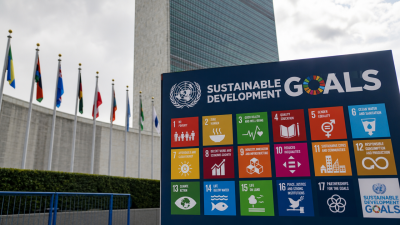
India has reached its highest-ever position in the UN SDG Index — ranked 94th with a score of 68.3 in the 2026 Sustainable Development Report. The result signals improvement since 2015 but also exposes concentrated shortfalls across several goals that affect governance, economy, society and environment.
India’s 2026 SDG performance — snapshot
- Rank and score: 94th out of 167 countries; overall score 68.3.
- Progress since 2015: Improved by 18 ranks; East and South Asia show strong regional advances.
- Global context: Only about one-third of SDG targets are projected to be met globally by 2030; progress is uneven.
- Breadth of challenges: Major difficulties in 13 of 17 SDGs; acute problems in seven goals (SDG 2, 3, 5, 11, 14, 15, 16).
Why this matters for governance and policy
- Governance: SDG 16 shortfalls (declining Press Freedom Index score from 59.51 to 31.96) point to institutional and accountability deficits that affect policy implementation.
- Economy and social development: Nutrition and health gaps constrain human capital; urban and environmental stresses increase fiscal and social costs.
- Environment and climate: Per capita CO2 emissions rose from 1.69 t (2015) to 2.21 t (2023), complicating India’s climate transition and energy planning.
- International relations: Ranking affects soft power and negotiating credibility on global development and climate forums.
Major SDG challenges — selected goals and data
- SDG 2 — Zero Hunger: Nearly one in three children under five is stunted (NFHS‑6: 29.3%); wasting increased to 19%; undernourishment rose to 12% in 2023.
- SDG 3 — Good Health: Double burden of malnutrition with rising adult obesity alongside undernourishment; public health infrastructure gaps persist.
- SDG 5 — Gender Equality: Persistent gaps in labour participation, safety and empowerment indicators; gendered nutritional and health outcomes.
- SDG 11 — Sustainable Cities: Rapid urbanisation strains housing, transport, water and waste systems; climate and disaster risk in cities rising.
- SDG 13 — Climate Action: Per capita CO2 from fossil fuel combustion and cement increased to 2.21 t in 2023, highest since SDGs adoption.
- SDG 14 & 15 — Biodiversity and Oceans: Coastal and terrestrial ecosystems face pollution, habitat loss and unsustainable resource use.
- SDG 16 — Peace, Justice & Institutions: Press Freedom Index decline to 31.96 signals challenges for transparency, media plurality and civic space.
Comparative position in South Asia
- Regional peers: Despite improvement, India ranks below Bhutan, Maldives, Nepal and Sri Lanka in the 2026 Index.
- Implication: Neighbouring countries’ higher scores reflect differing development mixes, targeted social policies, and governance outcomes that India must examine for policy lessons.
Underlying drivers of uneven progress
- Demographic and spatial diversity: Large population and inter-state variation amplify delivery challenges for health, nutrition and services.
- Economic structure: Informal sector dominance, agrarian distress and unequal labour markets affect income security and nutrition.
- Urban pressure: Unplanned growth raises infrastructure deficits and environmental stress.
- Policy and institutional gaps: Weak inter-governmental coordination, data shortfalls and limited local capacity slow implementation.
- Environmental trade-offs: Growth driven by fossil energy and construction increased emissions and ecosystem degradation.
Policy, governance and institutional responses
Nutrition and health
- Targeted interventions: Strengthen POSHAN Abhiyaan and ICDS to improve maternal and child nutrition; integrate WASH and food systems interventions.
- Health coverage: Expand public health investments under National Health Mission and Ayushman Bharat; focus on primary care, preventive services and nutrition-sensitive healthcare.
Gender equality
- Economic inclusion: Boost women’s labour-force participation through skilling, social protection and support for care services.
- Safety and rights: Strengthen legal enforcement, GBV response mechanisms and access to justice.
Urban sustainability
- Infrastructure: Scale public transport, affordable housing and urban drainage; use Smart Cities learnings to prioritize low-carbon solutions.
- Local planning: Empower ULBs with finance and capacity for integrated city planning and disaster resilience.
Climate and environment
- Decarbonisation: Accelerate renewable capacity, energy efficiency, electrification of transport and cleaner industry standards to bend emission trajectory.
- Nature-based solutions: Invest in afforestation, coastal buffers and biodiversity corridors; strengthen pollution control for oceans and land.
Institutions, rule of law and civic space
- Institutional reforms: Improve transparency, regulatory quality and independent oversight to restore media plurality and public accountability.
- Justice delivery: Court and police reforms to reduce access gaps and build public trust.
Federalism, local governance and implementation
- Cooperative federalism: Use NITI Aayog and central schemes to set national targets while allowing state differentiation in pathways and timelines.
- Decentralisation: Strengthen Panchayati Raj Institutions and Urban Local Bodies through capacity building, fiscal devolution and performance-linked grants.
- State innovation: Scale state-level best practices via sanctioned central funds and knowledge exchange platforms.
Data, monitoring and finance
- Indicators and analytics: Build sub-national SDG dashboards, use administrative data and remote sensing for timely monitoring.
- Financing: Combine public capital, state budgets, private investment and multilateral finance; use outcome-based financing for social programmes.
- Partnerships: Engage civil society, academia and private sector for delivery and independent evaluation.
Priorities for accelerated progress to 2030
- Focus: Prioritise nutrition, primary health, gender parity and urban resilience where shortfalls are largest.
- Policy mix: Pair supply-side investments with demand-side transfers, behavioural change and market reforms.
- Accountability: Strengthen independent monitoring, media plurality and community oversight to improve service delivery.
- Climate alignment: Align national development plans with NDCs and invest in just transition measures for labour and regions dependent on fossil sectors.
Model Questions
1. India’s rise to 94th in the 2026 UN SDG Index represents an improvement since 2015. Analyse its governance and policy implications, and assess the areas that require priority action. [GS-II: Governance]
India’s rise by 18 ranks shows policy gains but exposes concentrated deficits in nutrition, health, gender, urban resilience and institutions. Governance implications include need for stronger inter‑governmental coordination, improved public service delivery, transparency and local capacity. Priority actions: scale nutrition and primary health, empower ULBs/PRIs, strengthen accountability mechanisms, enhance data systems and target fiscally supported programmes to disadvantaged states and communities for faster, equitable progress.
2. Rising per capita CO2 emissions and a fall in Press Freedom Index score pose distinct threats to India’s SDG trajectory. Analyse their implications for policy and international commitments. [GS-III: Environment & DM]
Higher per capita emissions (1.69 t to 2.21 t) raise mitigation needs and increase reliance on accelerated renewables and efficiency to meet NDCs without harming growth. Decline in press freedom (score to 31.96) weakens transparency and accountability, impairing policy scrutiny and implementation. Policy response must combine a faster low‑carbon transition, stronger environmental regulation, and institutional safeguards that protect media plurality to sustain democratic oversight.
3. India trails some South Asian neighbours on the SDG Index. Identify factors causing this disparity and propose measures to accelerate progress on hunger and gender equality by 2030. [GS-III: Economic Development]
Disparities stem from governance effectiveness, scale of population, state capacity, and differing social policy mixes. To reduce hunger: expand POSHAN Abhiyaan, strengthen ICDS and PDS targeting, integrate agriculture, WASH and social protection, and invest in women’s nutrition. For gender equality: boost female labour participation via skilling, childcare support, legal enforcement against violence, and incentives for formal employment. Use conditional financing and outcome monitoring to drive results.
4. Discuss the role of federal governance and local institutions in delivering the SDGs in India, and outline steps to improve implementation at sub‑national level. [GS-II: Governance]
Federal governance must combine national targets with state-led pathways. Steps: transfer adequate finances and technical support to states and ULBs; strengthen PRIs/ULBs through capacity building and performance-linked grants; institutionalise SDG monitoring in state plans; promote inter‑state learning and competitive federalism; and deploy central schemes as catalytic funds. Emphasise community participation and independent accountability to improve local delivery and equity.
Last Modified: June 28, 2026