
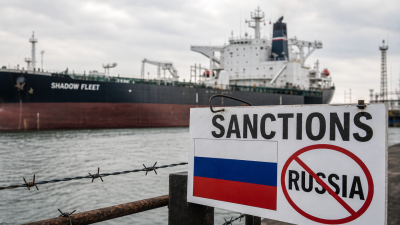
The UK announced 70 new sanctions at the G7 Summit targeting Russia’s shadow fleet, military procurement networks and illicit finance, including over 20 tankers, several LNG vessels linked to Arctic LNG 2, and a GRU procurement network. The EU adopted an interim package and plans further vessel listings.
What is the issue?
Russia’s shadow fleet is a covert maritime network of ageing tankers, opaque ownership structures and ship‑to‑ship transfers used to export oil and evade sanctions. Recent UK and EU measures aim to disrupt these channels, cut Kremlin revenues and block access to Western technology for Russia’s military.
Why it matters
- Governance & Security: Sanctions form part of economic measures to degrade an adversary’s war‑economy and procurement chains.
- Economy & Trade: Disruption of Russian exports affects global oil and LNG flows, insurance markets and freight costs.
- Legal & Operational: Enforcing maritime sanctions raises questions of jurisdiction, flag state responsibility and maritime law.
- India’s interests: Energy supply, shipping personnel and diplomatic balance are directly implicated.
Concept and mechanics of the shadow fleet
Definition: A set of tankers and support vessels that conceal cargo origin and ownership through shell companies, frequent re‑flagging and ship‑to‑ship transfers. Many vessels are older and operate with limited or no insurance. Operational features: deliberate AIS gaps or spoofing, use of intermediary ports, bunkering and STS at sea, and layers of corporate obfuscation to hide beneficial ownership.
Scope and instruments of recent sanctions
| Sanctioning actor | Main targets | Mechanisms |
|---|---|---|
| United Kingdom | 70 listings: >20 tankers in shadow fleet; ship insurers; LNG vessels tied to Arctic LNG 2; LLC Neptune Co Ltd and GRU officers procuring tech | Asset freezes, trade restrictions, designation of insurers and service providers; interdiction operations |
| European Union | Interim package: 34 individuals, 47 entities across Russia and third‑party jurisdictions; drone/missile component manufacturers; Chinese and Belarus firms | Listing, asset freezes, export controls on components; proposal to list 30 more vessels |
Effectiveness and enforcement challenges
- Disruption potential: Targeting tankers, insurers and LNG carriers raises operational costs, reduces market access and can reduce Kremlin revenues.
- Circumvention tactics: Beneficial‑ownership opacity, flag‑hopping, new intermediary registries, opaque bunkering and third‑party intermediaries blunt effects.
- Insurance and markets: Designating insurers and services increases risk premia, forces rerouting or self‑insurance, and may drive trade to less regulated corridors.
- Operational limits: Maritime interdiction requires legal basis, actionable intelligence and often cooperation from flag or port states; evidence collection for prosecutions is complex.
Legal and operational complexities — the MV Smyrtos incident
British forces intercepted MV Smyrtos in the English Channel and the vessel’s Indian captain has been charged with contravening sanctions. The case illustrates core complexities:
- Jurisdiction: Rights to board on high seas depend on flag state consent and treaty norms under UNCLOS; criminal jurisdiction may involve flag, coastal or intercepting state.
- Evidentiary burden: Proving sanctions breaches requires tracing cargo ownership and finance chains across jurisdictions.
- Risks: Boarding operations may provoke diplomatic friction, require naval assets and raise questions about due process for seafarers.
Role of military procurement networks and third‑party facilitators
Sanctions target GRU‑linked procurement (LLC Neptune Co Ltd) and firms supplying drone and missile components. Third‑party actors in Liberia, Türkiye, UAE, Azerbaijan, Hong Kong, China and Belarus provide shipping services, components and legal cover. These actors enable sanctioned states to procure dual‑use goods and maintain export routes.
Impact on global energy markets and trade
- Supply re‑routing: Buyers in non‑sanctioning states may absorb redirected Russian oil and LNG; sanctioned shipments may shift to new maritime corridors.
- Price and volatility: Enforcement actions and countermeasures create downside supply shocks and add volatility to oil and LNG prices.
- Logistics costs: Higher insurance, longer voyages and compliance checks increase transport costs and can affect commodity margins and refinery economics.
- Environmental risk: Ageing tankers raise spill and safety risks if pushed into riskier operations to avoid detection.
India — challenges and strategic options
- Immediate risks: Disruption to discounted Russian crude supplies; exposure of Indian seafarers and firms to legal action (example: MV Smyrtos captain).
- Diplomatic balance: India must reconcile energy needs and strategic ties with Russia against expectations from Western partners.
- Secondary sanctions exposure: Indian companies must strengthen compliance to avoid penalties under secondary‑effects regimes.
- Opportunities: Diversify suppliers, expand refining margins and crude blending flexibility, increase strategic petroleum reserves and engage multilaterally to protect legitimate commerce.
Operational and legal measures to improve enforcement
- Intelligence & surveillance: Enhanced AIS analytics, satellite imagery and maritime domain awareness to detect STS and AIS manipulation.
- Financial controls: Tighten correspondent banking checks, target insurance and bunkering networks, and trace beneficial ownership through registries.
- Multilateral legal instruments: Harmonise sanction lists, expedite information exchange, and clarify boarding and seizure legal standards through bilateral agreements.
- Export controls: Coordinate controls on dual‑use components to close procurement channels for military tech.
Institutional and policy implications for India
- Compliance architecture: Strengthen customs, shipping and banking compliance; issue guidance for Indian shipping and insurance firms.
- Consular preparedness: Plan for legal assistance to nationals involved in interdicted shipments and develop protocols with maritime agencies.
- Strategic outreach: Engage both sanctioning states and Russia to protect legitimate trade while demonstrating adherence to international norms.
Model Questions
- Analyse the concept of Russia’s ‘shadow fleet’ and critically evaluate the effectiveness of recent UK and EU sanctions in disrupting its operations and affecting global energy trade. [GS-II: International Relations]
- Examine how recent Western sanctions against Russia’s shadow fleet and military procurement networks reflect the evolving nature of economic warfare. Discuss enforcement challenges and role of third‑party facilitators. [GS-III: Internal & External Security]
- With reference to the interception of MV Smyrtos, discuss legal and operational complexities in enforcing maritime sanctions against shadow fleets and the implications for international maritime law and trade. [GS-II: Governance]
- Assess the strategic implications for India of sanctions on Russia’s shadow fleet. What challenges and policy options should India pursue to safeguard energy security while managing diplomatic ties? [GS-II: International Relations]
Model answer: Define shadow fleet as ageing tankers using opaque ownership, re‑flagging and ship‑to‑ship transfers to evade sanctions. Describe UK and EU measures targeting tankers, insurers, LNG vessels, procurement networks and third‑party facilitators. Evaluate effectiveness: raises costs, constrains revenues, and increases deterrence; but circumvention via flag‑hopping, opaque finance, and non‑cooperating states limits full disruption and sustains market volatility.
Model answer: Economic warfare now targets maritime logistics, insurance and dual‑use procurement to deprive finance and technology. Sanctions combine listings, export controls and interdictions. Enforcement challenges include tracing beneficial ownership, AIS spoofing, jurisdictional gaps, and evidentiary demands. Third‑party facilitators in multiple jurisdictions provide shipping, components and corporate cover, necessitating multilateral action, intelligence sharing and tightened export/financial controls to pressure sanctioned economies.
Model answer: Boarding and interdiction confront UNCLOS norms, flag state consent and criminal jurisdiction issues. Proving sanctions breaches requires cross‑border evidence on ownership and cargo chain. Operational risks include diplomatic fallout and safety of crews. Implications: potential rise in naval patrols, stricter port controls, higher insurance costs, and pressure to clarify legal bases for enforcement through agreements to protect legitimate trade and seafarers’ rights.
Model answer: Sanctions risk disrupting discounted Russian supplies and expose Indian seafarers/companies to legal action. Challenges include secondary sanctions risk, higher energy costs and reputational concerns. Policy options: strengthen compliance and due diligence, diversify energy sources, boost strategic reserves and refining flexibility, engage diplomatically with sanctioning and supplier states, and support multilateral mechanisms to distinguish legitimate trade from sanctions evasion.