
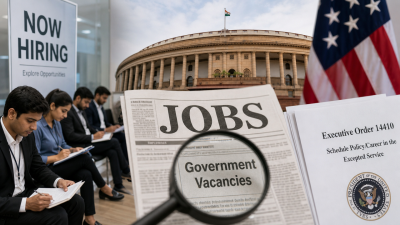
On 22 June 2026 a Parliamentary Standing Committee led by Brij Lal reviewed central government vacancies and the CSAT component of the Civil Services Preliminary Examination. The panel examined actions by DoPT, SSC and UPSC to fill posts and ensure timely recruitment across ministries.
Status and significance
What is current: A parliamentary review scrutinised vacancy levels and recruitment processes across central services. The panel recalled an April 2026 recommendation to UPSC to revisit the CSAT. International developments — US federal and state moves on civil‑service protections and South African deliberations on statutory commission vacancies — add comparative context. Why it matters: Vacancies reduce administrative capacity. Recruitment design shapes representativeness, equity and morale. Personnel rules affect policy continuity and the impartiality of the state.
Key institutional actors and functions
- DoPT: Nodal policy authority for personnel management, recruitment rules and cadre control.
- UPSC: Constitutional recruitment agency for All‑India Services and Group A/B posts.
- SSC: Principal recruiting body for Group B (non‑gazetted) and Group C posts.
- Parliamentary Standing Committees: Oversight, review of vacancy data, and recommendations to executive agencies.
- Tribunals and courts: CAT and courts adjudicate service disputes and affect timelines.
CSAT: concerns and policy options
Issue: The parliamentary panel asked UPSC to revisit CSAT on grounds that emphasis on quantitative and analytical items may disadvantage non‑science, rural and underserved aspirants. The matter is equity versus selection validity.
Analytical dimensions
- Measurement aim: CSAT tests aptitude; critics say it privileges prior training and coaching.
- Representation: Rural and non‑science candidates face resource gaps for targeted preparation.
- Selection trade‑offs: Removing or altering CSAT affects predictive validity for administrative tasks.
Policy options for UPSC
- Re‑weighting or diversification: Adjust relative weight of CSAT versus general studies; introduce context‑sensitive items.
- Pilot changes: Trial alternative formats and measure outcome differences across cohorts.
- Support measures: Expand affordable training, model papers and regional study centres to reduce preparation gaps.
- Transparency: Publish item‑level rationales and aggregate impact assessments by socio‑economic groups.
Persistent vacancies: causes and institutional bottlenecks
- Process delays: Multiple clearances, prolonged approvals for cadre strength and protracted litigation.
- Capacity constraints: Recruitment agencies face high application volumes and periodic resource shortages.
- Workforce planning gaps: Irregular cadre reviews and absence of multi‑year vacancy forecasting.
- Technological gaps: Partial digitalisation of end‑to‑end recruitment slows processing and grievance redressal.
- Mismatch of skills: Emerging technical needs outpace traditional selection criteria and training.
Comparative developments: United States and other examples
US federal action: An Executive Order reclassified about 8,000 senior federal posts into an at‑will category, removing appeal rights to the Merit Systems Protection Board. OPM issued guidance for implementation. Federal unions filed suits arguing politicisation and loss of due process. State action: In West Virginia, the administration removed civil‑service and grievance protections for over 9,000 state employees, drawing criticism from labour advocates.
| Dimension | US recent reforms | Indian system |
|---|---|---|
| Legal basis | Executive order and administrative guidance | Constitutional provisions (Article 311), service rules, statutory tribunals |
| Protections | Shift towards at‑will for selected posts; reduced appeal rights | Security of tenure, appeal mechanisms (CAT, courts), prescribed dismissal safeguards |
| Risk | Politicisation, morale loss | Similar risks if tenure safeguards are weakened |
Implications for neutrality, protections and governance
- Tenure erosion: Removing appeal and grievance channels lowers job security and can deter applicants.
- Politicisation risk: Easier termination of senior staff may incentivise loyalty over impartial advice.
- Merit system impact: Merit‑based appointment and promotion regimes may weaken if political considerations dominate.
- Administrative continuity: Frequent turnover disrupts institutional memory and programme delivery.
- Legal safeguards in India: Article 311 and service rules provide statutory protections that limit arbitrary removals; CAT and courts are remedies.
Reform measures: operational and policy mix
- Fixed recruitment calendar: Synchronise vacancy estimation, approvals and examination schedules to reduce lags.
- End‑to‑end digitalisation: Single portal for vacancy publishing, application processing, evaluation and grievance tracking.
- Cadre and skill forecasting: Periodic audits to align recruitment with projected needs and emerging skill sets.
- Selective flexibility: Use contractual or lateral appointments for non‑core specialised roles while preserving tenure for core civil service posts.
- CSAT moderation: UPSC to conduct impact assessment and pilot alternatives; enhance access to preparatory resources for under‑represented groups.
- Institutional capacity: Strengthen SSC and UPSC staffing and infrastructure to manage volumes and timelines.
- Parliamentary oversight: Regular reporting to standing committees on vacancy metrics and implementation of recommendations.
Ethical and governance dimensions
The policy choice is a balance between managerial flexibility and civil‑service neutrality. Flexibility can aid rapid policy staffing. Excessive managerial control can undermine impartiality and fairness. Due process, transparent criteria and legal remedies are ethical requirements for public employment. Reforms must protect the public interest by preserving merit, preventing arbitrariness and maintaining public trust.
Model Questions
1. Critically examine the concerns surrounding the Civil Services Aptitude Test (CSAT) and its implications for equitable representation in the civil service. Assess the role of parliamentary scrutiny in shaping recruitment reforms. [GS-II: Governance]
Answer: CSAT tests quantitative and analytical aptitude, but the parliamentary panel noted it may disadvantage non‑science, rural and underserved candidates due to resource disparities. Implications include skewed representativeness and reduced social diversity. Parliamentary scrutiny provides accountability, mandates impact assessment, and can steer UPSC to pilot alternatives, mandate support measures and ensure reforms balance selection validity with inclusivity.
2. Persistent vacancies impede governance. Analyse institutional causes and examine reforms needed to streamline central recruitment and ensure timely appointments. [GS-II: Governance]
Answer: Causes include delayed cadre approvals, litigation, capacity constraints in UPSC/SSC, poor forecasting and partial digitalisation. Reforms needed: fixed recruitment calendar, end‑to‑end digital portal, periodic cadre and skills audits, increased capacity for recruiting agencies, legal mechanisms to expedite vacancy clearances, and transparent vacancy dashboards. These steps reduce lead‑time and improve administrative continuity.
3. Compare recent US moves to reclassify senior public‑sector posts as at‑will with India’s civil service safeguards. Discuss potential concerns if similar measures were adopted in India. [GS-II: Governance]
Answer: US actions reclassified senior roles into at‑will employment and limited appeal rights, prompting union litigation. India’s system rests on constitutional and statutory safeguards, including Article 311, service rules and tribunal remedies. Adopting at‑will norms in India risks politicising administration, eroding impartial advice, lowering morale and weakening merit‑based recruitment. Safeguards are needed to prevent arbitrary removals while allowing targeted managerial flexibility.
4. Discuss the ethical dilemma between granting executives greater personnel flexibility and protecting civil service neutrality and due process. Suggest principles to guide personnel reforms. [GS-IV: Ethics, Integrity and Aptitude]
Answer: The dilemma pits administrative agility against impartiality and fairness. Ethical principles: preserve due process and transparent criteria; limit managerial discretion to clearly defined non‑core roles; ensure proportionality in removal powers; protect whistleblowers and advice functions; and maintain merit as primary selection criterion. Reforms must be justified, time‑bound, legally anchored and subject to independent review to protect public interest.
Last Modified: June 23, 2026