
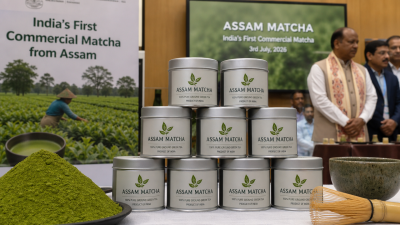
On 3 July 2026 Assam’s Chota Tingrai Tea Estate (Tinsukia) sold India’s first commercially produced matcha at the Guwahati Tea Auction Centre.
Production & Process
- Botanical source: Camellia sinensis leaves are used for matcha production.
- Shading: Leaves are shaded for 3–4 weeks with about 90% sunlight reduction to raise chlorophyll and L-theanine (an amino acid).
- Processing: Shade-grown leaves are transformed into tencha (de-veined, steamed, dried) then stone- or mechanical-milled to a fine powder (matcha).
Commercial Launch Details
- Location & date: Chota Tingrai Tea Estate, Tinsukia; sale at Guwahati Tea Auction Centre on 3 July 2026.
- Lot & price: Initial lot 5 kg; reported sale price ₹3,000 per kg; buyer Sheosons Chai Co.; auctioneer J Thomas & Co.
Technology & Collaboration
- Facility: Estate houses a fully automated Japanese-style tea manufacturing unit.
- Technical partnership: Development involved a decade-long collaboration with Japanese manufacturers, agronomists and tea experts.
Market & Cultivation
- Market focus: Initial emphasis on domestic demand with an aim to address reported global supply shortfall for matcha.
- Agro-climatic fit: Assam’s climate and soils are suitable for cultivating shade-grown leaves required for matcha.
IASPOINT Booster Facts
- Matcha form: Whole-leaf powdered green tea consumed by whisking; retains leaf nutrients unlike infusion teas.
- Tencha term: Name for steamed, de-stemmed leaf product destined for powdering into matcha.
- Guwahati Tea Auction Centre: Major regional auction platform for marketing Assam teas.