
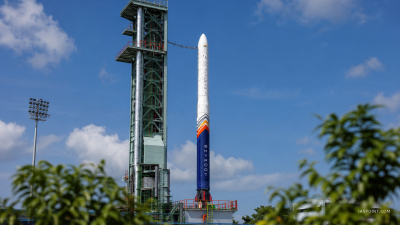
Vikram-1, India’s first privately developed orbital‑class rocket, launched on 18 July 2026 from Satish Dhawan Space Centre, Sriharikota, placing multiple payloads into Low Earth Orbit.
Vikram‑1: vehicle features
- Configuration: Four-stage launch vehicle.
- Structure: All‑carbon composite airframe; about seven storeys tall.
- Capacity: Rated to carry up to 350 kg to LEO.
Mission Aagaman and orbital details
- Launch date: 18 July 2026; lift‑off from Satish Dhawan Space Centre, Sriharikota.
- Orbit achieved: ~450 km Low Earth Orbit at ~60° inclination.
- Payloads: Technology demonstration satellites from Grahaa Space, Cosmoserve Space and DCUBED; Skyroot’s SCOPE satellite.
- Commemorative items: Included small artefacts and artwork as non‑technical payloads.
Regulatory and sector linkages
- Policy framework: Indian Space Policy 2023 facilitates private launch vehicle development and commercial launches.
- Industry base: Skyroot Aerospace is part of India’s private launch ecosystem including satellite manufacturers and integrators.
- Global context: Marks private orbital launch capability in India alongside existing private launch activities in the United States and China.
IASPOINT Booster Facts
- Spaceport: Satish Dhawan Space Centre is India’s principal orbital launch site on Sriharikota island, Andhra Pradesh.
- LEO: Low Earth Orbit is commonly defined as orbits below 2,000 km altitude.
- Orbital‑class rocket: Vehicle capable of delivering payloads into a sustained Earth orbit rather than a suborbital trajectory.