
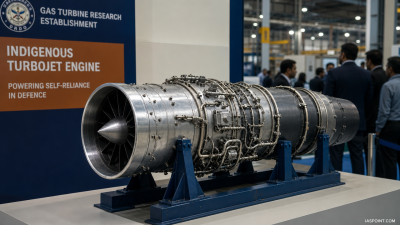
India realised its first indigenous expendable turbojet engine in the 350 kg thrust class on 22 July 2026; the engine was designed by the Gas Turbine Research Establishment (GTRE), DRDO, and manufactured and assembled by Azad Engineering, Hyderabad.
Turbojet and Expendable Engines
- Turbojet: Gas-turbine producing thrust by compressing air, burning fuel, and expelling high-speed exhaust; lacks bypass stream used in turbofans.
- Expendable engine: Built for single-use or limited-duration missions with reduced service-life requirements.
- 350 kg thrust class: ~3.43 kN; typical sizing for missiles and small unmanned platforms.
Development & Industry Linkage
- Developer: GTRE — DRDO laboratory focused on aero gas-turbine propulsion.
- Manufacturer: Azad Engineering, Hyderabad — handled manufacture and assembly.
- Delivery cycle: Prototype delivered after approximately 24 months from contract.
Operational Applications
- Missile classes: Suitable for naval anti-ship, air-to-surface and air-to-air missiles requiring compact propulsion.
- Counter-UAS & UAVs: Usable in medium-range anti-drone systems and expendable/loitering unmanned systems.
- Performance traits: Compact form-factor, sustained high-speed cruise capability, designed for short operational life.
IASPOINT Booster Facts
- GTRE mandate: Design, development and testing of aero gas-turbine engines and components.
- Technical requirements: High-temperature alloys, precision machining, turbine aero-thermodynamics, combustion stability.
- Policy link: Aligns with Atmanirbhar Bharat emphasis on indigenous defence industrial capacity.
- Unit conversion: 1 kgf ≈ 9.81 N; 350 kgf ≈ 3.43 kN.