
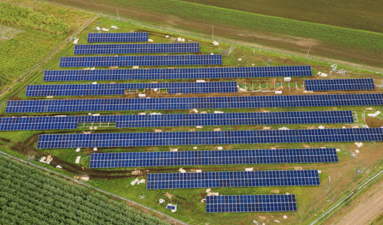
India is exploring agri-photovoltaics, or agriPV, as a dual-use model that combines solar power generation with farming on the same land. The idea has gained attention as the PM-KUSUM scheme’s outlay in the 2026-27 Budget was raised sharply to support farmer-centric solarisation. AgriPV is seen as a possible way to expand clean energy without worsening land competition or food security concerns.
What AgriPV Means
AgriPV integrates solar panels with agricultural activity. Panels are mounted high enough to permit cultivation below, placed between crop rows, or installed on greenhouse structures. The system allows farmers to produce electricity while continuing crop production. Different designs are used depending on crop type, climate, irrigation pattern, and local farming conditions.
Crop Suitability and Design Choices
The success of agriPV depends on careful crop selection and system design. Shade-tolerant crops generally perform better under panels, while sunlight-intensive crops are better suited to spaces between rows. Suitable crops vary across regions. Examples include tomato, onion, garlic, turmeric, ginger, leafy vegetables and tulsi in Madhya Pradesh, and ragi, jowar, grapes, potato, chillies, banana and brinjal in Karnataka and Maharashtra. Elevated, row-based, vertical and greenhouse-integrated systems each have different advantages.
Why It Matters for India
AgriPV is relevant because India aims to expand solar capacity while preserving agricultural land. It can help farmers earn from electricity sales, land leasing or revenue sharing, while continuing cultivation. It may also improve water-use efficiency through partial shading, reduce heat stress on crops, and support rural services such as cold storage, food processing and chaff cutting. The model therefore links energy transition with farm income diversification.
Challenges and Policy Direction
Around 50 pilot agriPV installations are operating in India, but large-scale adoption remains limited. High capital costs, unclear land and ownership arrangements, weak design benchmarks, grid issues and tariff uncertainty remain major barriers. Policy discussions have suggested a possible National Agri-photovoltaics Mission under PM-KUSUM 2.0, with a dedicated 10-GW component and viability gap funding. Such support could improve project viability and help agriPV move from pilots to wider deployment.
Last Modified: April 29, 2026