
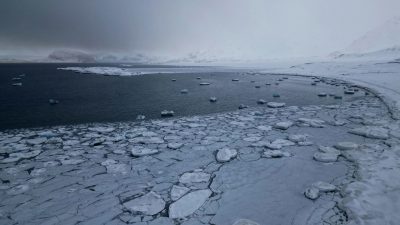
Recent studies indicate that the Arctic Ocean may experience its earliest ice-free day within the next few years. This projection arises from the analysis of sea ice area minimum conditions from 2023. Researchers predict that the first summer with minimal sea ice could occur as early as 2027. The findings highlight the urgency of climate change and its impact on polar regions.
Climate Change and Sea Ice Dynamics
The Arctic is undergoing changes due to climate change. Rising global temperatures are causing accelerated melting of sea ice. This year, Arctic sea ice reached its smallest size on September 11, 2024. The trend of diminishing ice has been consistent for 46 years. Thinner, younger ice predominates, making it less resilient to summer heat.
Factors Influencing Ice-Free Days
Key factors contribute to the likelihood of ice-free days. A warm atmosphere during winter and spring leads to increased sea ice loss. Heatwaves and warm air intrusions can elevate spring temperatures. Additionally, the frequency of storms in the Arctic is projected to rise, further exacerbating ice melt.
Implications of an Ice-Free Day
The first ice-free day holds symbolic significance. It marks a fundamental change in the Arctic environment. However, it does not mean that the Arctic will be consistently ice-free thereafter. The occurrence of such a day is linked to global temperatures exceeding the Paris Agreement target of 1.5°C. Maintaining this limit could potentially prevent future ice-free days.
The Role of Global Temperature
The study indicates that the first ice-free day is likely to happen when global temperatures are at or above the 1.5°C threshold compared to pre-industrial levels. This marks the critical role of international climate agreements in mitigating climate change effects.
Future Projections and Concerns
As the Arctic warms, the frequency of ice-free days is expected to increase. This trend poses risks to ecosystems and global weather patterns. The loss of sea ice affects marine life and indigenous communities. It also contributes to rising sea levels, impacting coastal regions worldwide.
Research and Monitoring Efforts
Continuous monitoring of Arctic sea ice is essential. Satellite observations provide vital data on ice thickness and extent. Research institutions like NASA are at the forefront of studying these changes. Their findings are crucial for understanding the broader implications of climate change.
Global Response and Mitigation Strategies
Addressing climate change requires global cooperation. Nations must adhere to emission reduction targets. Transitioning to renewable energy sources is vital. Public awareness and education can also drive changes in behaviour and policy.
Questions for UPSC:
- Examine the implications of rising global temperatures on Arctic ecosystems.
- Discuss in the light of current trends how climate change affects global weather patterns.
- Critically discuss the role of international agreements in addressing climate change and its effects.
- Analyse the significance of monitoring Arctic sea ice in understanding climate change impacts.
Answer Hints:
1. Examine the implications of rising global temperatures on Arctic ecosystems.
- Rising temperatures lead to accelerated melting of sea ice, disrupting habitats for polar species.
- Thinner, younger ice is less resilient, affecting species that rely on stable ice conditions.
- Changes in ice cover impact food webs, influencing predator-prey relationships in marine ecosystems.
- Indigenous communities face challenges as traditional hunting and fishing grounds diminish.
- Loss of sea ice contributes to increased ocean acidification, further threatening marine biodiversity.
2. Discuss in the light of current trends how climate change affects global weather patterns.
- Increased Arctic temperatures can lead to altered jet stream patterns, causing extreme weather events worldwide.
- Warmer oceans contribute to more intense and frequent hurricanes and typhoons.
- Changes in precipitation patterns can lead to droughts in some regions and flooding in others.
- Melting ice contributes to rising sea levels, impacting coastal weather and ecosystems.
- Global temperature rises can disrupt agricultural cycles, impacting food security globally.
3. Critically discuss the role of international agreements in addressing climate change and its effects.
- International agreements like the Paris Agreement aim to limit global warming to below 1.5°C, crucial for Arctic preservation.
- Such agreements promote cooperation among nations to reduce greenhouse gas emissions effectively.
- They provide frameworks for financial and technological support to developing countries for climate adaptation.
- Monitoring and accountability mechanisms within agreements encourage nations to meet their commitments.
- However, challenges remain in enforcement and compliance, with some countries lagging behind in targets.
4. Analyse the significance of monitoring Arctic sea ice in understanding climate change impacts.
- Monitoring provides crucial data on trends in sea ice extent and thickness, informing climate models.
- Satellite observations help track changes in Arctic ecosystems and their broader implications for global climate.
- Data from monitoring can guide policy decisions and international climate strategies.
- About sea ice dynamics is essential for predicting future climate scenarios and potential tipping points.
- Continuous monitoring aids in raising public awareness about climate change and its urgent impacts.