
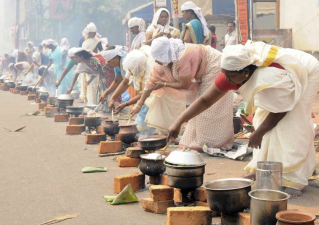
Attukal Pongala is being observed at the Attukal Bhagavathy Temple in Thiruvananthapuram, Kerala. The annual Hindu festival, also called Pongala Mahotsavam, draws one of the largest gatherings of women in the world. It marks the culmination of the 10-day ritual at the shrine and is known for its strong cultural, devotional and social significance.
Festival Significance
Attukal Pongala honours Goddess Attukal Bhagavathy, regarded as an incarnation of Goddess Kannaki. The festival symbolises feminine power, devotion and collective faith. It is one of Kerala’s most prominent religious events and is closely associated with the cultural identity of Thiruvananthapuram.
Main Rituals
- Women prepare a sweet offering called pongala using rice, jaggery and coconut.
- The offering is cooked in earthen pots on makeshift hearths set up around the temple.
- The ritual begins with Kappukettu, when the chief priest lights the central hearth.
- Sacred fire is then distributed to devotees for the preparation of pongala.
- The offering is later blessed by temple priests and becomes prasadam.
Record and Global Recognition
The ritual entered the Guinness Book of World Records in 2009 as the largest religious gathering of women on a single day. More than 2.5 million women participated in the event. This record underlines the scale of public participation in the festival and its unique place among religious gatherings.
Arrangements and Public Impact
Thiruvananthapuram witnesses heavy crowds during the festival, requiring extensive arrangements for devotees. Authorities typically provide medical support, security and sanitation facilities. Traffic and railway services are also adjusted to manage the movement of pilgrims and local congestion.
Last Modified: April 28, 2026