
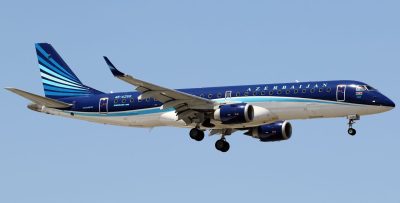
On December 25, 2024, Azerbaijan Airlines flight 4K-AZ65 tragically crashed near Aktau, Kazakhstan. The flight was en route from Baku to Grozny with 67 individuals on board. The incident resulted in the deaths of 38 passengers. Initial investigations suggest a complex interplay of technical failures and external factors, including adverse weather and potential military activity in the region.
Flight Details and Incident Overview
The flight was an Embraer ERJ-190AR, which faced technical difficulties prompting diversions. After being denied landing at two Russian airports, the aircraft attempted to reach Aktau but crashed approximately three kilometres from the airport. Reports indicate that the plane may have been shot down, although this remains under investigation.
Investigation Process
The investigation involves multiple countries, including Kazakhstan, Azerbaijan, and Russia. Flight data recorders were sent to Brazil for analysis. The investigation is being overseen by the International Civil Aviation Organization (ICAO) and the Interstate Aviation Committee. The final report is expected to clarify the causes and responsibilities surrounding the crash.
International Reactions and Legal Implications
Azerbaijani President Ilham Aliyev stated that the aircraft was shot down, raising questions about state responsibility. Russian President Vladimir Putin expressed regret over the incident occurring in Russian airspace. The incident has sparked discussions on international aviation safety and accountability.
Impact of Conflict Zones on Civil Aviation
The crash marks the risks of operating civilian flights in conflict zones. ICAO guidelines emphasise the need for states to provide updated risk assessments. The importance of robust cybersecurity measures against GPS jamming and spoofing is telld. These technologies pose severe risks to navigation and communication systems.
Global Initiatives for Aviation Safety
In response to past incidents, several global initiatives have emerged. Canada’s Safer Skies initiative and the ICAO’s Risk Assessment Manual provide frameworks for assessing and mitigating risks in conflict zones. The IATA Tactical Operations Portal offers real-time alerts to aviation stakeholders.
GPS Interference and Hotspots
Flightradar24 reports that GPS jamming is prevalent around the Black Sea, while spoofing is common in Iraq, Ukraine, and Russia. Flight crews receive training on managing these risks. About these interference hotspots is critical for enhancing aviation safety.
Legal Framework and Responsibilities
The incident raises legal questions regarding jurisdiction and state responsibility under international law. The Montreal Convention outlines liability for damages, but state involvement could complicate matters. The Chicago Convention prohibits the use of weapons against civil aircraft, denoting the need for stricter regulations.
Future Directions for Aviation Regulation
The Azerbaijan Airlines incident puts stress on the need for enhanced international regulations governing civil aviation. Greater cooperation among states is essential to ensure safety and accountability in air travel, particularly in conflict zones.
Questions for UPSC:
- Examine the implications of operating civilian flights in conflict zones and the measures needed to enhance safety.
- Critically discuss the role of international law in regulating state responsibility for incidents involving civilian aircraft.
- Discuss the significance of GPS jamming and spoofing in aviation safety, with suitable examples.
- Analyse the effectiveness of global initiatives aimed at improving aviation safety in conflict zones, taking examples from recent incidents.
Answer Hints:
1. Examine the implications of operating civilian flights in conflict zones and the measures needed to enhance safety.
- Civilian flights in conflict zones face risks from military activity, leading to potential accidents and casualties.
- ICAO guidelines recommend states provide updated risk assessments to airlines regarding threats in these areas.
- Airlines must conduct their own risk assessments to ensure passenger safety and avoid dangerous airspace.
- Enhanced cybersecurity measures are needed to protect against GPS jamming and spoofing that disrupt navigation.
- International cooperation is essential for establishing protocols and frameworks that govern aviation safety in conflict zones.
2. Critically discuss the role of international law in regulating state responsibility for incidents involving civilian aircraft.
- The Chicago Convention mandates states to ensure the safety of civil aviation within their airspace.
- The Montreal Convention outlines liability for damages resulting from incidents involving civilian aircraft.
- If state involvement is proven, principles of state responsibility under international law may apply, complicating liability issues.
- International humanitarian law prohibits the use of weapons against civil aircraft, denoting states’ obligations to protect civilian flights.
- There is a pressing need for clearer regulations and frameworks to address state accountability in aviation incidents.
3. Discuss the significance of GPS jamming and spoofing in aviation safety, with suitable examples.
- GPS jamming disrupts navigation signals, posing risks to aircraft operating in affected areas, such as the Black Sea region.
- Spoofing sends false signals, misleading pilots and air traffic control, which can lead to navigational errors.
- Recent incidents, like the Azerbaijan Airlines crash, highlight the severe impact of these technologies on aviation safety.
- Flight crews are trained to manage risks associated with GPS interference, enhancing their situational awareness.
- Robust incident reporting and alternative navigation systems are necessary to mitigate risks from GPS jamming and spoofing.
4. Analyse the effectiveness of global initiatives aimed at improving aviation safety in conflict zones, taking examples from recent incidents.
- Canada’s Safer Skies initiative aims to enhance aviation safety following incidents like the shooting down of PS752.
- The ICAO’s Risk Assessment Manual provides guidelines for assessing risks in conflict zones, promoting safer operations.
- The IATA Tactical Operations Portal offers real-time alerts to aviation stakeholders, improving situational awareness.
- Efforts like the Expert Group on Risk Information overflying Conflict Zones (EGRICZ) facilitate information sharing among states.
- Despite these initiatives, ongoing conflicts and technological challenges necessitate continuous improvement in safety measures.