
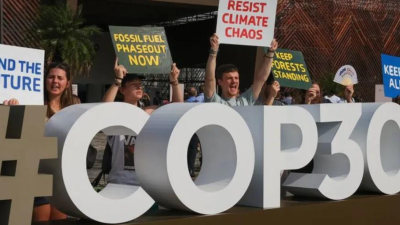
The COP30 climate summit held in Brazil in 2025 concluded with a consensus called the Mutirão agreement. Countries agreed to prioritise adaptation to climate change over immediate fossil fuel phase-out road maps. The summit also emphasised climate finance, especially for developing nations, while addressing trade concerns linked to climate policies.
Emphasis on Adaptation Over Fossil Fuel Phase-Out
COP30 did not include any specific roadmap to end fossil fuel use. Instead, the focus shifted to adapting infrastructure and economies to withstand climate impacts. This reflects a pragmatic approach recognising the complexity of phasing out fossil fuels globally. Adaptation finance is set to at least triple by 2035, signalling growing support for resilience-building measures.
Climate Finance Commitments
The agreement establishes a two-year work programme on climate finance. Developed countries committed to mobilising $300 billion annually by 2035 under the New Collective Quantified Goal (NCQG). The target aims to expand to $1.3 trillion annually from all sources. Finance is to be split more evenly between mitigation and adaptation, though adaptation has historically received less funding.
Trade and Climate Policy Dialogue
COP30 introduced systematic dialogue involving UN trade bodies such as the International Trade Centre, UNCTAD, and WTO. The goal is to ensure climate measures do not unfairly restrict trade or hinder growth in developing countries. This reflects concerns about unilateral trade-restrictive climate policies that could impact developing economies.
Just Transition Mechanism (JTM)
The agreement includes the Just Transition Mechanism. This aims to support labour and communities affected by the move away from fossil fuels. It promotes fairness and equity in adapting economies and workforces to climate goals. The JTM is a key outcome welcomed by developing countries as a step towards inclusive climate action.
Ideological Divides and Negotiation Dynamics
COP30 negotiations revealed an ideological divide. Some parties pushed for hard targets on fossil fuel phase-out. Others, especially developing nations, resisted such demands citing development needs. India expressed satisfaction with outcomes that balanced climate goals with economic growth and trade concerns. The absence of fossil fuel phase-out in the agreement marks ongoing tensions.
Future Roadmaps and Commitments
COP30 President André Lago pledged two future roadmaps – one to halt and reverse deforestation, another to transition away from fossil fuels in a just and orderly way. These roadmaps aim to address demands from the European Union and others while maintaining consensus. They represent ongoing efforts to reconcile climate ambition with political realities.
Questions for UPSC:
- Critically analyse the role of climate finance in balancing mitigation and adaptation efforts in developing countries with suitable examples.
- Explain the significance of the Just Transition Mechanism in addressing socio-economic impacts of climate change policies on labour markets.
- What are unilateral trade-restrictive climate measures? How do they affect international trade and economic growth of developing countries?
- With suitable examples, comment on the challenges of achieving global consensus on fossil fuel phase-out in international climate negotiations.
Answer Hints:
1. Critically analyse the role of climate finance in balancing mitigation and adaptation efforts in developing countries with suitable examples.
- Climate finance funds mitigation (renewable energy, emission cuts) and adaptation (resilient infrastructure, agriculture).
- Developing countries need more adaptation finance due to higher vulnerability and limited resources.
- Mitigation projects often attract more business-friendly investments, causing imbalance in funding.
- Example – COP30’s commitment to triple adaptation finance by 2035 aims to correct historic underfunding.
- Effective climate finance supports sustainable development without compromising economic growth.
- Challenges include mobilising sufficient funds ($300 billion annually by 2035 under NCQG) and equitable distribution.
2. Explain the significance of the Just Transition Mechanism in addressing socio-economic impacts of climate change policies on labour markets.
- JTM ensures fairness for workers and communities affected by fossil fuel phase-out.
- It promotes re-skilling, job creation in green sectors, and social protection measures.
- Supports equitable economic transition avoiding unemployment and social unrest.
- Recognises diverse impacts on labour markets, especially in developing countries reliant on fossil fuels.
- Facilitates inclusive climate policies balancing environmental goals with social justice.
- Example – COP30’s inclusion of JTM welcomed by developing nations as a step toward just climate action.
3. What are unilateral trade-restrictive climate measures? How do they affect international trade and economic growth of developing countries?
- Unilateral trade-restrictive climate measures are policies by one country restricting imports/exports to enforce climate goals.
- Examples include carbon border adjustment mechanisms and import tariffs linked to carbon footprints.
- They can limit market access for developing countries lacking clean technologies.
- May increase production costs and reduce competitiveness of developing country exports.
- Risk of trade disputes and protectionism harming global cooperation.
- COP30’s dialogue with UN trade bodies aims to prevent such measures from impeding growth and fair trade.
4. With suitable examples, comment on the challenges of achieving global consensus on fossil fuel phase-out in international climate negotiations.
- Divergent priorities – Developed countries push for phase-out; developing countries emphasize economic growth and energy access.
- Fossil fuels remain central to many developing economies for development and poverty alleviation.
- Political and ideological divides hinder agreement on binding roadmaps.
- Example – COP30’s Mutirão agreement excludes fossil fuel phase-out roadmap reflecting these tensions.
- Future roadmaps (deforestation, fossil fuel transition) pledged as compromise but delayed action risks climate goals.
- Balancing climate ambition with equity and development needs remains a persistent negotiation challenge.