
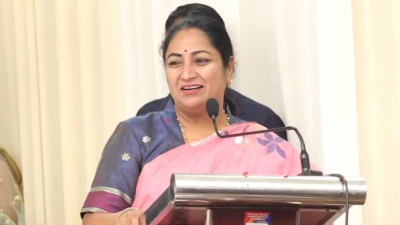
Delhi Chief Minister Rekha Gupta announced on 23 September 2025 that loudspeaker use during cultural and religious festivals like Ramlila and Durga Puja will be permitted until midnight. This extends the usual 10 pm cut-off by two hours. The extension is allowed under existing noise pollution laws for limited festive occasions.
Legal Framework on Loudspeaker Use
The Noise Pollution (Regulation and Control) Rules, 2000, under the Environment (Protection) Act, 1986, regulate loudspeaker use. Loudspeakers require written permission from authorities. Use is banned between 10 pm and 6 am in public spaces except closed venues. Daytime noise limits are 55 decibels (dB) and nighttime limits 45 dB in residential zones. Rule 5(3) permits state governments to allow loudspeaker use until midnight for up to 15 days annually during festivals.
Supreme Court Judgements on Noise Pollution
The Supreme Court has emphasised the right to a peaceful environment under Article 21 of the Constitution. It ruled that loudspeaker use is not a fundamental religious right under Article 25. The 2005 suo moto case established the 10 pm to 6 am ban on loudspeakers. The Court upheld the 15-day midnight exemption but restricted it to state governments, forbidding delegation or extension beyond two hours or 15 days. Silence zones near hospitals, schools and courts are exempt from this relaxation.
High Court Rulings and Enforcement
High Courts have enforced noise rules strictly. The Bombay High Court in 2016 stated loudspeakers are not essential to religion and criticised lax enforcement. Karnataka High Court allowed loudspeakers inside closed halls during banned hours with strict noise limits. Punjab and Haryana High Courts mandated written permissions and confidential complaint mechanisms. The Allahabad High Court distinguished between religious practices and loudspeaker use for azaan, ruling microphones are a modern addition.
Recent Innovations in Noise Control
Recently, the Bombay High Court introduced graded penalties for violations – warnings, fines, then seizure of loudspeakers. It recognised cumulative noise levels from multiple sources in an area. The court encouraged mobile decibel apps and automatic decibel limit controls in devices to aid enforcement. These measures aim to balance cultural expression with citizens’ right to peace.
Questions for UPSC:
- Discuss in the light of the Noise Pollution (Regulation and Control) Rules, 2000, the challenges faced in balancing cultural freedoms and environmental rights in India.
- Analyse the role of the judiciary in enforcing environmental laws with suitable examples from noise pollution cases in India.
- Taking the example of noise pollution regulation, examine how constitutional rights can be limited to protect public interest and social welfare.
- Critically discuss the effectiveness of technological interventions in environmental governance with reference to recent innovations in noise pollution control.