
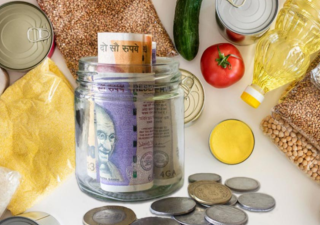
Recent data from 2022-23 reveals disparities in monthly per capita consumption expenditure across districts in Uttar Pradesh. A pilot study by the Ministry of Statistics and Programme Implementation (MoSPI) used innovative statistical techniques to estimate consumption at the district level. This effort supports the state’s goal of becoming a $1 trillion economy through data-driven governance and targeted welfare planning.
Consumption Expenditure Variations Across Districts
Sonbhadra, the second-largest district in Uttar Pradesh, recorded one of the lowest rural monthly per capita consumption expenditures at Rs 2,337. In stark contrast, rural Gautam Buddha Nagar, part of the Delhi NCR, had nearly double this figure. Urban areas showed even wider gaps – Noida in Gautam Buddha Nagar saw almost Rs 10,000 per month, the highest in the state, while urban Ballia in eastern Uttar Pradesh spent just Rs 2,575. These figures show the uneven economic landscape within the state.
State and National Consumption Benchmarks
The average monthly rural consumption in Uttar Pradesh was Rs 3,191, below the national rural average of Rs 3,773. Urban consumption in Uttar Pradesh was Rs 5,040, again lower than the national urban average of Rs 6,459. These comparisons indicate Uttar Pradesh’s consumption levels lag behind national figures, emphasising the need for focused economic development.
Methodology – Small Area Estimation Models
Direct survey data at the district level is limited due to small sample sizes. MoSPI surveyed over 2.6 lakh households nationwide but only about 30,000 in Uttar Pradesh, with even fewer per district. To overcome this, statisticians applied Small Area Estimation techniques, combining survey data with administrative records such as pensioners, health scheme beneficiaries, and LPG connections. Two models, Fay-Herriot (FH) and Spatial Fay-Herriot (SFH), were tested, with SFH providing more accurate rural estimates. This approach ensures reliable district-level consumption estimates.
Implications for Policy and Planning
The study’s results provide critical insights for policymakers to design welfare schemes tailored to district-specific needs. Accurate consumption data aids in monitoring living standards and addressing regional inequalities. The methodology can extend to other socio-economic indicators like employment and poverty, promoting evidence-based governance and enhancing local-level planning in Uttar Pradesh and beyond.
Collaborative Efforts to Strengthen Statistical Systems
The pilot study coincided with meetings between MoSPI officials and the Uttar Pradesh government. Discussions focused on improving the state’s statistical infrastructure to support its $1 trillion economy ambition. Officials reiterated their commitment to data-driven governance, recognising the importance of robust statistics in economic planning and welfare monitoring.
Questions for UPSC:
- Discuss the role of Small Area Estimation techniques in improving data reliability for policymaking in India.
- Critically examine the challenges and opportunities in achieving balanced regional development in large states like Uttar Pradesh.
- Explain the significance of household consumption expenditure data in formulating welfare schemes and economic policies.
- With suitable examples, discuss the importance of data-driven governance and its impact on achieving economic growth targets in state of Indias.
Answer Hints:
1. Discuss the role of Small Area Estimation techniques in improving data reliability for policymaking in India.
- Small Area Estimation (SAE) combines survey data with auxiliary administrative data to improve estimates where direct survey samples are small.
- SAE addresses limitations of small sample sizes at district or sub-district levels, enhancing precision in localized data.
- Techniques like Fay-Herriot (FH) and Spatial Fay-Herriot (SFH) models incorporate spatial correlation and auxiliary variables for better accuracy.
- Improved data reliability aids policymakers in accurate targeting of welfare schemes and resource allocation at micro levels.
- SAE enables filling data gaps in socio-economic indicators such as consumption, poverty, and employment, supporting evidence-based governance.
- Its application in Uttar Pradesh pilot study demonstrates scalability to other states and indicators, promoting data-driven local planning.
2. Critically examine the challenges and opportunities in achieving balanced regional development in large states like Uttar Pradesh.
- Challenges include wide disparities in consumption, income, infrastructure, and access to services between districts (e.g., Sonbhadra vs Gautam Buddha Nagar).
- Unequal urban-rural development and concentration of economic activities in few districts hinder inclusive growth.
- Limited availability of reliable, granular data complicates targeted policy interventions and monitoring of regional inequalities.
- Opportunities lie in leveraging data-driven governance and statistical innovations to identify backward regions and tailor welfare schemes accordingly.
- State initiatives aligned with $1 trillion economy goal can prioritize balanced infrastructure and human capital development across districts.
- Collaboration between central and state statistical bodies can strengthen data systems to support evidence-based regional development policies.
3. Explain the significance of household consumption expenditure data in formulating welfare schemes and economic policies.
- Consumption expenditure data reflects living standards, poverty levels, and economic well-being of households at detailed levels.
- It helps identify vulnerable and low-income populations requiring targeted social protection and subsidy programs.
- Data guides allocation of resources, design of welfare schemes, and evaluation of their effectiveness over time.
- District-level consumption estimates enable localized planning and monitoring of regional disparities.
- Consumption patterns influence macroeconomic policy decisions related to demand management and inclusive growth strategies.
- Accurate data supports evidence-based governance, reducing leakages and improving transparency in welfare delivery.
4. With suitable examples, discuss the importance of data-driven governance and its impact on achieving economic growth targets in states of India.
- Data-driven governance enables precise identification of development gaps, allowing targeted interventions (e.g., UP’s use of consumption data for welfare planning).
- Use of statistical models and administrative data integration improves policy design and resource efficiency.
- Regular data updates facilitate monitoring progress towards economic goals like UP’s $1 trillion economy mission.
- Examples include improved welfare delivery through schemes like Ayushman Bharat, LPG subsidy, and pension programs informed by data.
- Data transparency encourages accountability and citizen trust, enhancing governance outcomes.
- States adopting data-driven approaches can better manage regional inequalities, boost human capital, and accelerate inclusive growth.