
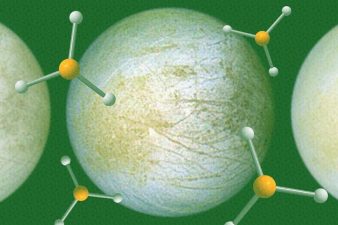
Recent discoveries have reignited interest in the search for extraterrestrial life. Scientists have detected signals of sulphur-containing gases on the planet K2-18b. This planet lies about 120 light years from Earth. The findings suggest the possibility of life-supporting conditions. However, experts caution against jumping to conclusions. They stress that more research is needed to confirm any claims of life.
The Planet K2-18b
K2-18b was discovered in 2015. It is approximately nine times heavier than Earth. The planet orbits a cooler, smaller star and resides in the “habitable zone.” This zone allows for the potential presence of liquid water. Water is essential for life as we know it. Previous studies have indicated water vapour in K2-18b’s atmosphere. The latest research has strengthened earlier findings regarding gases linked to life.
Key Discoveries
A research team from the University of Cambridge reported strong signals of dimethyl sulphide (DMS) and dimethyl disulphide (DMDS). These gases are by-products of biological processes on Earth. Their presence on K2-18b raises questions about the planet’s environment. Scientists speculate that it may have warm oceans, similar to early Earth. However, the discovery does not confirm the existence of life.
Importance of Water
Water is important factor in the search for extraterrestrial life. It has been found in various forms on multiple celestial bodies. Despite this, no definitive evidence of life has been observed elsewhere. Mars and Venus have shown signs of gases that could indicate life. Yet, these findings remain unproven.
The Role of Astrobiology
Astrobiology is a growing field dedicated to exploring life beyond Earth. It encompasses the study of various environments and potential life forms. The search for extraterrestrial life is still in its infancy. Thus, the lack of direct evidence does not eliminate the possibility of life existing elsewhere.
The Drake Equation
The Drake equation estimates the number of extraterrestrial civilisations in our galaxy. It considers factors like star formation rates and the likelihood of habitable planets. Due to uncertainties, the results can vary widely. The equation is not a definitive answer but a statistical tool. It helps frame our understanding of life’s potential in the universe.
Caution in Interpretation
While the discovery of these gases is , caution is advised. Scientists warn that unknown chemical processes could produce similar results. Thus, the mere presence of certain gases does not confirm life. Ongoing research is vital to uncovering the truth about K2-18b and other celestial bodies.
Questions for UPSC:
- Point out the significance of the habitable zone in the search for extraterrestrial life.
- Critically analyse the implications of the Drake equation in understanding potential extraterrestrial civilisations.
- What is astrobiology? How does it contribute to our understanding of life beyond Earth?
- Estimate the role of water in supporting life on other planets and discuss its importance in astrobiological studies.
Answer Hints:
1. Point out the significance of the habitable zone in the search for extraterrestrial life.
- The habitable zone is the region around a star where conditions may allow for liquid water, essential for life as we know it.
- Planets within this zone have a higher probability of supporting life due to favorable temperatures.
- K2-18b is located in the habitable zone of its star, making it a prime candidate for life exploration.
- The concept helps astronomers prioritize which exoplanets to study for signs of life.
- About the habitable zone aids in identifying potentially habitable planets beyond our solar system.
2. Critically analyse the implications of the Drake equation in understanding potential extraterrestrial civilisations.
- The Drake equation estimates the number of communicable extraterrestrial civilizations in our galaxy.
- It incorporates factors like star formation rates and the fraction of stars with planets, which are crucial for understanding life potential.
- Results from the equation can range widely, denoting the uncertainty in estimating extraterrestrial life.
- The equation encourages scientific inquiry and exploration in astrobiology and astrophysics.
- While not definitive, it serves as a framework for discussions about the existence of intelligent life beyond Earth.
3. What is astrobiology? How does it contribute to our understanding of life beyond Earth?
- Astrobiology is the study of life in the universe, including the origins, evolution, and potential for life beyond Earth.
- It combines multiple disciplines like biology, chemistry, and planetary science to explore extreme environments.
- Astrobiologists investigate conditions on other planets that could support life, guiding future missions and research.
- The field helps identify biosignatures, or indicators of life, in extraterrestrial atmospheres.
- Astrobiology encourages a broader understanding of life’s potential diversity and resilience in various environments.
4. Estimate the role of water in supporting life on other planets and discuss its importance in astrobiological studies.
- Water is considered a key ingredient for life, as it is essential for biochemical processes.
- It has been detected in various forms on celestial bodies, including Mars, Europa, and K2-18b.
- Astrobiological studies often focus on the presence of water to identify habitable environments.
- Liquid water can facilitate chemical reactions necessary for life, making it a priority in the search for extraterrestrial organisms.
- The ongoing exploration of water sources in space informs our understanding of where life might exist beyond Earth.