
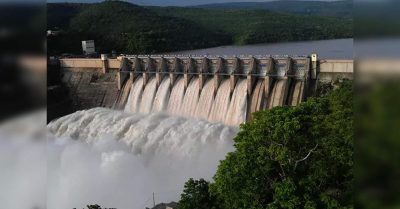
The National Board for Wildlife (NBWL) Standing Committee granted in-principle approval in June 2025 for diverting 142 hectares of forest land in Karnataka’s Sharavathi Valley Lion-Tailed Macaque Wildlife Sanctuary. This decision supports the Sharavathi Pumped Storage Project, aimed at generating 2,000 megawatts of power. The sanctuary, part of the Western Ghats and a UNESCO World Heritage Site, hosts the largest population of the endangered lion-tailed macaque. The project has sparked debate over ecological risks and economic viability.
Project Overview and Location
The project uses existing reservoirs—Talakalale and Gerusoppa—as upper and lower storage sites. It plans to harness a vertical head of over 460 metres. No new dams will be constructed. Water will be pumped uphill during the day using solar energy and released to generate electricity during peak evening hours. The scheme aims to supplement the existing 1,035 MW Sharavathi hydroelectric project.
Environmental Concerns
The sanctuary is home to about 700 lion-tailed macaques, an endangered species with only around 2,500 individuals left in the wild. The diversion includes 39.72 hectares from the eco-sensitive zone. Approximately 15,000 trees will be felled for road construction and underground pipe laying. Concerns include habitat disruption, loss of tree cover, and potential impact on wildlife movement.
Official Responses and Safeguards
The Karnataka chief wildlife warden described the project as green with minimal ecological impact. Mitigation measures include canopy bridges to ensure macaque movement. The project proponents show the use of existing infrastructure and renewable solar power integration. Forest clearance, wildlife clearance, and environmental clearance processes are ongoing simultaneously.
Criticism and Expert Opinions
NBWL members and wildlife experts raised issues about the lack of detailed environmental impact assessment. Questions were posed on the economic feasibility of pumped storage, given energy losses in pumping water uphill. Experts urged a thorough examination under the Van (Sanrakshan Evam Samvardhan) Adhiniyam, 1980, and recommended forming an expert committee for site inspection before final approval.
Regulatory and Procedural Aspects
The project was recommended by the state wildlife authorities and Karnataka government. The NBWL stipulated that final appraisal would proceed only after securing forest clearance. The committee placed conditions on the in-principle approval to ensure environmental safeguards. The approval process reflects the balance between developmental needs and wildlife conservation priorities in protected areas.
Significance of the Sanctuary
The Sharavathi Valley sanctuary is the largest habitat for lion-tailed macaques in the Western Ghats. It forms part of a globally recognised biodiversity hotspot. Preservation of this habitat is critical for the survival of several endemic and endangered species. The sanctuary’s ecological integrity is vital for maintaining regional biodiversity and ecosystem services.
Technical Details of the Pumped Storage
The project involves connecting existing reservoirs with underground pipes. The Linganamakki dam releases water to a 55 MW powerhouse via a power channel into the Talakalale reservoir. During daylight, solar power pumps water uphill. In the evening, water flows downhill to generate electricity. This load balancing approach aims to optimise renewable energy usage and meet peak electricity demand.
Questions for UPSC:
- Critically discuss the challenges of balancing infrastructure development and wildlife conservation in protected areas of India.
- Examine the ecological significance of the Western Ghats as a UNESCO World Heritage Site and its role in biodiversity conservation.
- Analyse the working principle of pumped storage hydroelectric projects and point out their advantages and limitations in India’s energy mix.
- Estimate the impact of forest land diversion on endangered species habitat and suggest mitigation strategies in the context of Indian environmental laws.