
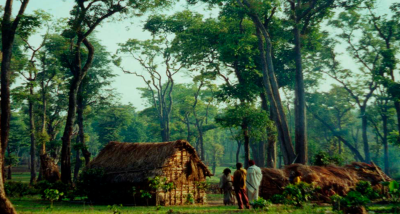
The Forest Rights Act, 2006 was one of the rare legislations in India to enjoy near-unanimous political support. Conceived as a “healing touch”, it sought to correct historical injustices suffered by forest-dwelling Scheduled Tribes and other traditional forest communities. Nearly two decades later, however, the Act stands at a critical juncture. What was designed as a rights-based framework for justice and conservation is increasingly being used as a political instrument, with serious ecological and governance consequences.
The original promise of the Forest Rights Act
The was meant to recognise legitimate individual and community rights over forest land and resources that were denied during colonial and post-colonial forest administration. It aimed to integrate forest-dwellers into conservation by giving them legal stakes, thereby aligning livelihood security with ecological protection.
At its core, the Act was a response to unresolved historical disputes arising from forest reservations, particularly in ex-princely and ex-zamindari areas where settlements were rushed and often incomplete after Independence.
How the Act became politically distorted
In practice, the implementation of the Act by the Ministry of Tribal Affairs () and several state governments has hollowed out its original intent. Instead of correcting past injustice, the Act has increasingly facilitated fresh encroachments on forest land, which are then regularised through Gram Sabha recommendations.
This has created an inherent conflict of interest. Gram Sabha members who encroach upon forest land often become the very authority that certifies and legitimises those claims. In electorally sensitive states such as Maharashtra, Odisha, Chhattisgarh and Madhya Pradesh, the FRA has gradually shifted from being about “rights” to being about “votes”.
The danger of an open-ended law
Unlike many corrective legislations, the FRA did not prescribe a firm cut-off date for filing claims. This open-ended design has proven disastrous in a competitive political environment. With no temporal boundary, encroachments are incentivised, as communities and political intermediaries anticipate future regularisation.
An Act meant to address historical injustice has thus become forward-looking in the worst possible way—rewarding recent and even ongoing forest clearances.
Ignoring science in the race for targets
The Ministry of Tribal Affairs, driven by target-based assessments of “progress”, has often pressured local administrations to disregard scientific evidence. Forest Departments possess time-series satellite imagery that clearly shows large-scale clearing of forests after the FRA’s 2005 eligibility cut-off. Yet, Gram Sabhas—frequently under the influence of local political brokers—are encouraged to override such evidence with populist assertions.
The net outcome is perverse. Instead of reversing injustice, the country is witnessing incentivised deforestation under the legal cover of rights recognition.
Rising conflicts and sidelining forest institutions
This faulty implementation has also fuelled conflict with Joint Forest Management (JFM) Committees, which were earlier institutional mechanisms for participatory conservation. The near silence of the forest establishment in this process is striking and runs counter to its mandate of ecological protection.
The Forest Survey of India’s 2023 report has already flagged adverse trends linked to the implementation of the Act, including forest degradation in several tribal-dominated regions.
The Gadchiroli bamboo model: empowerment or over-extraction?
The much-celebrated “Gadchiroli model” of bamboo management illustrates the deeper structural problem. While villages like Mendha-Lekha are showcased as symbols of community empowerment under Community Forest Rights (CFR), the broader district presents a worrying picture.
Bamboo, a biologically sensitive resource, is being harvested on an industrial scale without adherence to scientific Working Plans traditionally prepared by Forest Departments. In the absence of technical oversight, bamboo clumps are over-exploited for quick cash, ignoring regeneration cycles. Large areas of once-dense bamboo forests in Gadchiroli have been reduced to stumps, exposing the limits of unregulated “community management”.
Signs of policy drift beyond Maharashtra
Similar trends are emerging in Madhya Pradesh and Odisha, where studies indicate a sharp rise in the reconsideration of previously rejected claims. This points to systemic political pressure rather than genuine discovery of overlooked historical rights.
Given these developments, there is a compelling case for a comprehensive white paper on the Gadchiroli experience and comparable CFR models across states, led by senior forest authorities at both central and state levels.
Lessons from forest history often ignored
India’s forest history offers valuable perspective. Under Dietrich Brandis, the country’s first Inspector General of Forests appointed in 1864, forest reservation was combined with strong people-centric safeguards. Large tracts around villages were left for local use, and communities were informed of their rights through systematic village-level consultations.
Over time, however, these shared spaces were often captured by village elites, and unresolved disputes accumulated. Sub-divisional committees set up in 1989 to address such issues failed to deliver solutions. Instead of strengthening these institutional routes, political actors chose the easier path of encouraging encroachments and seeking post-facto regularisation.
Political origins and missed opportunities
The FRA emerged in 2006 after the United Progressive Alliance came to power with Left support. It also served as a political counter to the NDA government’s 2004 decision to regularise certain pre-1980 encroachments under the Forest Conservation Act.
Had either intervention been implemented impartially and with scientific rigour, it could have transformed tribal welfare. Instead, selective enforcement and political signalling undermined both conservation and justice.
Why an urgent review is unavoidable
The Act now requires an immediate, high-level review. A final cut-off date for claims is essential to prevent future encroachments. Equally important is restoring the primacy of scientific evidence, forest working plans, and ecological limits in decision-making.
If the FRA continues to function as an electoral instrument, India risks creating legally titled citizens in landscapes stripped of forests, with depleted water sources and declining agricultural resilience. Forest rights cannot survive without forests themselves.
What to note for Prelims?
- Objectives and provisions of the Forest Rights Act, 2006
- Role of Gram Sabha in FRA implementation
- Community Forest Rights (CFR) and Joint Forest Management (JFM)
- Forest Survey of India’s role in monitoring forest cover
What to note for Mains?
- Political economy of forest governance under the FRA
- Conflict between conservation goals and electoral incentives
- Limitations of community management without scientific oversight
- Need for balancing tribal justice with long-term ecological security