
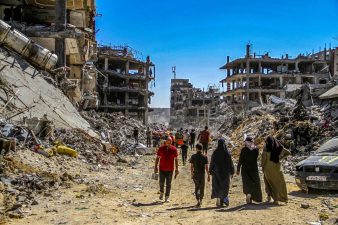
Recent developments in the Gaza Strip highlight the ongoing humanitarian crisis and complex ceasefire negotiations between Israel and Hamas. The fragile ceasefire, initially established to facilitate humanitarian aid and the release of hostages, has faced challenges. Tensions escalated as Israel suspended aid deliveries, citing Hamas’s failure to comply with new proposals. This situation has raised concerns over the well-being of the civilian population in Gaza and the future of negotiations.
Background of the Conflict
The conflict escalated dramatically on October 7, 2023, when Hamas militants attacked southern Israel. This assault resulted in the deaths of approximately 1,200 people, mainly civilians, and the abduction of 251 individuals. In response, Israel launched extensive military operations. The conflict has resulted in over 48,000 Palestinian fatalities, with number being women and children.
Ceasefire Phases and Humanitarian Aid
The first phase of the ceasefire lasted six weeks. During this period, Hamas released 25 Israeli hostages and the bodies of eight others. In exchange, Israel freed nearly 2,000 Palestinians. The ceasefire allowed for a surge in humanitarian aid, although disputes marred its implementation. Both sides accused each other of violations, complicating the situation.
Current Negotiations and Proposals
Israel has proposed extending the ceasefire through Ramadan and the Jewish Passover holiday. This proposal includes the release of half the hostages on the first day of the extension. Hamas, however, demands a permanent ceasefire and the release of more Palestinian prisoners in exchange for the remaining hostages. The negotiations are further complicated by external mediators, including Egypt and the United States.
Humanitarian Consequences
The humanitarian situation in Gaza is dire. The population has faced severe shortages of food and medical supplies. U.N. agencies have warned of potential famine. Israel’s blockade has been heavily criticised, with accusations of using starvation as a method of warfare. The International Criminal Court has issued an arrest warrant for Israeli officials based on these allegations.
International Response
International bodies have been closely monitoring the situation. The Biden administration has urged Israel to facilitate more aid. Meanwhile, South Africa has brought a case against Israel at the International Court of Justice, accusing it of genocide. Israel has dismissed these claims as biased and maintains that it has allowed sufficient aid into Gaza.
Impact on Civilians
The war has displaced portion of Gaza’s population. Estimates suggest that up to 90% of the 2.3 million residents have been displaced. Most of the remaining population relies heavily on international aid for survival. The psychological and physical toll on civilians continues to rise as the conflict drags on.
Questions for UPSC:
- Examine the role of international mediators in the Israel-Hamas conflict. How effective have they been?
- Discuss in the light of humanitarian law the implications of the blockade on Gaza by Israel.
- What are the historical roots of the Israel-Palestine conflict? How have these roots influenced current events?
- Critically discuss the impact of military conflicts on civilian populations, taking examples from recent global conflicts.
Answer Hints:
1. Examine the role of international mediators in the Israel-Hamas conflict. How effective have they been?
- Mediators like Egypt and the U.S. have facilitated negotiations between Israel and Hamas, aiming for ceasefires and humanitarian aid.
- Egypt has historically played important role in mediating ceasefires due to its geographical proximity and political influence.
- The U.S. has provided diplomatic support, often backing Israel’s proposals while urging for humanitarian considerations.
- Effectiveness has been mixed; while some temporary ceasefires have been achieved, lasting peace remains elusive due to deep-rooted mistrust.
- Recent proposals have been met with skepticism from both sides, indicating challenges in mediation efforts and the need for more robust engagement.
2. Discuss in the light of humanitarian law the implications of the blockade on Gaza by Israel.
- The blockade has severely restricted access to essential goods, leading to humanitarian crises, which may violate international humanitarian law.
- Under the Fourth Geneva Convention, occupying powers must ensure the provision of food and medical supplies to the civilian population.
- Accusations of using starvation as a method of warfare have been raised, complicating Israel’s legal standing under international law.
- The International Criminal Court has indicated potential war crimes, emphasizing the legal implications of the blockade.
- Humanitarian organizations have consistently reported on the dire living conditions in Gaza, denoting the blockade’s impact on civilians.
3. What are the historical roots of the Israel-Palestine conflict? How have these roots influenced current events?
- The conflict’s roots trace back to the late 19th century, focusing on competing nationalisms between Jewish and Arab populations in Palestine.
- The establishment of Israel in 1948 and subsequent wars led to displacement of Palestinians, creating a long-standing refugee crisis.
- Key events, such as the Six-Day War and the Oslo Accords, have shaped territorial disputes and the political landscape.
- Historical grievances continue to fuel tensions, influencing current negotiations and public sentiment on both sides.
- The ongoing conflict is often framed within historical narratives, complicating efforts for reconciliation and peace agreements.
4. Critically discuss the impact of military conflicts on civilian populations, taking examples from recent global conflicts.
- Military conflicts often result in civilian casualties, as seen in Gaza, Syria, and Yemen, where civilians bear the brunt of violence.
- Displacement is a common consequence, with millions forced to flee their homes, leading to refugee crises and humanitarian challenges.
- Access to basic needs, such as food, water, and healthcare, is severely disrupted, exacerbating suffering and increasing mortality rates.
- Psychological impacts, including trauma and PTSD, are prevalent among civilians, affecting future generations and community stability.
- International humanitarian law aims to protect civilians, but enforcement is often inadequate, leading to ongoing violations and suffering.