
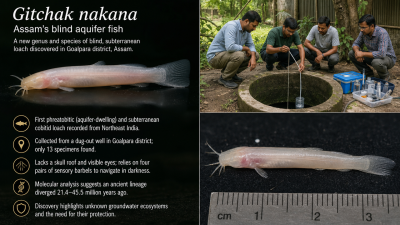
On 23 June 2026 scientists reported a new genus and species, Gitchak nakana, from a dug-out well in Goalpara district, Assam.
Taxonomy & morphology
- Taxon: Gitchak nakana, new genus and species (subterranean cobitid loach).
- Size: Maximum recorded length 20.8 mm.
- Skull & eyes: Skull roof absent; eyes not externally visible.
- Body & senses: Translucent body; four pairs of barbels with taste buds for non-visual navigation.
Habitat & occurrence
- Habitat type: Phreatobitic — obligate aquifer-dwelling, hypogean freshwater species.
- Location: Single dug-out well, Goalpara district, Assam; 13 specimens collected; absent from neighbouring wells.
Phylogeny & temporal data
- Molecular divergence: Estimated 21.4–45.5 million years ago.
- Habitat age mismatch: Current alluvial sediment habitat dated <1 million years.
- Publication: Species description published in Scientific Reports, February 2026.
Biogeographic and conservation notes
- Regional context: First subterranean cobitid loach recorded from Northeast India; adds to subterranean records from Kerala and Meghalaya.
- Threats to aquifers: Documented pressures include groundwater over-extraction, pollution and urban expansion.
IASPOINT Booster Facts
- Name origin: Derived from Garo terms na.tok (fish) and kana (blind).
- Phreatobitic definition: Species restricted to groundwater aquifers and connected hypogean zones.
- Significance for surveys: Groundwater fauna are often omitted from standard biodiversity assessments and require targeted sampling methods (well sampling, eDNA, baited traps).