
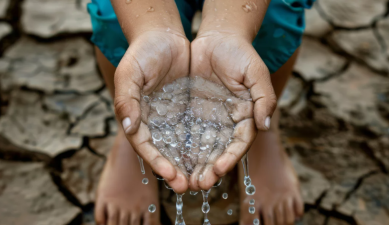
Freshwater scarcity is an escalating global challenge as the world’s population nears 10 billion by 2050. Despite freshwater accounting for just 2.57 per cent of Earth’s water, humanity depends almost entirely on it for survival. Meanwhile, 97.43 per cent of the planet’s water is saline and largely overlooked. This narrow focus on freshwater limits solutions to water crises. Recognising the potential of saline water could transform water management worldwide.
Freshwater Scarcity and Its Impact
Freshwater comprises a tiny fraction of Earth’s water, with rivers holding only 0.002 per cent. This limited supply supports all life, agriculture, and industry. Many regions, including India, face severe water stress. Nearly 45 per cent of India’s population experienced water scarcity by 2020. Demand is projected to double by 2030. Aging infrastructure worsens the problem. Groundwater depletion and climate change intensify shortages. Current responses focus mainly on conserving and reallocating freshwater.
Saline Water – A Vast Untapped Resource
The majority of Earth’s water is saline, primarily in oceans and seas. Saline water is often dismissed as unusable for drinking, farming, or industry due to high salt content. This perception has limited exploration of saline water’s potential. However, oceans provide seafood rich in nutrients and support coastal ecosystems. Salt-tolerant plants and crops, called halophytes, thrive in saline environments. These plants offer alternatives for food, fuel, and timber without using freshwater.
Halophytes and Saline Agriculture
Halophytes are salt-tolerant species used in agriculture and industry. They can produce grains, biofuels, and edible oils. Examples include mangroves for fuelwood and salt-tolerant Prosopis for timber. Saline horticulture and floriculture are emerging sectors. These crops reduce freshwater demand and open economic opportunities. Expanding saline agriculture can relieve pressure on freshwater resources.
Saline Water Footprint Concept
The saline water footprint measures the volume of saline water used in producing goods and services. Agriculture consumes 80 to 90 per cent of global freshwater. Substituting freshwater crops with saline-tolerant alternatives could increase the saline water footprint. Nearly 38 per cent of the world’s population lives near coastlines, offering access to saline water. Integrating saline water use into water management can conserve freshwater and enhance resilience.
Policy and Research for a Saline Future
A paradigm shift is needed to recognise saline water as a valuable resource. Policymakers, researchers, and investors must collaborate to develop desalination, saline agriculture, and seafood consumption strategies. Unified frameworks can scale saline water use and innovation. India, with its extensive coastline and water challenges, can lead this transition. Embracing saline water solutions is vital to address the global freshwater crisis sustainably.
Questions for UPSC:
- Critically analyse the impact of freshwater scarcity on agriculture and urban development in India with suitable examples.
- Explain the concept of the saline water footprint and discuss its potential role in global water sustainability.
- What are the challenges and opportunities in promoting halophyte-based agriculture in coastal regions? Comment on its socio-economic implications.
- Underline the significance of policy reforms and technological innovations in addressing the global water crisis, and suggest measures to integrate saline water resources effectively.
Answer Hints:
1. Critically analyse the impact of freshwater scarcity on agriculture and urban development in India with suitable examples.
- Freshwater constitutes only 2.57% of Earth’s water; rivers hold a mere 0.002%, crucial for agriculture and cities.
- Nearly 600 million Indians (~45% population) faced severe water scarcity by 2020, affecting crop yields and urban water supply.
- Groundwater depletion and climate change exacerbate shortages, reducing irrigation potential and drinking water availability.
- Aging dams and decaying infrastructure worsen water distribution, causing urban water stress and agricultural distress.
- Demand projected to double by 2030, threatening food security and urban growth in water-stressed regions like Punjab, Rajasthan, and Chennai.
- Examples – Chennai’s 2019 water crisis and Punjab’s declining groundwater table show urban and agricultural impacts.
2. Explain the concept of the saline water footprint and discuss its potential role in global water sustainability.
- Saline water footprint = total volume of saline water used in producing goods and services, analogous to freshwater footprint.
- Recognizes 97.43% of Earth’s water as saline, shifting focus from scarce freshwater to abundant saline resources.
- Integrating saline water footprint can reduce pressure on limited freshwater, especially in agriculture (which uses 80-90% freshwater).
- Promotes use of halophytes, saline agriculture, desalination, and seafood to expand sustainable water use.
- Nearly 38% of global population lives near coastlines, enabling access to saline water for economic activities.
- Supports a paradigm shift in water policy and management for resilience against climate change and population growth.
3. What are the challenges and opportunities in promoting halophyte-based agriculture in coastal regions? Comment on its socio-economic implications.
- Challenges – limited awareness, lack of research, infrastructure deficits, and initial investment costs for saline agriculture.
- Opportunities – halophytes produce grains, biofuels, edible oils, fuelwood, and timber without freshwater use.
- Halophytes can reclaim saline soils, improve coastal livelihoods, and reduce freshwater demand in agriculture.
- Economic benefits include new markets in floriculture, horticulture, and bio-industries, diversifying rural income sources.
- Supports food security and energy sustainability in vulnerable coastal communities facing salinity intrusion.
- Requires policy support, capacity building, and integration into local farming systems for scalable impact.
4. Underline the significance of policy reforms and technological innovations in addressing the global water crisis, and suggest measures to integrate saline water resources effectively.
- Current policies focus narrowly on freshwater conservation, ignoring 97.43% saline water potential.
- Technologies like desalination, saline agriculture, and halophyte cultivation can diversify water sources and reduce freshwater stress.
- Policy reforms should promote a unified saline water footprint framework for monitoring, scaling, and incentivizing saline water use.
- Investment in R&D, infrastructure modernization, and public-private partnerships is crucial for innovation adoption.
- Awareness campaigns and capacity building among stakeholders to shift mindset from freshwater fixation to saline resource utilization.
- India’s extensive coastline offers a strategic opportunity to lead in saline water integration, combining local solutions with global collaboration.