
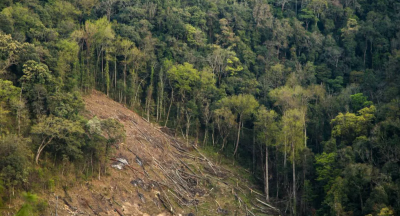
India’s renewed focus on forest restoration has gained momentum with the revised Green India Mission (GIM) blueprint of 2025. The mission aims to restore 25 million hectares of degraded land by 2030. This effort supports India’s climate goal to create an additional carbon sink of 3.39 billion tonnes of CO₂ equivalent. However, recent research shows that increasing forest cover alone is insufficient. The quality and resilience of forests are crucial for effective carbon absorption.
Revised Green India Mission Goals
The updated GIM prioritises ecological restoration over mere afforestation. It targets biodiversity-rich areas like the Aravalli Hills, Western Ghats, mangroves, and Himalayan catchments. The mission also integrates with other policies such as the National Agroforestry Policy and watershed programmes. The focus is on restoring degraded forests and non-forest lands with native species adapted to local conditions.
Challenges in Forest Restoration
India faces three main challenges – community participation, ecological design, and financing. Nearly 200 million people depend on forests for livelihoods. The Forest Rights Act (2006) grants them legal rights, yet many plantation efforts bypass these communities. This creates mistrust and weakens social legitimacy. Ecologically, past afforestation relied heavily on monocultures like eucalyptus, which harm soil and biodiversity. Financing is another hurdle, with large funds like CAMPA underutilised or inefficiently spent.
Scientific on Forest Health
A 2025 study by IIT Kharagpur and partners found a 12% decline in photosynthetic efficiency in dense Indian forests. The main causes are rising temperatures and drying soils due to climate change. This reduces forests’ carbon absorption capacity despite increased cover. The finding challenges the assumption that more trees always mean more carbon sinks. It calls for restoration strategies that enhance forest resilience and ecological health.
Community and State-Level Innovations
Some states showcase successful models. Odisha’s Joint Forest Management Committees involve local communities in planning and revenue sharing. Chhattisgarh promotes biodiversity-sensitive plantations supporting tribal livelihoods. Tamil Nadu has doubled mangrove cover in three years, improving carbon storage and coastal protection. Himachal Pradesh’s biochar project generates carbon credits while reducing fire risks. Uttar Pradesh planted over 39 crore saplings in 2025 and links village councils to carbon markets.
Financing and Institutional Capacity
CAMPA holds ₹95,000 crore but suffers from inconsistent utilisation. GIM’s budget remains modest and depends heavily on CAMPA funds. Effective use of money requires transparency and accountability. Training institutes in Uttarakhand, Coimbatore, and Byrnihat can build frontline staff capacity. Public dashboards tracking survival rates, species diversity, fund use, and community involvement could improve governance.
Policy Integration and Future Directions
The success of GIM hinges on aligning legal frameworks, funding, expertise, and community engagement. Forest departments must prioritise ecological restoration over targets based on area planted. CAMPA could expand to support participatory planning and adaptive management. Civil society and research bodies have roles in technical support and monitoring. This holistic approach can transform forest restoration into a sustained national movement supporting India’s climate and development goals.
Questions for UPSC:
- Discuss in the light of India’s Green India Mission how community participation influences sustainable forest management.
- Critically examine the role of monoculture plantations in ecological degradation and suggest alternatives with examples.
- Explain the impact of climate change on forest ecosystems and how it affects carbon sequestration capacity.
- With suitable examples, discuss the challenges and strategies for effective utilisation of environmental funds like the Compensatory Afforestation Fund Management and Planning Authority (CAMPA).
Answer Hints:
1. Discuss in the light of India’s Green India Mission how community participation influences sustainable forest management.
- Nearly 200 million Indians depend on forests for livelihoods, making community involvement crucial.
- The Forest Rights Act (2006) legally empowers communities to manage and protect forests.
- Excluding communities in plantation drives erodes trust, legality, and social legitimacy.
- Successful models like Odisha’s Joint Forest Management Committees integrate communities in planning and revenue sharing.
- Community participation ensures better protection, monitoring, and sustainable use of forest resources.
- Empowered communities encourage ecological restoration aligned with local needs and knowledge.
2. Critically examine the role of monoculture plantations in ecological degradation and suggest alternatives with examples.
- Monocultures like eucalyptus and acacia deplete groundwater and reduce soil quality.
- They crowd out native biodiversity and increase vulnerability to climate stress.
- Such plantations often fail to enhance forest resilience or carbon sequestration effectively.
- Alternatives include native, site-specific species that support biodiversity and ecological balance.
- Tamil Nadu’s mangrove restoration is an example of native species improving carbon storage and coastal protection.
- Biodiversity-sensitive plantations in Chhattisgarh align ecological health with tribal livelihoods.
3. Explain the impact of climate change on forest ecosystems and how it affects carbon sequestration capacity.
- A 2025 IIT study found a 12% decline in photosynthetic efficiency of dense forests due to rising temperatures and drying soils.
- Climate stress reduces forests’ ability to absorb carbon despite increased forest cover.
- Warming and drought weaken tree health, growth rates, and survival.
- Forest degradation leads to loss of biodiversity and ecosystem services.
- Restoration must focus on enhancing ecological resilience, not just increasing canopy area.
- Adaptive management and native species planting help mitigate climate impacts on forests.
4. With suitable examples, discuss the challenges and strategies for effective utilisation of environmental funds like the Compensatory Afforestation Fund Management and Planning Authority (CAMPA).
- CAMPA holds ₹95,000 crore but suffers from inconsistent and inefficient fund utilisation.
- Example – Delhi utilised only 23% of approved CAMPA funds between 2019-2024.
- Challenges include bureaucratic delays, lack of transparency, and inadequate monitoring.
- Strategies include linking funds to participatory planning, adaptive management, and ecological outcomes.
- States like Himachal Pradesh use funds innovatively for biochar projects generating carbon credits.
- Public dashboards tracking fund use, survival rates, and community involvement can improve accountability.