
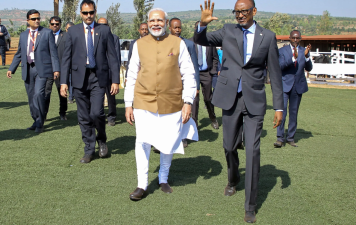
India and Africa have deepened ties since the 2015 India-Africa Forum Summit in New Delhi. This event marked a new phase in diplomacy under Prime Minister Narendra Modi. Over the past decade, India has expanded its diplomatic presence with 17 new missions across Africa. Trade between the two has crossed $100 billion. Investments and cooperation in diverse sectors have accelerated. India’s support for Africa’s global representation has also strengthened.
Diplomatic and Economic Expansion
India now ranks among Africa’s top five investors with $75 billion in cumulative investments. The focus has shifted from traditional infrastructure like ports to modern sectors such as power, digital technology and vaccine production. India’s Exim Bank extended $40 million in credit to the ECOWAS Bank for Investment and Development, signalling support for African-led growth. Despite these gains, Indian firms face challenges from limited capital and bureaucratic hurdles, slowing progress compared to China’s larger footprint.
Strategic Security Cooperation
Recently, India and nine African navies conducted the first Africa-India Key Maritime Engagement (AIKEYME). This naval exercise establishes a security partnership based on shared maritime interests. It reflects India’s commitment to regional stability and cooperation in the Indian Ocean region, reinforcing mutual security and strategic ties.
Education and Knowledge Partnerships
Education remains a mainstay of India-Africa relations. The IIT Madras campus in Zanzibar exemplifies this commitment. Long-standing programmes like the Pan-African e-Network and Indian Technical and Economic Cooperation (ITEC) continue to train thousands across Africa. Nearly 40,000 Africans have studied in India in the last decade, many returning to lead in governance and innovation. This human capital forms a vital bridge of trust and shared expertise.
Trade, Technology and Innovation
Africa’s economic landscape is evolving with the African Continental Free Trade Area (AfCFTA) creating a single continental market. India’s digital payment system UPI and technology stack can complement Africa’s digital growth. Cities like Kigali, Nairobi and Lagos are emerging as innovation hubs. India must move beyond traditional trade to co-invest in future sectors such as green hydrogen, electric mobility and digital infrastructure to remain competitive.
Future Directions and Institutional Revival
Sustaining momentum requires connecting finance to tangible outcomes. Public funds should de-risk private investments rather than replace them. Building an India-Africa digital corridor that leverages strengths from both sides can enhance platforms in health, education and payments. Reviving the India-Africa Forum Summit is crucial to renew diplomatic energy and coordinate efforts. This institutional backbone will guide the partnership into the future.
People-to-People Links
Beyond strategy, the India-Africa relationship is lived through people. African students, athletes and entrepreneurs thrive in India. Indian expertise and African talent exchange knowledge and culture. This human connection strengthens trust and cooperation, making it a foundation for long-term partnership.
Questions for UPSC:
- Critically discuss the role of diplomatic summits like the India-Africa Forum Summit in shaping international relations and trade partnerships.
- Analyse the challenges and opportunities of India’s investment strategy in Africa and its impact on India’s global economic positioning.
- Examine the significance of maritime security cooperation in the Indian Ocean region and its implications for regional stability and geopolitics.
- Estimate the potential of digital infrastructure and technology corridors in enhancing South-South cooperation between India and Africa.
Answer Hints:
1. Critically discuss the role of diplomatic summits like the India-Africa Forum Summit in shaping international relations and trade partnerships.
- IAFS-III (2015) marked a diplomatic milestone by bringing all 54 African states together in New Delhi, enhancing India’s global stature.
- Such summits provide a platform for high-level dialogue, enabling coordinated policy and strategic partnerships.
- They catalyse trade and investment agreements; since 2015, India-Africa trade surpassed $100 billion and investments reached $75 billion.
- Summits help build institutional frameworks and revive diplomatic energy, as seen in calls to reinstate IAFS meetings post-2015.
- They encourage people-to-people ties through education and cultural exchanges, strengthening trust beyond formal agreements.
- However, summits alone cannot guarantee delivery; follow-up mechanisms and on-ground implementation remain critical challenges.
2. Analyse the challenges and opportunities of India’s investment strategy in Africa and its impact on India’s global economic positioning.
- India is among Africa’s top five investors with $75 billion cumulative investments, signaling growing economic engagement.
- Challenges include limited capital size of Indian firms and bureaucratic delays, hindering competitiveness against larger players like China.
- Opportunities lie in shifting focus to future-facing sectors – green hydrogen, electric mobility, digital infrastructure, and vaccine production.
- India’s credit lines (e.g., $40 million to ECOWAS Bank) signal support for African-led development but need scaling for impact.
- Success in Africa can help India leverage demographic and economic growth corridors, boosting its global economic rank (projected #3 by 2050).
- Strategic investments can enhance India’s influence in global institutions and South-South cooperation frameworks.
3. Examine the significance of maritime security cooperation in the Indian Ocean region and its implications for regional stability and geopolitics.
- The Africa-India Key Maritime Engagement (AIKEYME) in 2025 involved nine African navies, reflecting a new security partnership.
- This cooperation addresses shared oceanic geography, securing vital sea lanes and enhancing regional maritime safety.
- It counters strategic competition in the Indian Ocean, balancing influences from China and other powers.
- Maritime security encourages trust, joint exercises, and intelligence sharing, strengthening political and defense ties.
- Regional stability supports economic activities, including trade and resource exploration, benefiting both India and African nations.
- Such partnerships contribute to India’s Act East and Indo-Pacific strategies, reinforcing its role as a security provider.
4. Estimate the potential of digital infrastructure and technology corridors in enhancing South-South cooperation between India and Africa.
- Africa’s AfCFTA aims to create a single continental market, presenting vast opportunities for digital integration.
- India’s UPI and India Stack can complement Africa’s digital ecosystem, enabling seamless payments and digital services.
- Co-developing platforms in health, education, and payments can address shared developmental challenges effectively.
- Building an India-Africa digital corridor can facilitate trade, innovation, and knowledge exchange, boosting economic growth.
- Digital cooperation supports emerging innovation hubs in African cities like Kigali, Nairobi, and Lagos.
- This collaboration exemplifies South-South cooperation by leveraging mutual strengths and encouraging inclusive development.