
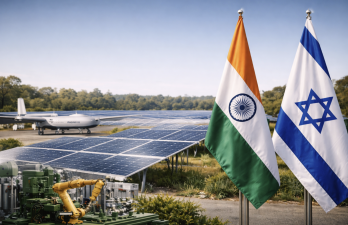
Recent developments have marked shift in India–Israel relations. During a 2026 summit, Prime Minister Narendra Modi and Israeli Prime Minister Benjamin Netanyahu elevated bilateral ties to a Special Strategic Partnership. This new framework includes 16 agreements across defence, digital infrastructure, emerging technologies, agriculture, and innovation. The move signals a broader and deeper engagement beyond traditional defence procurement, reflecting shared strategic interests amid a complex geopolitical landscape.
Evolution of India–Israel Relations
India and Israel’s relationship was once mainly based on defence purchases. The new partnership institutionalises cooperation across multiple sectors. It shifts from buyer-seller dynamics to co-development and joint innovation. This creates a resilient ecosystem involving research, digital payments, artificial intelligence (AI), cybersecurity, industrial research and development (R&D), and agricultural modernisation. The partnership aligns both countries’ national transformation goals.
Technology as Strategic Currency
Technology is central to the expanded cooperation. Israel is known for its start-up ecosystem, while India excels in digital public infrastructure. Collaboration in fintech and AI aims to boost innovation and defence modernisation. Cybersecurity cooperation is crucial to counter digital threats. Agricultural partnerships focus on water management and climate-resilient farming, addressing India’s productivity challenges. These efforts enhance sovereignty and practical socio-economic benefits.
Geopolitical and Regional Implications
The partnership sends a message of strategic autonomy by India, not aligning strictly with any bloc. It complements US interests without dependence. Pakistan views the enhanced defence collaboration with concern, as it may alter tactical balances through advanced technologies like drones and electronic warfare. China monitors the partnership carefully, as it impacts regional technology competition and supply chain resilience, potentially limiting its strategic leverage in South Asia.
Benefits for India and Israel
India gains through defence co-production, boosting indigenous manufacturing and employment. Digital and AI cooperation supports its global technology ambitions. Agriculture and water initiatives offer climate adaptation benefits. The arrangement strengthens deterrence without formal military alliances, preserving diplomatic flexibility. For Israel, the partnership expands its global diplomatic reach and economic ties, reinforcing its strategic relevance beyond the Middle East.
Topics for Prelims:
India–Israel Special Strategic Partnership
- Elevated in 2026 by Modi and Netanyahu.
- Includes 16 agreements across defence, technology, agriculture.
- Shifts from defence procurement to joint innovation.
- Focuses on AI, cybersecurity, fintech, water management.
- Supports strategic autonomy and multipolar diplomacy.
Technological Cooperation and Innovation
- Israel’s start-up ecosystem complements India’s digital scale.
- Collaboration in AI and fintech enhances defence and economy.
- Cybersecurity frameworks address digital threats.
- Agricultural tech includes drip irrigation and desert farming.
- Co-development strengthens supply chain resilience.
Geopolitical Impact in Asia
- Partnership aligns with US interests but retains Indian autonomy.
- Pakistan views it as a strategic challenge.
- China monitors for regional technology competition implications.
- Strengthens India’s position in multipolar Asia.
- Enhances deterrence without formal alliances.
Questions for Mains:
- Discuss in the light of India’s foreign policy how strategic autonomy is maintained through the India–Israel Special Strategic Partnership. [GS-II-Constitution of India & Polity]
- Analyse the role of technology in shaping modern bilateral relations with examples from the India–Israel cooperation in AI and cybersecurity. [GS-III-Science & Technology]
- With suitable examples, critically discuss the impact of India’s evolving defence partnerships on regional security dynamics in South Asia. [GS-III-Internal & External Security]
- Examine how agricultural technology collaborations between countries like India and Israel can contribute to climate resilience and food security. [GS-III-Environment & Disaster Management]
Answer Hints:
1. Discuss in the light of India’s foreign policy how strategic autonomy is maintained through the India–Israel Special Strategic Partnership. [GS-II-Constitution of India & Polity]
- India–Israel partnership elevated without formal military alliances, preserving diplomatic flexibility.
- India pursues interest-driven bilateral ties, not aligning strictly with any bloc or external pressure.
- Partnership complements US interests but puts stress on India’s independent decision-making.
- Co-development and joint innovation reduce dependence on single suppliers, enhancing sovereign capability.
- Maintains multipolar diplomacy by balancing relations with multiple global and regional powers.
- Strengthens India’s strategic leverage without compromising its non-aligned, autonomous posture.
2. Analyse the role of technology in shaping modern bilateral relations with examples from the India–Israel cooperation in AI and cybersecurity. [GS-III-Science & Technology]
- Technology is the core of expanded India–Israel partnership beyond defence procurement.
- Collaboration in AI advances both civilian industries and defence modernisation.
- Joint cybersecurity frameworks address rising digital threats from state and non-state actors.
- Fintech cooperation facilitates cross-border digital payment integration and innovation flow.
- Co-development encourages innovation ecosystems, moving from buyer-seller to joint R&D models.
- Technology cooperation enhances national sovereignty by securing critical digital infrastructure.
3. With suitable examples, critically discuss the impact of India’s evolving defence partnerships on regional security dynamics in South Asia. [GS-III-Internal & External Security]
- India–Israel defence co-production strengthens indigenous manufacturing and technological edge.
- Enhanced cooperation in drones, electronic warfare, and surveillance may alter tactical balances with Pakistan.
- Partnership signals durability and resilience in India’s defence capabilities, complicating adversaries’ strategic calculus.
- Absence of formal alliances allows India to maintain strategic flexibility amid multipolar regional tensions.
- Pakistan perceives the partnership as a challenge, potentially escalating regional security dilemmas.
- Broader cooperation impacts South Asian security architecture by introducing advanced technology and joint innovation.
4. Examine how agricultural technology collaborations between countries like India and Israel can contribute to climate resilience and food security. [GS-III-Environment & Disaster Management]
- Israel’s expertise in drip irrigation and desert farming addresses India’s water scarcity and climate stress.
- Joint projects improve agricultural productivity and rural livelihoods under changing climate conditions.
- Water recycling and efficient management techniques enhance sustainable resource use.
- Technology transfer aids India’s adaptation to climate variability and food security challenges.
- Collaborations move beyond theory to practical solutions benefiting millions of farmers.
- Supports India’s broader environmental goals and rural resilience strategies.