
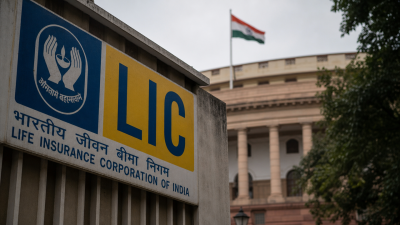
As of 8 July 2026, India’s life insurance sector holds nearly one quarter of outstanding central government dated securities, with LIC alone holding about 19%. The sector remains a major domestic buyer of sovereign debt while regulatory and policy actions are reshaping its future role in public financing.
Current issue
Life insurers provide a steady pool of long-term rupee financing for government expenditure. Their collective holdings (~25% of central dated securities) support market absorption of large borrowings. At the same time, regulatory changes, a planned small LIC stake sale and volatile foreign inflows create short‑to‑medium term uncertainties for the financing mix.
Why this matters
- Fiscal impact: Stable domestic demand for government securities reduces rollover risk and borrowing costs.
- Financial stability: High concentration of sovereign holdings in a few insurers implies systemic importance and supervisory implications.
- Household savings mobilisation: Insurers channel household savings into public debt; changes in insurance growth affect long‑term domestic financing capacity.
Role of the life insurance sector in government debt financing
Scale and mechanics
- Aggregate share: Life insurers collectively hold nearly 25% of central government dated securities; this share has been broadly stable even as sovereign debt expanded by about 40% over three years.
- Function: Insurers buy long‑dated G‑secs across funds, matching long‑term liabilities and providing durable market demand for government paper.
Life Insurance Corporation of India (LIC): size and systemic role
- Market position: LIC holds about 19% of all outstanding central government dated securities; it is the largest institutional holder of government debt.
- Portfolio numbers: LIC reported holdings of ₹20.2 lakh crore in central government securities and ₹32.3 lakh crore in total government and government‑guaranteed securities (March 2025 filings).
- Regulatory status: LIC is designated a Domestic Systemically Important Insurer (D‑SII) by IRDAI, reflecting its role in sovereign borrowing and systemic importance.
IRDAI regulatory framework and recent developments
- Past interventions: Three regulatory changes between 2023–24 compressed new business growth, reducing the inflow of fresh household savings into the sector.
- Proposed reforms: IRDAI invited comments on amendments to insurer registration, capital structure, share transfers and amalgamations aimed at easing compliance and encouraging investment.
- Agent compensation reform: IRDAI plans to move from large upfront commissions to staggered, life‑of‑policy payments to reduce mis‑selling; a consultation paper was expected by end July 2026.
Government disinvestment and market implications
- Planned OFS: The government planned an offer for sale of a minority LIC stake (about 1.5–2%) to raise up to ₹10,000 crore and meet SEBI public‑float norms.
- Market effects: Even a small divestment can alter corporate governance incentives, increase public float, and introduce institutional investor scrutiny of LIC’s investment strategy.
Other sources of government debt financing
| Source | Role / Feature | Notes |
|---|---|---|
| Life insurance sector | Long‑term investor; ~25% of central dated securities | Stable demand; matches long liabilities |
| Banks and financial institutions | Shorter to medium‑term buyers; liquidity buffer | Interest rate sensitive |
| Provident funds / pension funds | Large institutional holders; long horizon | Conservative investment mandates |
| Foreign portfolio investors (FPIs) | Volatile but sizable inflows | Record inflow of ₹55,518 crore into bond market in June 2026; sustainability concerns |
Key risks and challenges
- Concentration risk: Heavy reliance on a few insurers for a large share of demand raises systemic and market‑conduct concerns.
- Flow of household savings: Regulatory compression of new business reduces future premium inflows and long‑term savings available for G‑secs.
- Asset‑liability mismatch: Product design changes or sudden yield shocks can force portfolio adjustments, impacting market liquidity and yields.
- Foreign flow volatility: Large episodic FPI inflows are helpful but can reverse quickly, exposing borrowing plans to rollover risk.
- Governance and transparency: Ownership changes and public listing obligations alter incentives for investment policy and disclosure.
Strategic measures for sustainable government debt financing
- Diversify investor base: Develop pension funds, mutual funds, and corporate bond markets to reduce concentration on life insurers.
- Deepen the bond market: Enhance liquidity via a longer, more liquid yield curve; increase market‑making and repo facilities for G‑secs.
- Promote insurance penetration: Policy measures to increase coverage and new business will expand long‑term domestic savings.
- Balanced regulation: Calibrate agent compensation and product rules to protect policyholders while preserving distribution incentives; provide transition windows.
- Fiscal prudence and debt management: Maintain credible fiscal consolidation and a predictable borrowing calendar to anchor investor expectations.
- Market infrastructure: Strengthen settlement, custody and indexation options including inflation‑linked and long‑dated instruments to match liabilities.
Model Questions
1. Examine the role of India’s life insurance sector in financing government debt and its implications for fiscal health. [GS-III: Economic Development]
Life insurers hold nearly 25% of central dated securities; LIC alone holds ~19%, providing durable rupee financing and smoothing absorption of large borrowings. Benefits include lower rollover risk and longer‑term funding. Risks include concentration, potential asset‑liability mismatch and reduced new premium inflows after regulatory compression. Fiscal health requires diversification of investor base, deeper bond markets and policies to expand insurance penetration.
2. Analyse the significance of LIC’s D‑SII status and the implications of the proposed small OFS for the sovereign borrowing programme and market governance. [GS-II: Governance]
LIC’s D‑SII designation recognises systemic importance given its ₹20.2 lakh crore central G‑sec holdings and ₹32.3 lakh crore government‑linked portfolio. D‑SII status implies stronger supervision and contingency planning. A 1.5–2% OFS (~₹10,000 crore) raises public float and market discipline but may shift governance incentives. Policy must balance market disclosure, investor protection and continuity of LIC’s role in sovereign funding.
3. Critically assess the effects of IRDAI’s recent regulatory interventions on new insurance business and evaluate proposed reforms such as agent compensation changes. [GS-III: Economic Development]
IRDAI interventions in 2023–24 compressed new business, reducing fresh household savings available to insurers. Proposed reforms (registration, capital rules, staggered agent commissions) seek to improve compliance and curb mis‑selling. A balanced approach needs phased implementation, transitional distribution incentives, capital adequacy buffers, and support for digital distribution to restore growth while protecting policyholders.
4. Evaluate India’s current sources of government debt financing, including domestic institutional investors and foreign inflows, and suggest measures for ensuring sustainable long‑term funding. [GS-III: Economic Development]
Primary domestic sources include life insurers (~25%), banks, provident funds and mutual funds; FPIs contributed a record ₹55,518 crore in June 2026 but remain volatile. Sustainable funding requires deepening domestic bond markets, broadening institutional participation, improving market liquidity and instruments, promoting insurance penetration and maintaining fiscal discipline to reduce overreliance on any single investor class.
Last Modified: July 8, 2026