
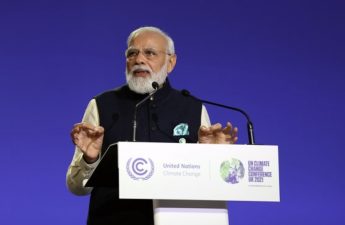
India has officially withdrawn its bid to host the 33rd United Nations Climate Change Conference (COP33) scheduled for 2028. This decision reverses the proposal made by Prime Minister Narendra Modi during COP28 in December 2023. The withdrawal was communicated through an official letter dated April 2, 2026, from India’s environment ministry to the chair of the Asia-Pacific Group. This move has created uncertainty over the future host of COP33, which is traditionally selected through a regional rotation system by the United Nations Framework Convention on Climate Change (UNFCCC).
Reasons Behind India’s Withdrawal
The official reason cited for the withdrawal was a “review of its commitments” for 2028. While the Indian government has not issued a formal public statement, expert analysis suggests multiple factors influenced the decision. These include competing diplomatic priorities, reassessment of financial and organisational capacity, and concerns over hosting a large international event amid global geopolitical tensions. The ongoing U.S.-Iran conflict and regional instability have reportedly contributed to a more cautious diplomatic approach.
Impact on UNFCCC Hosting Rotation
The UNFCCC follows a regional rotation system for hosting COP summits among five groups: Africa, Asia-Pacific, Eastern Europe, Latin America and the Caribbean, and Western Europe and Others. As 2028 was Asia-Pacific’s turn to host COP33, India’s withdrawal leaves this slot vacant. The Asia-Pacific Group must now reach consensus on an alternative host country. Potential candidates from the region include South Korea, but no formal nomination has been made. Failure to nominate a host could result in the UNFCCC headquarters in Germany stepping in as a fallback venue.
Strategic and Domestic Considerations
Experts have described India’s withdrawal as a missed opportunity to lead climate diplomacy among Global South countries and showcase its renewable energy progress. The decision follows India’s recent approval of its third Nationally Determined Contribution (NDC), which some view as conservative. Domestic challenges such as high pollution levels during the proposed summit months and the political sensitivity of hosting international protests may have also contributed to the decision. India had earlier established a dedicated “COP33 cell” within its environment ministry, indicating prior commitment to hosting.
Future Prospects for COP33 Hosting
With India stepping back, the Asia-Pacific Group faces pressure to identify a new host country to maintain regional rotation integrity. The host country plays a vital role in setting the COP agenda, mediating negotiations, and projecting leadership on climate issues. The delay or absence of a host could affect the momentum of global climate talks. The UNFCCC Secretariat continues to engage with member states to finalise arrangements ahead of COP33.
What to Study for UPSC Exams?
- UNFCCC and COP Summit Mechanisms
- Nationally Determined Contributions (NDCs)
- Geopolitical Impacts on Climate Diplomacy
- Asia-Pacific Regional Group in UN
- Climate Change Mitigation Strategies in India
UNFCCC and COP Summit Mechanisms
The United Nations Framework Convention on Climate Change (UNFCCC) is an international treaty adopted in 1992 to combat climate change. It organizes annual Conferences of Parties (COP) to assess progress and negotiate commitments. COP summits rotate hosting among five regional groups: Africa, Asia-Pacific, Eastern Europe, Latin America and the Caribbean, and Western Europe and Others. The host country influences agenda-setting and negotiations. Decisions are made by consensus or voting among member states. The UNFCCC Secretariat facilitates these processes and supports implementation of climate agreements like the Paris Agreement.
Nationally Determined Contributions (NDCs)
Nationally Determined Contributions (NDCs) are climate action plans submitted by countries under the Paris Agreement to reduce greenhouse gas emissions. They outline targets, policies, and measures for mitigation and adaptation. NDCs are updated every five years to increase ambition. They reflect national circumstances and capabilities. The collective goal is to limit global warming to well below 2°C, preferably 1.5°C. Transparency frameworks monitor progress. NDCs play a central role in global climate governance and diplomacy.
Geopolitical Impacts on Climate Diplomacy
Geopolitical factors influence international climate negotiations by shaping countries’ priorities and alliances. Conflicts, regional instability, and diplomatic tensions can delay or complicate consensus. Major power rivalries affect funding, technology transfer, and enforcement mechanisms. Climate diplomacy often intersects with security concerns, trade policies, and development aid. Regional groups within the UNFCCC reflect geopolitical alignments. Shifts in global power balance impact leadership roles and negotiation dynamics in climate forums.
Asia-Pacific Regional Group in UN
The Asia-Pacific Group is one of five regional groups in the United Nations, comprising countries from East Asia, South Asia, Southeast Asia, and Oceania. It facilitates regional coordination on UN matters, including election of officials and hosting of events like COP summits. The group follows rotational principles for hosting UNFCCC Conferences of Parties. Members vary in economic development and climate vulnerability. Consensus-building within the group is crucial for regional representation and influence in global diplomacy.
Climate Change Mitigation Strategies in India
India’s climate mitigation strategies include expanding renewable energy capacity, enhancing energy efficiency, afforestation, and promoting electric mobility. It aims to achieve 500 GW of renewable energy by 2030. India submitted its third Nationally Determined Contribution (NDC) with targets to reduce emissions intensity by 45% from 2005 levels by 2030. Policies support solar parks, wind energy, and bioenergy. Challenges include balancing development needs, energy access, and pollution control. India also focuses on international climate finance and technology collaboration.
Last Modified: April 8, 2026