
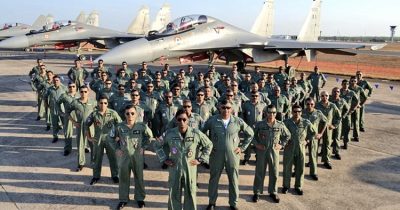
Recently, the Indian Air Force (IAF) is grappling with a critical shortfall in its fighter jet squadrons, currently at 30 against a sanctioned strength of 42. The government is now focused on establishing a transparent procurement model for the acquisition of 114 Multi-Role Fighter Aircraft (MRFA), a process that has faced delays amidst concerns over past procurement controversies, notably the Rafale deal. This urgency is telld by the IAF’s need for immediate enhancements to its operational capabilities.
Historical Background
The procurement of fighter jets in India has a complex history. The 2015 announcement by Prime Minister Narendra Modi for the direct purchase of 36 Rafale jets was driven by an urgent operational requirement. This deal, valued at €7.87 billion, was formalised in 2016. However, the previous tender for 126 Medium Multi-Role Combat Aircraft was scrapped, denoting the challenges faced in large-scale military procurements.
Current Procurement Challenges
The IAF’s MRFA project has been stalled due to the need for a robust procurement process that avoids past pitfalls. The Request for Information (RFI) was issued in April 2019, requiring technology transfer and local manufacturing. However, the Acceptance of Necessity (AoN), which is crucial to initiate the formal procurement process, remains pending. This delay is attributed to the government’s cautious approach to prevent controversies similar to those surrounding the Rafale deal.
Indigenous Aircraft Development
In parallel to the MRFA procurement, India is investing in indigenous aircraft development. The Light Combat Aircraft (LCA) programme aims to enhance self-reliance in defence manufacturing. The LCA-MK1A variant has already seen contracts for 83 units, with plans for 97 more. The LCA-MK2, a more advanced version, is expected to take its first flight in October 2024, with a projected completion of its research and development by December 2027. This dual approach of procurement and indigenous development is crucial for the IAF’s long-term strategy.
Strategic Implications
The urgency expressed by IAF leadership reflects broader geopolitical considerations. With regional tensions and evolving threats, maintaining air superiority is paramount. The procurement of MRFA, alongside the acceleration of indigenous projects, aims to bolster the IAF’s capabilities to respond effectively to emerging challenges. Furthermore, the emphasis on indigenisation aligns with India’s broader defence policy of self-reliance, crucial for sustainable military readiness.
Future Outlook
The IAF’s future capability hinges on timely procurement and successful indigenous development. The government’s commitment to a transparent procurement model is essential for restoring confidence in the process. If timelines for the MRFA and LCA-MK2 are met, the IAF could stabilise its operational readiness. However, any further delays may necessitate alternative strategies to ensure a robust air defence posture.
Last Modified: November 1, 2024Questions for UPSC:
- Discuss the significance of the MRFA procurement in the context of India’s national security.
- Analyse the challenges faced by the IAF in achieving its sanctioned strength of fighter squadrons.
- Evaluate the impact of indigenous aircraft development on India’s defence capabilities.
- What lessons can be learned from the Rafale deal controversy for future military procurements?
- Examine the role of technology transfer in the MRFA procurement process.