
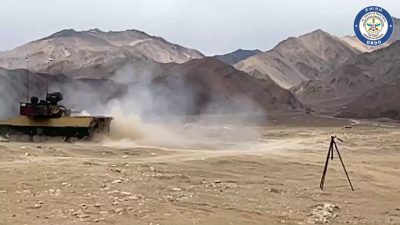
The Indian Light Tank (ILT) has recently demonstrated capabilities in high-altitude conditions. The successful firing of multiple rounds at elevations exceeding 4200 metres marks important step in its development. This achievement follows the initial Phase I trials conducted in a desert environment in September 2024. The ILT is designed to meet the operational needs of the Indian Armed Forces, particularly for high-altitude warfare.
Development and Design
The ILT is a product of the Combat Vehicles Research & Development Establishment, a facility under the Defence Research and Development Organisation (DRDO) based in Chennai. It was developed to meet the Provisional Staff Qualitative Requirements set forth by the Indian Army. The design process, from conception to demonstration, took only three years, showcasing efficient project management and innovation.
Specifications and Features
Weighing approximately 25 tonnes, the ILT is classified as an armoured fighting vehicle. Its lightweight design allows for enhanced mobility in challenging terrains. The vehicle is equipped with advanced technology to ensure effective combat performance in high-altitude environments.
Manufacturing and Collaboration
Larsen & Toubro Precision Engineering & Systems is the primary manufacturer of the ILT. This partnership between DRDO and the private sector puts stress on the importance of collaboration in defence manufacturing. Such alliances aim to boost indigenous capabilities and reduce reliance on foreign technology.
Operational Capabilities
The ILT has demonstrated airlift capabilities, which were showcased by the Indian Air Force. This feature is crucial for rapid deployment in remote areas where traditional transport routes may be inaccessible. The ability to airlift the tank enhances operational flexibility and response times during military operations.
Future Trials and User Readiness
Following the successful high-altitude trials, the ILT is set to undergo further testing. These additional trials will assess its performance under various conditions before it is offered for user trials. The involvement of the Indian Army and Indian Air Force in the trial phases has been instrumental in refining the vehicle’s capabilities.
Recognition and Support
The successful trials have received commendations from key officials, including Raksha Mantri Shri Rajnath Singh. He praised the collaborative efforts of DRDO, the Indian Army, the Indian Air Force, and L&T. This recognition marks the importance of teamwork in achieving defence objectives.
Strategic Importance
The development of the ILT is for India’s military strategy, especially in the context of high-altitude operations. It enhances the Army’s capability to operate effectively in challenging environments, which is crucial given the geopolitical landscape in the region.
Questions for UPSC:
- Discuss the significance of indigenous defence manufacturing in India.
- Critically examine the role of the Defence Research and Development Organisation in modernising the Indian Armed Forces.
- Explain the challenges faced by the Indian Army in high-altitude warfare.
- With suitable examples, discuss the impact of technological advancements on military operations in contemporary warfare.
Answer Hints:
1. Discuss the significance of indigenous defence manufacturing in India.
- Enhances self-reliance, reducing dependence on foreign imports.
- Boosts local economy through job creation and skill development.
- Encourages innovation and technological advancements within the country.
- Strengthens national security by ensuring timely availability of defence equipment.
- Promotes collaboration between public and private sectors, encouraging a competitive defence industry.
2. Critically examine the role of the Defence Research and Development Organisation in modernising the Indian Armed Forces.
- DRDO develops advanced technologies tailored to the specific needs of the Armed Forces.
- Facilitates indigenous design and production, enhancing operational capabilities.
- Conducts research that supports strategic defence initiatives and modernization efforts.
- Collaborates with industry partners, enhancing public-private partnerships in defence.
- Plays important role in testing and validating new systems for operational readiness.
3. Explain the challenges faced by the Indian Army in high-altitude warfare.
- Extreme weather conditions impact soldier performance and equipment functionality.
- Logistical challenges in transporting supplies and reinforcements to remote areas.
- Limited operational mobility due to rugged terrain and altitude sickness.
- Increased vulnerability to enemy surveillance and attacks in open environments.
- Need for specialized training and equipment to adapt to high-altitude conditions.
4. With suitable examples, discuss the impact of technological advancements on military operations in contemporary warfare.
- Use of drones for surveillance and targeted strikes, enhancing situational awareness.
- Advanced communication systems improving coordination and command effectiveness.
- Cyber warfare capabilities allowing for disruption of enemy communications and infrastructure.
- Development of precision-guided munitions reducing collateral damage and increasing effectiveness.
- Integration of artificial intelligence in decision-making processes for faster responses in combat.