
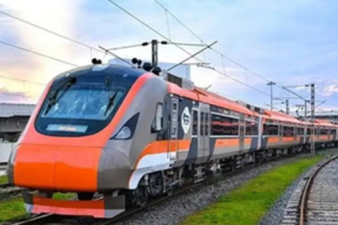
The Indian Railways is making important strides in electrifying its Broad Gauge railway lines. As of late 2023, approximately 97 per cent of the total Broad Gauge network has been electrified. This progress indicates a focused effort to enhance the railway system’s efficiency and sustainability. The Union Minister of Railways, Ashwini Vaishnaw, brought into light that since 2014-15, around 45,200 route kilometres have been electrified.
Current Electrification Status
Indian Railways has accelerated its electrification pace dramatically. From an average of 1.42 km per day between 2004-14, the rate has surged to about 19.7 km per day in 2023-24. This rapid increase showcases the commitment to modernising the railway infrastructure.
Environmental Impact
Electric traction is more environmentally friendly than diesel traction. It is reported to be approximately 70 per cent more economical. This shift not only reduces operational costs but also contributes to lower carbon emissions. The focus on electric trains aligns with global sustainability goals.
Power Supply and Reliability
A reliable power supply is crucial for electric train operations. The system is designed with multiple safeguards. Connections to the national grid through state and central transmission utilities ensure a steady power supply. Redundant power sources at grid and traction substations further guarantee uninterrupted services.
Green Railways Initiative
Indian Railways aims to establish itself as a leader in “Green Railways.” The electrification of the rail transport system is a vital step towards achieving net zero carbon emissions. The Northeast Frontier Railway (NFR) is particularly active in this initiative. It is accelerating electrification projects on all un-electrified Broad Gauge routes within its jurisdiction.
Future Goals
The ultimate goal is to achieve 100 per cent electrification across the railway network. This initiative not only enhances operational efficiency but also supports India’s broader environmental objectives. The commitment to electrification reflects shift towards sustainable transport solutions.
Questions for UPSC:
- Critically analyse the impact of electrification on the operational efficiency of Indian Railways.
- What are the environmental benefits of shifting from diesel to electric traction in railways? Provide suitable examples.
- Explain the role of the Northeast Frontier Railway in achieving electrification targets. What challenges does it face?
- Comment on the importance of a reliable power supply for electric train operations in the context of Indian Railways.
Answer Hints:
1. Critically analyse the impact of electrification on the operational efficiency of Indian Railways.
- Electrification has increased the speed of train operations, reducing travel times.
- Operational costs have decreased by approximately 70% compared to diesel traction, enhancing profitability.
- Higher reliability and reduced maintenance needs of electric engines improve overall service quality.
- Electrification supports higher train frequencies, leading to better capacity management on busy routes.
- Improved energy efficiency contributes to a more sustainable and competitive railway system.
2. What are the environmental benefits of shifting from diesel to electric traction in railways? Provide suitable examples.
- Electric traction reduces greenhouse gas emissions , aiding in climate change mitigation.
- It eliminates harmful pollutants such as NOx and particulate matter, improving air quality around rail corridors.
- Electric trains are more energy-efficient, using less energy per ton-km compared to diesel trains.
- Examples include the reduction of carbon emissions in electrified routes like the Delhi-Mumbai corridor.
- Overall, transitioning to electric traction aligns with global sustainability goals and India’s commitment to net zero emissions.
3. Explain the role of the Northeast Frontier Railway in achieving electrification targets. What challenges does it face?
- The Northeast Frontier Railway (NFR) is actively working to electrify all un-electrified Broad Gauge routes within its jurisdiction.
- NFR aims to meet national targets for 100% electrification and net zero carbon emissions.
- Challenges include difficult terrain, limited infrastructure, and funding constraints for electrification projects.
- Coordination with state governments for land acquisition can also delay progress.
- Despite these challenges, NFR’s commitment to electrification remains strong, showcasing its leadership role in the initiative.
4. Comment on the importance of a reliable power supply for electric train operations in the context of Indian Railways.
- A reliable power supply ensures uninterrupted train operations, crucial for maintaining schedules.
- Connections to the national grid and redundant power sources reduce the risk of service disruptions.
- Stable power supply enhances the performance and efficiency of electric locomotives.
- It supports the safety and reliability of electric train services, increasing passenger confidence.
- Investment in power infrastructure is essential for the long-term sustainability of electrified rail networks.