
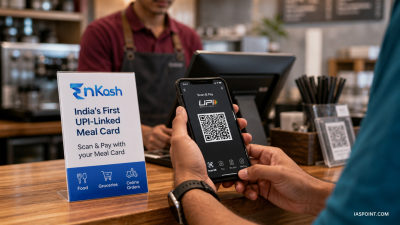
On 22 July 2026 EnKash launched India’s first meal card that permits employees to pay from card balance by scanning UPI QR codes at eligible food and grocery merchants.
Key features
- UPI-enabled payments: QR-based transactions use Unified Payments Interface for merchant acceptance.
- Card formats: Physical and virtual meal cards supporting tap, swipe, scan and online orders.
- Card-network fallback: RuPay support for wider card acceptance where UPI QR is unavailable.
- Payout model: Employer-funded prepaid balance routed through EnKash’s platform.
Regulatory and technical framework
- UPI: Real-time payments system developed and operated by NPCI.
- RuPay: India’s domestic card network operated by NPCI.
- Prepaid Payment Instrument (PPI): RBI-regulated instrument; issuing entities require RBI authorisation.
- EnKash licence: EnKash holds an RBI PPI licence for issuance and controls.
Tax treatment (effective 1 April 2026)
- Monthly limit: Tax-exempt meal allowance up to ₹8,800 per month.
- Per-meal cap: Prescribed limit of ₹200 per meal.
- Annual tax-free amount: Up to ₹1,05,600 per annum per employee.
Merchant coverage & employer controls
- Acceptance network: Claimed merchant base exceeds 500,000 food and grocery outlets and includes major food delivery platforms.
- Employer features: Instant card issuance, bulk reloading, real-time transaction visibility and merchant-category spending controls.
IASPOINT Booster Facts
- PPI types: Closed, semi-closed and open PPIs as per RBI definitions.
- RBI role: Regulation covers issuance, limits, KYC and monitoring of PPIs.
- Legal link: UPI and RuPay operate under NPCI governance and relevant RBI guidelines.