
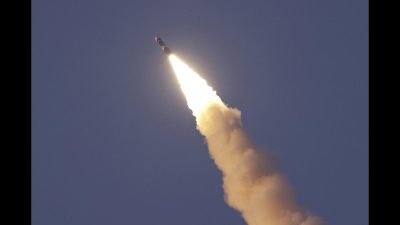
India’s Defence Research and Development Organisation (DRDO) has recently marked an important achievement in military technology. On November 17, 2024, the DRDO successfully flight-tested a long-range hypersonic missile off the coast of Odisha. This milestone positions India among a select group of nations with advanced hypersonic capabilities. Defence Minister Rajnath Singh brought into light its importance, stating that it is a historic moment for the country.
About Hypersonic Missiles
Hypersonic missiles travel at speeds exceeding Mach 5, or five times the speed of sound. This equates to approximately one mile per second. Unlike traditional ballistic missiles, hypersonic missiles can manoeuvre during flight, making them harder to intercept. There are two primary types – Hypersonic Glide Vehicles (HGV) and Hypersonic Cruise Missiles (HCM). HGVs are launched from rockets and glide towards targets, while HCMs use air-breathing engines for propulsion.
Advantages of Hypersonic Missiles
Hypersonic missiles provide several strategic advantages. They enable rapid strikes against time-sensitive threats, especially when other military options are unavailable. Their lower flight altitude makes them less detectable by conventional radar systems. This capability allows for effective targeting of hardened facilities and mobile threats, enhancing national security.
Challenges in Hypersonic Technology
Despite their advantages, developing hypersonic missiles presents important challenges. Engineering complexities arise from the extreme speeds, including managing heat generated by air friction. Maintaining precise manoeuvrability is crucial for operational effectiveness. Furthermore, ensuring reliable communications during flight is a major hurdle. The costs associated with developing these systems are also higher compared to traditional ballistic missiles.
Global Landscape of Hypersonic Development
Countries like Russia and China are leading in hypersonic missile technology. The United States is actively developing its capabilities, investing heavily in programmes like the Long Range Hypersonic Weapon (LRHW). Other nations, including France, Germany, Australia, Japan, Iran, and Israel, are also pursuing hypersonic projects. The ongoing advancements in this field reflect a growing global interest in enhancing military capabilities.
Future Implications
The successful testing of hypersonic missiles could alter the balance of power in military engagements. Nations with these technologies may gain strategic advantages in deterrence and rapid response scenarios. As development continues, the implications for international security and defence strategies will be important.
Questions for UPSC:
- Examine the strategic implications of hypersonic missile technology in modern warfare.
- Critically discuss the engineering challenges faced in the development of hypersonic systems.
- Estimate the impact of hypersonic missiles on global military dynamics and security.
- Point out the differences between hypersonic missiles and traditional ballistic missiles in terms of operational capabilities.
Answer Hints:
1. Examine the strategic implications of hypersonic missile technology in modern warfare.
- Hypersonic missiles can strike targets at unprecedented speeds, reducing reaction time for adversaries.
- Their manoeuvrability makes them difficult to intercept, complicating existing defensive strategies.
- They provide nations with the capability to target time-sensitive threats effectively, enhancing deterrence strategies.
- Possession of hypersonic technology can shift power dynamics, influencing geopolitical relations and military alliances.
- These systems can potentially outpace traditional missile defense systems, leading to an arms race in hypersonic technology.
2. Critically discuss the engineering challenges faced in the development of hypersonic systems.
- Extreme speeds generate important heat due to air friction, requiring advanced materials and cooling technologies.
- Precise manoeuvrability is essential for targeting, necessitating intricate control systems and algorithms.
- Maintaining reliable communication during hypersonic flight is challenging due to signal degradation at high speeds.
- Development costs are higher than traditional missile systems, limiting funding and resources for research.
- Testing and validation of hypersonic systems involve complex simulations and real-world trials, which are time-consuming.
3. Estimate the impact of hypersonic missiles on global military dynamics and security.
- Hypersonic missiles could lead to a re-evaluation of existing military doctrines and defense strategies globally.
- Countries with hypersonic capabilities may gain a strategic upper hand, affecting deterrence and power balances.
- The potential for rapid strikes may encourage preemptive military actions, increasing the risk of conflicts.
- The arms race in hypersonic technology could divert resources from other critical defense areas, impacting overall security.
- International treaties may need to be revisited or created to address the implications of hypersonic weapons proliferation.
4. Point out the differences between hypersonic missiles and traditional ballistic missiles in terms of operational capabilities.
- Hypersonic missiles travel at speeds exceeding Mach 5, while ballistic missiles have varying speeds but generally follow a parabolic trajectory.
- Hypersonic missiles can manoeuvre during flight, making them harder to predict and intercept compared to the fixed trajectory of ballistic missiles.
- They operate at lower altitudes than ballistic missiles, complicating detection and tracking by radar systems.
- Hypersonic systems can target mobile threats effectively, while traditional ballistic missiles are often designed for fixed targets.
- Development and operational costs are typically higher for hypersonic missiles, reflecting their advanced technology and capabilities.