
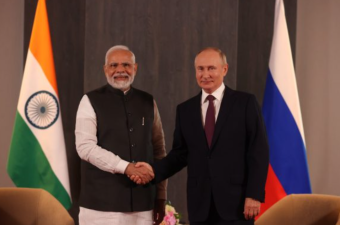
Recent developments have seen a sharp intensification of sanctions targeting India’s imports of Russian crude oil. The United States imposed a 50 per cent tariff on Indian imports linked to Russian oil. The European Union restricted imports of fuels refined from Russian crude in third countries. The United Kingdom expanded sanctions affecting entities involved in India-related energy trades. These moves aim to pressure India to limit its energy ties with Russia. This evolving sanctions landscape challenges India’s energy security and trade autonomy.
Global Sanctions Landscape
The US, EU and UK have introduced measures targeting Russia’s oil exports and countries trading with Moscow. The US tariff on Indian imports rose to 50 per cent. The EU banned fuels refined from Russian crude, even if processed outside Russia. The UK widened compliance rules affecting Indian banking, insurance and shipping. These actions are domestic laws with extraterritorial effects intended to influence India’s trade policies.
Legal Framework and International Trade Rules
International trade law under the World Trade Organization (WTO) limits unilateral trade restrictions. GATT Articles prohibit blanket import bans and require fair treatment among members. The national security exception under Article XXI is not absolute and must be invoked in good faith. The 2019 WTO ruling in Russia—Traffic in Transit clarified that security claims are reviewable. These principles challenge the legality of sanctions affecting India’s lawful trade with Russia.
Principles of Sovereignty and Non-Intervention
International law protects each nation’s right to set its own policies in internal and external affairs. The International Court of Justice in Nicaragua vs United States ruled against coercive economic intervention. Sanctions that condition market access on India abandoning lawful trade risk violating this principle. Such measures appear domestic but aim to coerce policy changes abroad by economic pressure.
India’s Strategic Policy Options
India may challenge US tariffs and EU restrictions at the WTO, citing overreach. It can seek sanctions waivers citing energy security, as done in 2018 with Iran. Promoting trade in local currencies like the rupee can reduce dependence on the US dollar and avoid sanctions risks. India might consider laws similar to the EU’s Blocking Statute to protect firms from secondary sanctions. Building a robust sanctions governance framework across ministries and industry will enhance resilience and preparedness.
Long-Term Implications for India’s Energy Security
India’s response requires balancing legal, diplomatic and economic tools. Reducing reliance on dollar-based trade and diversifying partnerships through groups like BRICS can safeguard energy supplies. Strengthening domestic legal protections and compliance capacities will help manage foreign pressure. India’s approach must be measured, law-based and aligned with national interests to uphold sovereignty in a shifting global order.
Questions for UPSC:
- Critically discuss the impact of unilateral sanctions on the sovereignty of states and international trade law.
- Examine the role of the World Trade Organization in resolving disputes related to national security exceptions under GATT Article XXI.
- Analyse the strategic importance of de-dollarisation in international trade and its implications for emerging economies like India.
- Point out the challenges and benefits of multilateral groupings such as BRICS in enhancing energy security and economic resilience.
Answer Hints:
1. Critically discuss the impact of unilateral sanctions on the sovereignty of states and international trade law.
- Unilateral sanctions often infringe on a state’s sovereignty by coercing policy changes through economic pressure.
- They may violate principles of non-intervention as per international law and the ICJ’s Nicaragua vs United States ruling.
- Sanctions are typically domestic laws with extraterritorial effects aimed at influencing another country’s trade choices.
- Under WTO rules, such sanctions can conflict with obligations like most-favoured-nation treatment and limits on tariffs (GATT Articles I and II).
- The national security exception (GATT Article XXI) is not absolute and must be invoked in good faith, limiting misuse of sanctions.
- Unilateral sanctions create legal ambiguity and trade disruptions, undermining the rules-based international trade system.
2. Examine the role of the World Trade Organization in resolving disputes related to national security exceptions under GATT Article XXI.
- The WTO provides a legal forum to challenge sanctions that invoke Article XXI under the guise of national security.
- Article XXI allows exceptions but requires genuine emergencies and good-faith invocation, as clarified in the 2019 Russia—Traffic in Transit case.
- WTO panels can review whether the security claims are legitimate or a pretext for protectionism.
- Dispute resolution is slow, and the Appellate Body paralysis limits effective enforcement.
- WTO rulings help establish a rules-based record that disciplines overreach by powerful states.
- However, some sanctions (e.g., financial or services-related) may fall outside WTO’s primary jurisdiction, limiting its reach.
3. Analyse the strategic importance of de-dollarisation in international trade and its implications for emerging economies like India.
- De-dollarisation reduces dependency on the US dollar, mitigating risks from US-led sanctions and financial pressure.
- It enhances economic sovereignty by enabling trade in local or alternative currencies (e.g., rupee-ruble, rupee-dirham agreements).
- Emerging economies can avoid dollar liquidity constraints and reduce exposure to exchange rate volatility.
- Challenges include limited liquidity, convertibility, and global acceptance of alternative currencies.
- Gradual adoption through minilateral and trilateral groupings (BRICS, India-Russia-China) supports diversification.
- Long-term de-dollarisation can strengthen resilience but requires robust financial infrastructure and political will.
4. Point out the challenges and benefits of multilateral groupings such as BRICS in enhancing energy security and economic resilience.
- BRICS offers a platform for cooperation in energy trade, finance, and reducing dependence on Western-dominated systems.
- It facilitates diversification of energy sources and promotes local currency trade, aiding de-dollarisation efforts.
- Multilateralism enhances bargaining power and collective resilience against unilateral sanctions.
- Challenges include differing member priorities, geopolitical tensions, and varying economic development levels.
- Institutional weaknesses and lack of enforcement mechanisms can limit effectiveness.
- Successful coordination can boost energy security, economic stability, and geopolitical influence for member states.