
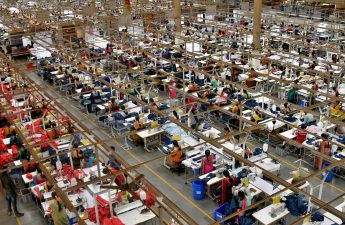
India’s textile industry stands as one of the largest globally, encompassing a comprehensive value chain from cotton cultivation to high-end apparel. Despite its size, India trails behind countries like China and Vietnam in textile exports due to various structural challenges. Recent trends indicate a pressing need for transformation, particularly in sustainability and compliance.
Cotton and Fibre Production
- India is the second-largest cotton producer, contributing 24% of global output.
- Approximately 6 million farmers engage in cotton cultivation, primarily in Gujarat, Maharashtra, and Telangana.
- The textile value chain employs over 45 million people, involving processes from spinning to dyeing.
- While cotton dominates, India also excels in man-made fibres (MMF), being the second-largest producer globally. However, per capita MMF consumption remains low at 3.1 kg, below China and North America.
Textile Industry Growth Trends
The textile and apparel sector contributes to India’s economy, accounting for 13% of industrial production and 12% of exports. However, the industry has faced contraction in recent years. From FY20 to FY24, the textile sector shrank by 1.8% annually, while the apparel sector saw an 8.2% decline. The Covid-19 pandemic exacerbated these challenges, particularly for micro, small, and medium enterprises (MSMEs).
Export Competitiveness
India’s textile exports have stagnated, with FY24 figures at $34.1 billion. In contrast, Vietnam’s apparel exports reached $40 billion in 2023. The disparity arises from higher production costs in India, stemming from a fragmented cotton supply chain and complex regulatory frameworks. Competitors benefit from vertically integrated supply chains and simpler customs procedures, enhancing their global competitiveness.
Sustainability Challenges
Sustainability is emerging as important concern for India’s textile industry. Global brands are tightening compliance norms, requiring increased use of renewable energy and better waste management practices. The shift towards sustainable sourcing is expected to raise costs, particularly for smaller firms. The European Union’s stringent regulations pose additional challenges, especially as it accounts for portion of India’s textile exports.
Future Prospects and Innovations
The Indian textile recycling market is projected to grow, with estimates reaching $400 million. However, the global recycled textile market is much larger, expected to hit $7.5 billion. The industry faces the urgent need to address fast fashion waste, which poses environmental threats. Innovations in recycling and sustainable practices are essential for future growth.
Key Players and Regional Specialisations
The industry is characterised by regional specialisations. Bhiwandi is known for fabric production, Tiruppur for t-shirts, Surat for polyester, and Ludhiana for woollen garments. Leading companies include Shahi Exports and Welspun Living. Their focus on quality and sustainability will be very important in navigating upcoming challenges.
Questions for UPSC:
- Examine the impact of global trade agreements on India’s textile exports.
- Critically discuss the role of sustainability in the future of the textile industry.
- Analyse the reasons for the decline in India’s textile sector growth over the past decade.
- With suitable examples, discuss the significance of MSMEs in the Indian textile industry.
Answer Hints:
1. Examine the impact of global trade agreements on India’s textile exports.
- India lacks free trade agreements (FTAs) that benefit its textile exports, unlike competitors like Vietnam and China.
- FTAs reduce tariffs and enhance market access, making products more competitive in global markets.
- Complex customs procedures in India hinder efficient export processes, increasing costs and delays.
- Countries with FTAs enjoy streamlined regulations, which attract more foreign investments in their textile sectors.
- India’s textile exporters need to lobby for favorable trade agreements to improve competitiveness and access new markets.
2. Critically discuss the role of sustainability in the future of the textile industry.
- Sustainability is becoming crucial due to rising global awareness and regulatory pressures from markets like the EU.
- Increased compliance requirements will necessitate investments in renewable energy and waste management for manufacturers.
- Brands are focusing on sustainable sourcing, which could raise costs but also open new markets for eco-friendly products.
- The recycling market in India is projected to grow, indicating a shift towards more sustainable practices in textiles.
- Failure to adopt sustainable practices could lead to loss of market share and reputational damage for Indian textile firms.
3. Analyse the reasons for the decline in India’s textile sector growth over the past decade.
- The textile sector has contracted due to higher production costs and a fragmented supply chain, increasing logistical challenges.
- Post-COVID economic downturn impacted micro, small, and medium enterprises (MSMEs), which dominate the sector.
- Global competitors have more efficient, vertically integrated supply chains, allowing them to offer lower prices and better quality.
- Regulatory complexities in India create barriers for exporters, limiting their ability to compete effectively on the global stage.
- Low per capita consumption of textiles in India indicates untapped domestic demand, but structural issues hinder growth.
4. With suitable examples, discuss the significance of MSMEs in the Indian textile industry.
- MSMEs account for roughly 80% of India’s textile value chain, driving employment and production in various regions.
- Regions like Tiruppur and Ludhiana showcase MSME specialization in t-shirts and woollen garments, respectively.
- MSMEs contribute to exports, with companies like Shahi Exports leading in garment production.
- These enterprises are crucial for innovation and flexibility, adapting quickly to changing fashion trends and market demands.
- Supporting MSMEs through policies and financial aid can enhance the overall resilience and growth of the textile sector.