
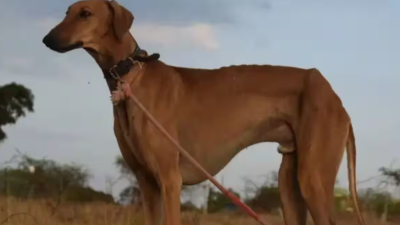
The Border Security Force (BSF) has recently begun training 150 dogs of the indigenous Rampur and Mudhol Hound breeds. These dogs will support border guarding, counterinsurgency, and special operations. This move marks India’s focus on utilising native breeds in security roles traditionally dominated by foreign breeds.
Mudhol Hound – History and Traits
Mudhol Hounds originate from the erstwhile kingdom of Mudhol in Karnataka. Raja Malojirao Ghorpade developed the breed after observing the hunting dogs of local tribes. The breed gained international recognition when the Raja gifted some to King George V. Mudhol Hounds are known for speed, stamina, agility, sharp vision, and a keen sense of smell. These traits make them suited for guarding and hunting. However, their performance declines in cold climates due to their warm-region origin.
Rampur Hound – Origin and Characteristics
Rampur Hounds were bred about 300 years ago in Uttar Pradesh by crossing Afghan Hounds and English Greyhounds. Historically used by royalty for hunting and guarding, they declined after India’s independence. Rampur Hounds are sleek, fast (running over 40 mph), and built for endurance. They are loyal and protective but naturally timid. Their loud bark and ferocity towards intruders make them excellent guard dogs. Current efforts aim at preserving this rare indigenous breed.
Indigenous Breeds in Indian Security Forces
Mudhol and Rampur Hounds have been inducted into the Indian armed and paramilitary forces, including the BSF. The Indian Army’s Remount and Veterinary Corps trained Mudhol Hounds for field trials. Indigenous breeds offer advantages like adaptation to local environments and cultural significance. Challenges include Mudhol Hounds’ limited cold-weather performance, which may affect deployment in northern regions.
Global Military Dog Breeds and Roles
Worldwide, militaries select dogs based on intelligence, agility, endurance, and scenting ability. The US military favours Belgian Malinois for their speed, trainability, and scent detection. German Shepherds are valued for strength and versatility. Labrador Retrievers excel in non-aggressive detection tasks due to their gentle temperament. Dutch Shepherds offer agility and adaptability. Bloodhounds are unmatched trackers but less suited for combat roles.
Significance of Indigenous Breeds in Security
Using Rampur and Mudhol Hounds reflects a shift towards promoting native breeds in security roles. These breeds carry historical and cultural importance. Their adaptation to Indian climates and terrain can enhance operational effectiveness. This approach aligns with broader efforts to preserve indigenous animal breeds and reduce reliance on foreign species.
Questions for UPSC:
- Point out the advantages and challenges of using indigenous dog breeds in Indian security forces with suitable examples.
- Critically analyse the role of animals in modern warfare and counterinsurgency operations, estimating their impact on operational success.
- Underline the significance of preserving indigenous animal breeds in the context of biodiversity and national security.
- What are the key traits that make certain dog breeds suitable for military roles? How do these traits influence their deployment in diverse geographical regions?
Answer Hints:
1. Point out the advantages and challenges of using indigenous dog breeds in Indian security forces with suitable examples.
- Advantages – Indigenous breeds like Mudhol and Rampur Hounds are well-adapted to local climates and terrains, enhancing operational effectiveness.
- They carry cultural and historical significance, boosting national pride and support for security forces.
- Mudhol Hounds exhibit speed, stamina, agility, sharp vision, and strong scenting ability, useful in guarding and hunting roles.
- Rampur Hounds offer high speed (over 40 mph), endurance, loyalty, and protective instincts, making them good guard dogs.
- Challenges – Mudhol Hounds show reduced performance in cold climates, limiting deployment in northern or high-altitude regions.
- Indigenous breeds may lack the extensive training infrastructure and global experience available for foreign breeds like German Shepherds or Belgian Malinois.
2. Critically analyse the role of animals in modern warfare and counterinsurgency operations, estimating their impact on operational success.
- Animals provide critical capabilities such as explosive detection, tracking, search and rescue, and patrolling in complex terrains.
- Dogs’ superior olfactory senses enable detection of hidden threats, improving force protection and reducing casualties.
- Animals can operate in environments where technology may fail or be limited, such as dense forests or rugged borders.
- They enhance psychological operations by deterring intruders and boosting troop morale.
- Limitations include dependency on handler skill, environmental adaptability, and potential ethical concerns.
- Overall, animals contribute to operational success by complementing human and technological efforts.
3. Underline the significance of preserving indigenous animal breeds in the context of biodiversity and national security.
- Preservation maintains genetic diversity, crucial for ecosystem resilience and adaptability to changing environments.
- Indigenous breeds are often naturally adapted to local climates, diseases, and terrains, making them valuable for security and agriculture.
- They embody cultural heritage and traditional knowledge, encouraging national identity and pride.
- Using native breeds reduces reliance on foreign species, enhancing self-reliance in defense and biosecurity.
- Conservation supports sustainable development goals by protecting endangered species and habitats.
- Preserved breeds can serve as a genetic reservoir for future breeding and scientific research.
4. What are the key traits that make certain dog breeds suitable for military roles? How do these traits influence their deployment in diverse geographical regions?
- Key traits include intelligence, trainability, physical agility, endurance, strong scenting ability, and temperament.
- Breeds like Belgian Malinois combine speed, high energy, and strong work drive, ideal for special operations.
- German Shepherds offer strength, versatility, and adaptability to various climates, suitable for patrol and rescue.
- Labrador Retrievers’ gentle temperament suits non-aggressive detection tasks and team operations.
- Environmental adaptability influences deployment; for example, Mudhol Hounds perform poorly in cold climates but excel in warmer zones.
- Selection depends on mission requirements and regional conditions to optimize operational effectiveness.