
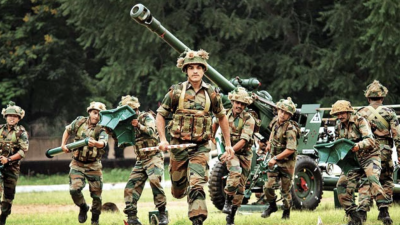
The Government of India is considering a significant defence reform proposal to establish Integrated Theatre Commands (ITCs). This initiative aims to enhance jointness among the Indian Army, Navy, and Air Force by creating unified commands based on geographical theatres. The move is part of broader efforts to modernise the armed forces and improve operational efficiency.
Concept of Integrated Theatre Commands
Integrated Theatre Commands involve the integration of all military assets and personnel from the three services under a single theatre commander. This structure is designed to enable seamless coordination during planning and execution of operations within a specific geographic area. Theatres are typically defined as land, sea, and air domains covering a strategic region, allowing for unified command and control.
Objectives of the Reform
The primary goal is to overcome the traditional service-centric approach where each branch operates independently. ITCs aim to reduce duplication of resources, improve jointness in training and operations, and enable faster decision-making. This reform is expected to enhance combat effectiveness, optimise resource utilisation, and strengthen India’s strategic posture against evolving security challenges.
Challenges and Considerations
Implementing Integrated Theatre Commands involves overcoming institutional resistance and complex coordination issues. Defence services have distinct operational cultures, doctrines, and command structures. Transitioning to ITCs requires significant organisational restructuring, legal amendments, and clarity in roles and responsibilities. Ensuring smooth interoperability and joint logistics support also poses challenges.
Global Examples and Lessons
Several countries have adopted theatre commands or unified combatant commands to enhance joint operations. The United States operates multiple geographic combatant commands integrating all service branches. China has restructured its forces into theatre commands to improve regional response. India’s proposed model draws lessons from these examples to tailor a system suitable for its strategic environment.
What to Study for UPSC Exams?
- Joint Military Doctrine
- Defence Procurement Process
- Command and Control Structures
- Military Modernisation in India
- Geostrategic Importance of Indian Ocean
Joint Military Doctrine
Joint Military Doctrine defines principles and procedures for combined operations of army, navy, and air force. It standardizes communication, planning, and execution to ensure interoperability. The doctrine evolves with technological advances and geopolitical shifts, guiding unified command strategies across diverse conflict scenarios.
Defence Procurement Process
Defence procurement involves acquisition of military equipment through government-approved procedures ensuring transparency and efficiency. It includes stages like requirement definition, tendering, evaluation, and contract management. India’s Defence Procurement Procedure (DPP) emphasizes indigenous manufacturing under ‘Make in India’ to reduce import dependency.
Command and Control Structures
Command and Control (C2) structures organize military leadership and decision-making hierarchies. They integrate communication systems, intelligence, and operational directives to coordinate forces effectively. Modern C2 systems incorporate real-time data and cyber capabilities for rapid response and battlefield awareness.
Military Modernisation in India
Military modernisation in India focuses on upgrading technology, weapons, and infrastructure. It includes induction of advanced fighter jets, missile systems, and network-centric warfare capabilities. Efforts also target enhancing indigenous production, cyber defence, and jointness among armed forces for future readiness.
Geostrategic Importance of Indian Ocean
The Indian Ocean is a critical global trade route with vast energy and mineral resources. It hosts key maritime chokepoints like the Strait of Hormuz and Malacca. Control over the region influences naval dominance, security of sea lanes, and geopolitical power projection among littoral states.
Last Modified: April 10, 2026