
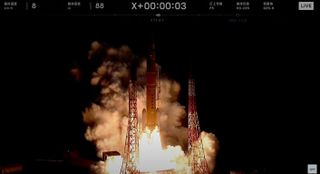
Japan’s space agency, JAXA, has successfully launched a navigation satellite aboard its new H3 rocket. This event marks step towards enhancing Japan’s independent positioning capabilities. The launch took place at the Tanegashima Space Center, with the Michibiki 6 satellite separating from the rocket approximately 29 minutes post-liftoff. This mission is part of Japan’s broader strategy to develop a robust navigation system.
Overview of Japan’s Navigation System
- Japan currently operates the Quasi-Zenith Satellite System (QZSS).
- This system began in 2018 and includes four satellites.
- The addition of Michibiki 6 will expand this network to five satellites.
- The QZSS is designed to complement the American GPS, providing enhanced accuracy for various applications such as smartphones, automotive navigation, maritime operations, and drones.
Future Plans for Satellite Launches
Japan has ambitious plans for its navigation satellite system. By March 2026, it aims to launch two additional satellites, bringing the total to seven. This expansion is crucial for achieving a more precise global positioning capability. Furthermore, by the late 2030s, Japan envisions an 11-satellite network to fully support its navigation needs independently.
About H3 Rocket
- The H3 rocket represents advancement in Japan’s space capabilities.
- It is designed to provide a commercially competitive space transport option.
- After a failed debut attempt last year, the H3 has successfully completed four consecutive flights.
- This reliability is essential for Japan’s aspirations in the growing satellite launch market.
Strategic Importance of Space Capabilities
Japan views its space programme as vital for national security and economic competitiveness. Developing reliable launch vehicles like the H3 and the smaller Epsilon rocket is part of this strategy. A self-sufficient satellite launch capability will reduce reliance on foreign technologies and services, particularly from the United States.
Impact on Global Navigation
The successful launch of Michibiki 6 is expected to enhance global navigation capabilities. Improved positioning data will benefit various sectors, including transportation and logistics. As Japan builds its satellite network, it aims to provide an alternative to existing global navigation systems, promoting technological independence.
Challenges and Opportunities
Japan’s space ambitions face challenges. The competition in the satellite launch market is intense. Japan must continuously innovate to maintain its position. However, with a growing demand for satellite services, there are ample opportunities for expansion and collaboration in the international arena.
Questions for UPSC:
- Critically analyse the significance of Japan’s Quasi-Zenith Satellite System in the context of global navigation systems.
- Explain the role of space technology in enhancing national security. Provide suitable examples.
- What are the implications of Japan’s independent navigation system for international relations in the Asia-Pacific region?
- With suitable examples, comment on the impact of satellite technology on modern transportation systems.
Answer Hints:
1. Critically analyse the significance of Japan’s Quasi-Zenith Satellite System in the context of global navigation systems.
- The QZSS enhances GPS accuracy in urban environments, where signals can be obstructed by buildings.
- It provides services for various applications, including automotive navigation, smartphones, and drones.
- The system operates with four satellites currently, with plans to expand to seven by 2026.
- QZSS aims to reduce reliance on foreign systems, promoting technological independence.
- It serves as a model for regional navigation systems, potentially influencing other countries’ satellite strategies.
2. Explain the role of space technology in enhancing national security. Provide suitable examples.
- Space technology enables precise surveillance and reconnaissance capabilities for national defense.
- Satellite communication enhances military coordination and operational effectiveness.
- Navigation systems improve the accuracy of military operations and logistics.
- Examples include the use of GPS in military applications and satellite imagery for monitoring threats.
- Countries like the US and Russia invest heavily in space technology to maintain strategic advantages.
3. What are the implications of Japan’s independent navigation system for international relations in the Asia-Pacific region?
- Japan’s independent navigation system could shift the balance of power in regional security dynamics.
- It may reduce dependency on US GPS, encouraging a more autonomous defense strategy.
- Other Asia-Pacific nations might seek to develop their own systems in response, increasing competition.
- Collaboration opportunities may arise among countries with similar technological goals.
- Japan’s advancements could enhance its diplomatic leverage in regional discussions on technology and security.
4. With suitable examples, comment on the impact of satellite technology on modern transportation systems.
- Satellite technology enables real-time tracking of vehicles, enhancing logistics and supply chain management.
- GPS facilitates navigation for personal vehicles, improving traffic efficiency and safety.
- In aviation, satellites assist in flight navigation, reducing delays and optimizing routes.
- Maritime navigation relies on satellite signals for safe and efficient shipping routes.
- Examples include the use of GPS in ride-sharing services like Uber, which revolutionized urban transportation.