
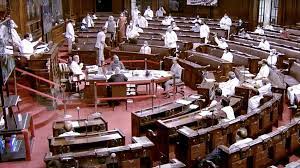
The Jammu and Kashmir Reorganisation (Amendment) Bill, 2023, recently introduced by the Centre in the Lok Sabha, seeks to address the political representation and development needs of the Kashmiri migrant community and the displaced persons from Pakistan-occupied Jammu and Kashmir (PoJK). This significant legislative proposal aims to nominate two members, including one woman, from the Kashmiri Migrants community and one member from the PoJK displaced community to the Legislative Assembly of Jammu and Kashmir.
Inclusion of Kashmiri Migrants in Legislative Assembly
The central objective of the “Jammu and Kashmir Reorganisation (Amendment) Bill, 2023” is to promote political inclusion by nominating two members from the “Kashmiri Migrants” community to the Legislative Assembly of the Union Territory of Jammu and Kashmir. This step aims to empower and give a voice to this marginalized section of society.
Emphasis on Women Representation
The bill makes a significant stride towards gender equality by mandating that one of the nominated members from the Kashmiri migrant community must be a woman. This progressive provision acknowledges the vital role women play in the socio-political fabric of the region and ensures their active participation in decision-making processes.
Representation of PoJK Displaced Persons
The bill also proposes to nominate one member from the displaced persons who were forced to leave their homes in Pakistan-occupied Jammu and Kashmir during the wars with Pakistan in 1947-48, 1965, and 1971. This move aims to provide a platform for these affected individuals to have a say in the region’s governance and development.
Fostering Social and Economic Development
Beyond political representation, the primary goal of the bill is to preserve the political rights of the Kashmiri migrant and PoJK displaced communities and promote their overall social and economic development. By providing them with a voice in the legislative assembly, the bill intends to address their grievances and uplift their socio-economic status.
Background
Revocation of Article 370
In August 2019, the Indian Parliament revoked Article 370, which granted special autonomy to Jammu and Kashmir. The move led to the reorganisation of the state into two separate union territories – Jammu and Kashmir, and Ladakh. The reorganization significantly impacted the region’s political dynamics.
Central Rule and Delayed Assembly Elections
Since 2018, the Union Territory of Jammu and Kashmir has been under the central rule, which led to a delay in conducting the assembly elections. This delay had left the citizens of the region without elected representatives, affecting governance and decision-making processes.
Delimitation Commission’s Role
To address issues related to seat reservations and representation, the Delimitation Commission was set up. The commission received representations from various sections of society, and based on its findings, it recommended representation through nomination, similar to the provision for women in Section 15 of the 2019 Act.
Increase in Assembly Seats
As per the Delimitation Commission’s recommendations, the total seats in the Jammu and Kashmir Assembly increased from 107 to 114, with the inclusion of nine reserved seats for Scheduled Tribes for the first time.
Last Modified: February 22, 2024