
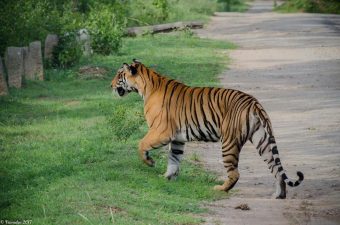
In 2024, Karnataka‘s tiger population was a focal point of conservation efforts. The Karnataka Forest Department reported a total of 393 tigers across five reserves. Bandipur and Nagarahole emerged as critical habitats, housing 303 of these tigers. The recent population estimation revealed a slight decline from 2023, yet officials assured that this fluctuation is manageable. The data was collected using advanced camera traps, aligning with national conservation strategies.
Current Tiger Population
Karnataka’s five tiger reserves include Bandipur, Nagarahole, Biligiri Ranganthaswamy Temple (BRT), Bhadra, and Kali. Bandipur has 154 tigers while Nagarahole has 149. BRT, Bhadra, and Kali reserves reported 39, 29, and 22 tigers respectively. This distribution showcases the importance of these habitats in sustaining tiger populations.
Trends in Population Estimation
The Phase IV population estimation was conducted between November 2023 and February 2024. This method is consistent with the All-India Tiger Estimation conducted by the National Tiger Conservation Authority every four years. The slight decrease in numbers from 408 in 2023 to 393 in 2024 reflects natural fluctuations rather than a conservation failure.
Factors Supporting Tiger Population
High prey density in Bandipur and Nagarahole is crucial for sustaining the tiger population. These reserves have a robust ecosystem that supports not only tigers but also other wildlife. The success of conservation efforts in these areas is vital for the overall health of India’s tiger population.
Challenges Ahead
Experts warn that Bandipur and Nagarahole may have reached their saturation point. The proximity of over 120 villages to these reserves increases the risk of human-animal conflict. Strategies must be developed to mitigate these conflicts while ensuring the safety of both tigers and local communities.
Conservation Strategies
To enhance tiger conservation, experts recommend protecting wildlife corridors. This would allow tigers to disperse to other protected areas, such as M.M. Hills Wildlife Sanctuary and Cauvery Wildlife Sanctuary. Such measures would facilitate gene transfer among tiger populations, reducing inbreeding risks.
Tourism and Habitat Protection
Unregulated tourism poses a threat to tiger habitats. Activists argue against new safari routes and the proliferation of unauthorized resorts. Sustainable tourism practices must be adopted to ensure minimal disruption to wildlife.
Anti-Poaching Measures
Strengthening anti-poaching initiatives is essential. Continuous protection of reserves is necessary, especially in M.M. Hills and Cauvery Wildlife Sanctuaries. Enhanced anti-poaching camps will help absorb potential increases in tiger populations from surrounding areas.
Questions for UPSC:
- Critically examine the role of wildlife corridors in enhancing biodiversity conservation.
- Discuss the impact of human-animal conflict on wildlife conservation efforts in India.
- What are the implications of fluctuating tiger populations for conservation strategies in India? Explain.
- With suitable examples, discuss the challenges and opportunities presented by eco-tourism in wildlife conservation.
Answer Hints:
1. Critically examine the role of wildlife corridors in enhancing biodiversity conservation.
- Wildlife corridors facilitate safe movement between habitats, reducing inbreeding and promoting genetic diversity.
- They help connect fragmented habitats, allowing species to access resources, mate, and migrate.
- Corridors can mitigate human-animal conflicts by providing alternative routes for wildlife, reducing encounters with humans.
- Successful examples include the corridors established in the Western Ghats, which have enhanced the movement of elephants and tigers.
- Conservation of corridors can also support ecosystem services, benefiting both wildlife and local communities.
2. Discuss the impact of human-animal conflict on wildlife conservation efforts in India.
- Human-animal conflict leads to loss of wildlife, often resulting in retaliatory killings by affected communities.
- It disrupts conservation efforts by creating negative perceptions of wildlife, hindering support for conservation initiatives.
- Conflicts can arise from habitat encroachment, leading to increased encounters between humans and wildlife.
- Effective management strategies, such as compensation schemes and community engagement, are essential to mitigate conflicts.
- Examples include the use of barriers and deterrents to protect crops and livestock, reducing conflict instances.
3. What are the implications of fluctuating tiger populations for conservation strategies in India? Explain.
- Fluctuating populations can indicate the health of ecosystems and the effectiveness of conservation measures.
- Minor fluctuations may not signify failure, but they necessitate adaptive management strategies to respond to changing dynamics.
- Conservation strategies must include monitoring and research to understand population trends and their causes.
- Implications include the need for habitat protection and sustainable management practices to support stable populations.
- Long-term strategies should focus on enhancing prey availability and reducing human pressures on habitats.
4. With suitable examples, discuss the challenges and opportunities presented by eco-tourism in wildlife conservation.
- Eco-tourism can generate revenue for conservation efforts, providing funding for protected areas and local communities.
- It raises awareness about wildlife conservation, encouraging a culture of appreciation and support among tourists.
- Challenges include unregulated tourism leading to habitat degradation and increased human-animal conflicts.
- Successful examples, like the Kaziranga National Park, demonstrate how eco-tourism can benefit both wildlife and local economies.
- Opportunities lie in developing sustainable tourism practices that minimize impact while maximizing conservation benefits.