
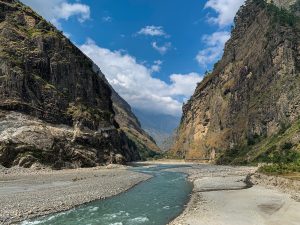
Recent research by Indian scientists has uncovered that the Kashmir Valley, known for its cool Mediterranean climate, was once a warm, humid subtropical region. This discovery is based on fossil leaf evidence and tectonic studies. The findings illuminate how mountain building altered the region’s climate over millions of years.
Fossil Evidence and Climate Reconstruction
Fossil leaves from the Karewa sediments in Kashmir show a rich diversity of subtropical plants. These fossils, preserved for about 4 million years, resemble species that thrive in warm and humid climates. Scientists used the Climate Leaf Analysis Multivariate Program (CLAMP) to study leaf shapes and margins. This method helped estimate past temperature and rainfall. They also applied the coexistence approach by comparing fossils with modern relatives to define the climate range.
Tectonic Uplift and Climate Change
The study links the climate shift to the rise of the Pir Panjal Range, part of the sub-Himalayan mountains. As these mountains gradually lifted, they blocked the Indian summer monsoon from reaching the Kashmir Valley. This cut off moisture supply, drying the region and transforming it from subtropical to Mediterranean. The tectonic uplift acted as a natural barrier, altering rainfall and temperature patterns over millennia.
Significance for Climate Science
About the ancient climate of Kashmir provides insight into how tectonic forces influence regional climates. It shows how mountain building can drastically change ecosystems by altering monsoon patterns. This knowledge is valuable for predicting future climate shifts. As global warming affects rainfall and temperature, such studies help build better climate models. These models can forecast how ecosystems might adapt or collapse under changing conditions.
Implications for Himalayan Conservation
The Himalayas are highly sensitive to environmental changes. The study marks the importance of conserving mountain ecosystems that are vulnerable to climate shifts. from past climate transformations offer guidance for managing fragile habitats. Protecting these regions is crucial for biodiversity and water security in South Asia.
Questions for UPSC:
- Critically analyse the role of tectonic uplift in shaping regional climates with suitable examples from the Himalayas and other mountain ranges.
- Explain the Climate Leaf Analysis Multivariate Program (CLAMP) and the coexistence approach. How do these methods contribute to palaeoclimatic reconstructions?
- What are the impacts of monsoon variability on the ecology and economy of South Asia? Discuss with reference to historical and contemporary contexts.
- With suitable examples, critically examine the challenges and strategies for conserving fragile mountain ecosystems like the Himalayas under climate change.