
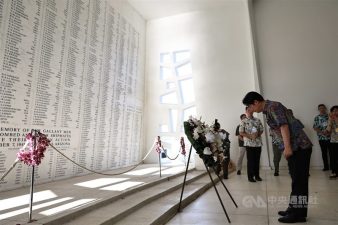
Taiwan’s President Lai Ching-te recently made headlines with his visit to the United States. This marked his first trip since taking office. The visit was officially termed a transit due to the sensitive nature of Taiwan-China relations. China swiftly condemned the trip, denoting the ongoing tensions surrounding Taiwan’s status.
Context of US-Taiwan Relations
Since 1949, Taiwan and China have maintained conflicting claims. China views Taiwan as a breakaway province. Conversely, Taiwan sees itself as the sole representative of China. The US historically supported Taiwan but altered its stance after recognising China in 1979. This led to a complex relationship where the US acknowledges the One-China policy while maintaining unofficial ties with Taiwan.
Historical Visits and Transits
The first transit occurred in 1994 under President Bill Clinton. Taiwan’s then-President Lee Teng-hui was allowed to refuel in Hawaii but not to stay overnight. In 1995, Lee made a private visit to Cornell University, provoking military responses from China. Such visits have been rare and often contentious, denoting the delicate balance of diplomacy.
Recent Developments
Lai Ching-te’s visit follows a pattern of transit stops by Taiwanese leaders. His trip came shortly after the US approved a sale of military parts to Taiwan, further aggravating China. The Democratic Progressive Party, which Lai represents, has a pro-independence stance. This has drawn sharp criticism from China, which perceives such actions as separatist.
China’s Reaction and Military Exercises
China’s Ministry of Foreign Affairs expressed strong opposition to Lai’s transit. They accused the US of undermining China’s sovereignty. Following Lai’s previous predecessor’s visits, China conducted military exercises around Taiwan. These actions tell the heightened tensions and potential for conflict in the region.
Future Implications
Lai’s visit to the US is a continuation of Taiwan’s efforts to strengthen international ties. After Hawaii, he plans to visit several Pacific nations that recognise Taiwan. This marks Taiwan’s diplomatic struggle against China’s growing influence and the need for support from allies.
US Policy on Taiwan
The US maintains a policy of strategic ambiguity. It acknowledges the One-China principle but continues to support Taiwan through arms sales and unofficial relations. This dual approach aims to deter aggression from China while not formally recognising Taiwan’s independence.
Conclusion on Taiwan’s Diplomatic Landscape
Taiwan remains in a precarious position internationally. Its limited recognition and ongoing tensions with China shape its foreign policy. The delicate balance of power in the region makes Taiwan’s diplomatic efforts critical for its survival.
Questions for UPSC:
- Examine the impact of the One-China policy on Taiwan’s international relations.
- Discuss the significance of military exercises conducted by China in response to Taiwanese leadership visits.
- With suitable examples, discuss the historical evolution of US-Taiwan relations since 1979.
- Critically discuss the role of international recognition in Taiwan’s struggle for sovereignty.
Answer Hints:
1. Examine the impact of the One-China policy on Taiwan’s international relations.
- The One-China policy asserts that there is only one China, which includes Taiwan, limiting Taiwan’s ability to gain formal diplomatic recognition.
- Only 12 countries officially recognize Taiwan, while most nations maintain unofficial relations, complicating Taiwan’s international standing.
- The policy pressures countries to choose between engaging with China or Taiwan, often leading to a preference for China due to its economic clout.
- Taiwan’s participation in international organizations is restricted, as many require recognition of the One-China principle for membership.
- The policy encourages a sense of isolation for Taiwan, prompting it to seek alliances with smaller nations and engage in soft diplomacy.
2. Discuss the significance of military exercises conducted by China in response to Taiwanese leadership visits.
- Military exercises serve as a show of force, demonstrating China’s readiness to assert its claims over Taiwan and respond to perceived provocations.
- Such exercises often coincide with high-profile visits by Taiwanese leaders, signaling China’s discontent and willingness to escalate tensions.
- They are intended to intimidate Taiwan and deter future visits by reinforcing China’s military capabilities in the region.
- These actions can lead to increased military presence and readiness, affecting regional stability and security dynamics in East Asia.
- China’s military drills also serve to rally domestic support by portraying the government as strong and protective of national sovereignty.
3. With suitable examples, discuss the historical evolution of US-Taiwan relations since 1979.
- In 1979, the US recognized the People’s Republic of China, leading to the Taiwan Relations Act, which allowed unofficial relations and arms sales to Taiwan.
- In 1994, Taiwan’s President Lee Teng-hui was allowed a transit stop in Hawaii, marking a shift towards more open engagements, albeit limited.
- The 1995 visit to Cornell University by Lee prompted a military response from China, denoting the sensitive nature of US-Taiwan relations.
- Under President Obama, the US increased arms sales to Taiwan, reinforcing its commitment to Taiwan’s defense amidst rising tensions with China.
- Recent visits by Taiwanese leaders, such as Lai Ching-te, demonstrate ongoing US support despite the One-China policy, reflecting a complex diplomatic balancing act.
4. Critically discuss the role of international recognition in Taiwan’s struggle for sovereignty.
- International recognition is crucial for Taiwan to assert its sovereignty and participate in global governance, yet it faces diplomatic isolation.
- The limited number of countries recognizing Taiwan hampers its ability to engage in formal diplomatic relations and international organizations.
- Efforts to gain recognition often lead to backlash from China, which pressures countries to sever ties with Taiwan in favor of Beijing.
- Taiwan relies on informal alliances and soft power strategies to enhance its international presence despite lack of formal recognition.
- The struggle for sovereignty is compounded by the global geopolitical landscape, where Taiwan’s status is often overshadowed by larger powers’ interests.