
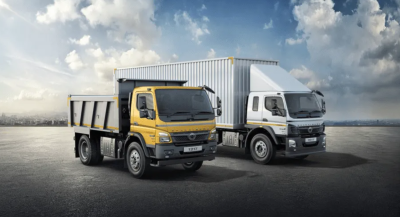
Whenever an online order reaches a doorstep, it is usually carried by a light commercial vehicle (LCV) — small trucks under 3.5 tonnes that quietly power India’s logistics and e-commerce economy. Yet, even as India tightened fuel efficiency rules for passenger cars, this crucial segment remained outside binding emission standards. That gap is now closing, with policymakers signalling that LCVs can no longer remain invisible in India’s clean transport transition.
Why light commercial vehicles matter
LCVs are not niche vehicles. In 2024, they made up nearly half of India’s commercial goods vehicle fleet, reflecting their centrality to urban freight, last-mile delivery, and small businesses. Their high daily utilisation means they consume disproportionately large amounts of fuel relative to their size. Despite this, LCVs escaped the kind of regulatory scrutiny applied to passenger cars under corporate average fuel efficiency (CAFE) norms.
This oversight has implications beyond emissions. As e-commerce volumes grow and cities struggle with air pollution, ignoring LCV efficiency risks locking India into a high-carbon freight pathway.
A long-standing regulatory blind spot
India’s passenger car sector has operated under fleet-wide CO₂ targets for years, compelling manufacturers to gradually improve fuel efficiency. LCVs, however, were treated differently, largely due to concerns about affordability and market sensitivity.
In late July 2025, the Bureau of Energy Efficiency proposed India’s first fuel consumption standards for LCVs, covering the period from 2027 to 2032. The move followed intense lobbying by automakers seeking a full exemption, arguing that compliance would raise costs and require expensive internal combustion engine (ICE) technologies. The decision to proceed anyway marked a clear shift in policy thinking — decarbonisation would extend beyond private cars.
Where India’s LCV emissions stand today
India’s LCV fleet emitted an average of 147.5 g CO₂/km in 2024. Even this figure masks the impact of limited electrification. Battery electric LCVs (e-LCVs) accounted for just 2% of the fleet, yet without them, emissions would have risen to around 150 g CO₂/km. The data highlights how even marginal electrification can make a measurable difference.
Current electric offerings remain cautious: most models have battery packs below 35 kWh and ranges of about 150 km. These specifications reflect manufacturers’ hesitation in a market dominated by vehicles priced under ₹10 lakh, while electric alternatives remain significantly costlier upfront.
Why electrification remains sluggish
On paper, electric LCVs already offer lower total cost of ownership due to reduced fuel and maintenance expenses. In practice, high acquisition costs and limited model availability restrict demand. Policy inconsistency adds to the problem. Central purchase incentives under PM E-DRIVE exclude LCVs, leaving States such as Maharashtra and Madhya Pradesh to fill the gap with their own support schemes.
This uneven incentive landscape weakens manufacturer confidence and slows investment in scaling electric platforms.
Do fuel efficiency standards push electrification?
Fuel efficiency regulations do not automatically lead to electric mobility; their impact depends on how stringent they are. When targets are lenient, manufacturers often find it cheaper to tweak existing ICE technologies rather than invest in new electric models. India’s passenger car experience illustrates this clearly: after eight years of CAFE norms, battery electric vehicles still make up only about 3% of the fleet.
Research by the International Council on Clean Transportation identifies a tipping point at around 116.5 g CO₂/km. Beyond this level, reducing emissions through electrification becomes cheaper for manufacturers than relying solely on ICE improvements. The BEE’s proposed LCV target of 115 g CO₂/km narrowly crosses this threshold — enough to allow e-LCVs to enter compliance strategies, but arguably not enough to drive mass adoption.
Super credits: catalyst or distraction?
To overcome the cost barrier, many regions — including China, the European Union, and the United States — use super credit multipliers. These allow electric vehicles to count multiple times toward compliance, making electrification more attractive on paper.
India’s draft proposal adopts this idea by assigning e-LCVs a zero CO₂ value and offering super credits. However, it also extends credits and offset factors to hybrid technologies and select ICE improvements. While intended as transitional tools, such measures risk fragmenting the market. If manufacturers can meet targets by incremental ICE upgrades or hybrids, the incentive to invest in full electrification weakens.
Notably, the proposal considers phasing out super credits for e-LCVs while continuing support for hybrids and ICE technologies — a choice that could prolong conventional dominance rather than accelerate transition.
Why policy design will decide the outcome
India’s challenge is no longer about recognising the problem but about sequencing solutions. Electrification follows momentum: early adoption encourages innovation, scales manufacturing, and brings down battery costs. Weak standards and prolonged interim incentives, by contrast, delay this virtuous cycle.
A more stringent fuel efficiency target, combined with time-bound and focused incentives for pure electric LCVs, could shift manufacturer strategies decisively. Without this, India risks repeating the passenger car experience — regulatory compliance without meaningful electrification.
What to note for Prelims?
- Light commercial vehicles (LCVs) are defined as goods vehicles under 3.5 tonnes.
- India’s first proposed fuel consumption standards for LCVs cover 2027–2032.
- LCVs accounted for about 48% of India’s commercial goods vehicles in 2024.
- Electric LCV penetration remains low at around 2%.
What to note for Mains?
- Regulatory design determines whether fuel efficiency norms drive genuine electrification.
- Super credits can accelerate EV adoption but may dilute outcomes if extended to ICE technologies.
- Policy consistency between Centre and States is crucial for reducing upfront EV costs.
- LCVs are critical for urban emissions reduction due to their high utilisation and role in e-commerce.